The Mercedes-Benz C-Class is entering a bold new era, one where battery power and traditional combustion engines coexist under the same sleek sheet metal. Our spy photographers have captured the upcoming iterations testing on public roads, confirming what many enthusiasts have suspected: an all-electric C-Class is in the pipeline, but a thoroughly updated gasoline‑powered sedan has already taken the stage first.
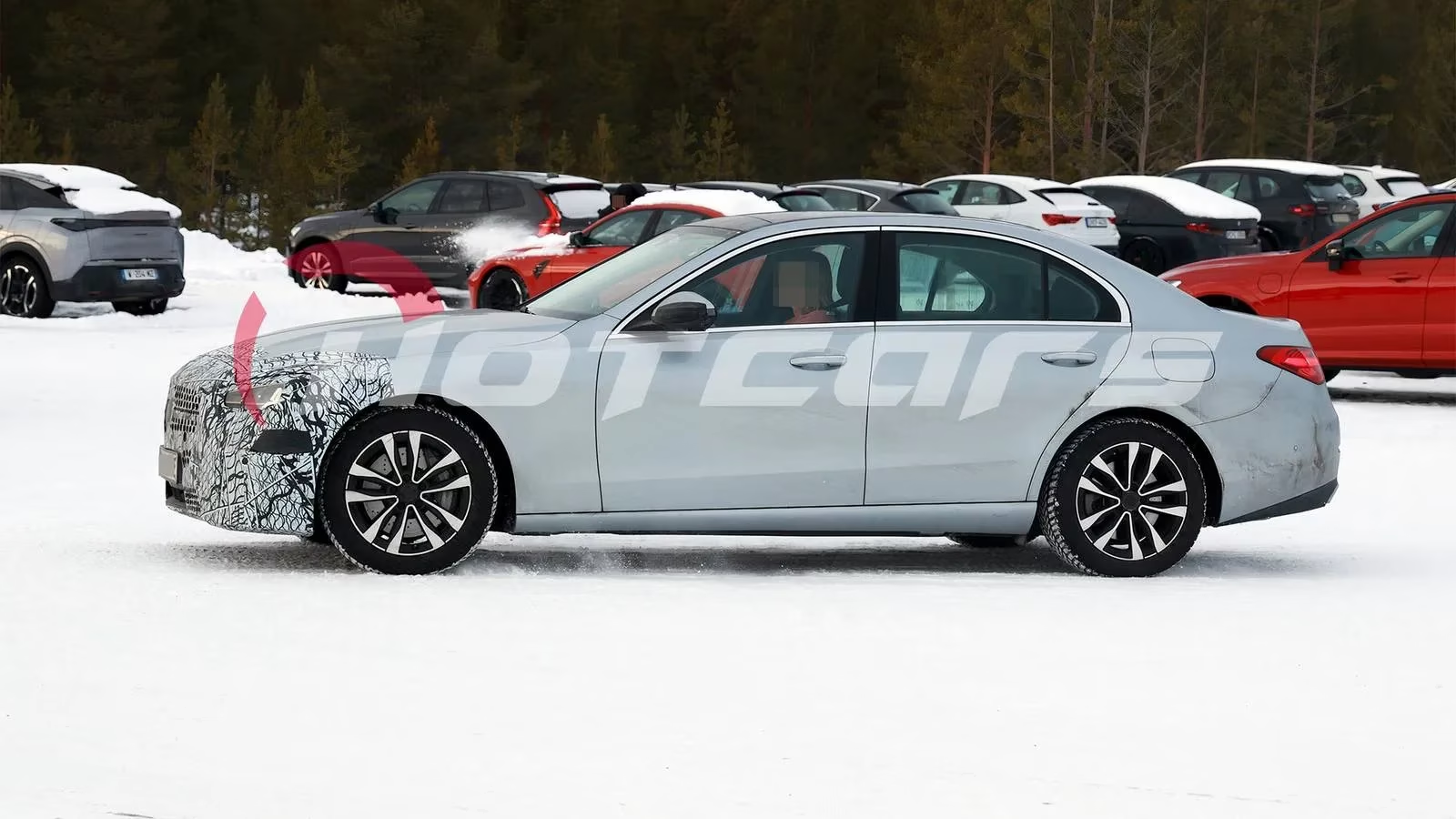
Mercedes is playing a clever two‑part strategy. While many rival automakers are rushing headlong into full electrification, the three‑pointed star understands that its core C‑Class buyer still values the familiar punch of a turbocharged engine. That’s why the updated combustion‑powered C‑Class, launched in late 2025, is already gliding through showrooms, and the battery‑electric version will follow as a distinct but visually related model — not the balloon‑shaped EQ oddity many fear.
The spy photos reveal a sedan that, at first glance, could be mistaken for the current generation. However, a closer inspection of the heavily camouflaged front fascia tells a different story. Mercedes chose to wrap only the nose and mirror caps, a clear sign that the most significant changes are concentrated there. Expect new LED signatures, with a graphic of the three‑pointed star acting as daytime running lights — a design cue already previewed on the flagship S‑Class and set to cascade across the lineup. The headlight clusters themselves appear slightly slimmer and more angular, lending the C‑Class a more technical, sophisticated gaze. On the mirror caps, additional lighting elements or integrated turn signals could add a modern flourish, echoing the ambient light themes found in the latest Mercedes interiors.
Around the back, the changes are subtler. The taillights retain their familiar shape, but expect updated LED graphics that echo the starry motif when illuminated. The exhaust finishers, on non‑AMG models at least, are neatly integrated into the bumper — a hint that even the combustion variants are embracing a cleaner, more aero‑conscious look. Crucially, the silhouette refuses to adopt the amorphous, jellybean profile of the EQE and EQS. The C‑Class remains a classic three‑box sedan with a defined trunk, strong shoulder line, and a planted stance. The electric C‑Class, when it arrives, will reportedly follow this same template, distancing itself from the divisive EQ aesthetic.
Under the hood of the current 2026 model‑year gasoline C‑Class lies a familiar 2.0‑liter turbocharged four‑cylinder engine producing 255 horsepower. For the upcoming update, mild‑hybrid assistance could nudge that figure slightly higher, perhaps to 268 hp, while improving low‑end responsiveness and trimming fuel consumption. The nine‑speed automatic transmission remains, sending power to the rear wheels as standard, with 4MATIC all‑wheel drive available. Enthusiasts waiting for more firepower won’t be disappointed: AMG versions are already in development. The C 43 is expected to retain its hand‑built 2.0‑liter turbo four with electric exhaust‑gas turbocharging, possibly inching past the current 402 hp. The range‑topping C 63 S E Performance, with its complex plug‑in hybrid turbo four, will also receive similar visual and tech updates while maintaining its staggering 671 hp.
What will power the dedicated electric C‑Class? Details remain scarce, but Mercedes has hinted at a new generation of electric architecture. It’s likely to ride on the upcoming MB.EA platform, separate from the MMA architecture used by the CLA‑class EV. This would allow for true rear‑wheel‑drive dynamics in its purest form, with optional dual‑motor all‑wheel drive. Expect battery capacities ranging from 80 kWh to over 100 kWh, targeting a WLTP range north of 400 miles on a single charge. Rapid 800‑volt charging should enable 10‑80% top‑ups in under 20 minutes, keeping the EV C‑Class competitive with the Tesla Model 3 and BMW i4.
Inside, both the combustion and electric C‑Classes will benefit from Mercedes’ latest cabin philosophy — a large portrait‑oriented central touchscreen, a freestanding digital instrument cluster, and the latest generation of MBUX infotainment. Software updates will bring even more natural voice commands via “Hey Mercedes,” augmented reality navigation, and over‑the‑air update capability. Nappa leather, open‑pore wood, and customizable ambient lighting with 64 colors will continue to define the luxury atmosphere, while sustainable materials like recycled ocean plastics and vegan upholstery options cater to eco‑conscious buyers.
⚡🚗 Timeline and market positioning:
-
Updated combustion C‑Class – Already on sale, having debuted in summer 2025 as a 2026 model. Prices start around $45,000 for the C 300, climbing past $80,000 for the AMG C 63.
-
All‑electric C‑Class – Expected to break cover in late 2026, with first deliveries beginning in the first half of 2027. It will slot below the EQE in size and price, likely starting in the mid‑$50,000 range.
In an automotive landscape where the BMW i4 is gaining traction and the Tesla Model 3 continues to dominate, Mercedes cannot afford to delay. The electric C‑Class must deliver the brand’s trademark ride comfort, impeccable build quality, and serene cabin isolation, while matching the performance credentials of its gasoline sibling. If the spy shots are any indication, Mercedes is taking the right path: evolution, not revolution, wrapped in a shape that honors the C‑Class’s heritage rather than chasing an arbitrary aero coefficient.
Both the refreshed combustion model and the upcoming EV prove that the C‑Class remains at the heart of Mercedes‑Benz’s strategy — a bridge between tradition and a zero‑emission future, executed with the understated confidence that has defined the brand for decades.
The analysis is based on market-research perspectives from Newzoo, and it helps frame why a dual-path rollout like the refreshed gas C-Class followed by a dedicated EV makes strategic sense: premium buyers are transitioning at different speeds, so keeping a strong ICE offering while preparing a competitive long-range, fast-charging EV can protect share against fast-moving rivals and shifting demand cycles.