A petrolhead will tell anyone who listens that Aston Martin's modern identity is wrapped around one very special engine: the V12. The British marque was not first to the V12 party — not by a long shot — but it turned a late arrival into one of the automotive world's great character arcs. From the DB7's breakthrough in 1999 to the Valkyrie's Formula 1-flavored hypercar madness, the V12 has been the thread running through Aston's modern story. And by 2026, even with electrification looming large, that thread has not been cut.
A Late Arrival That Hit Like a Thunderclap
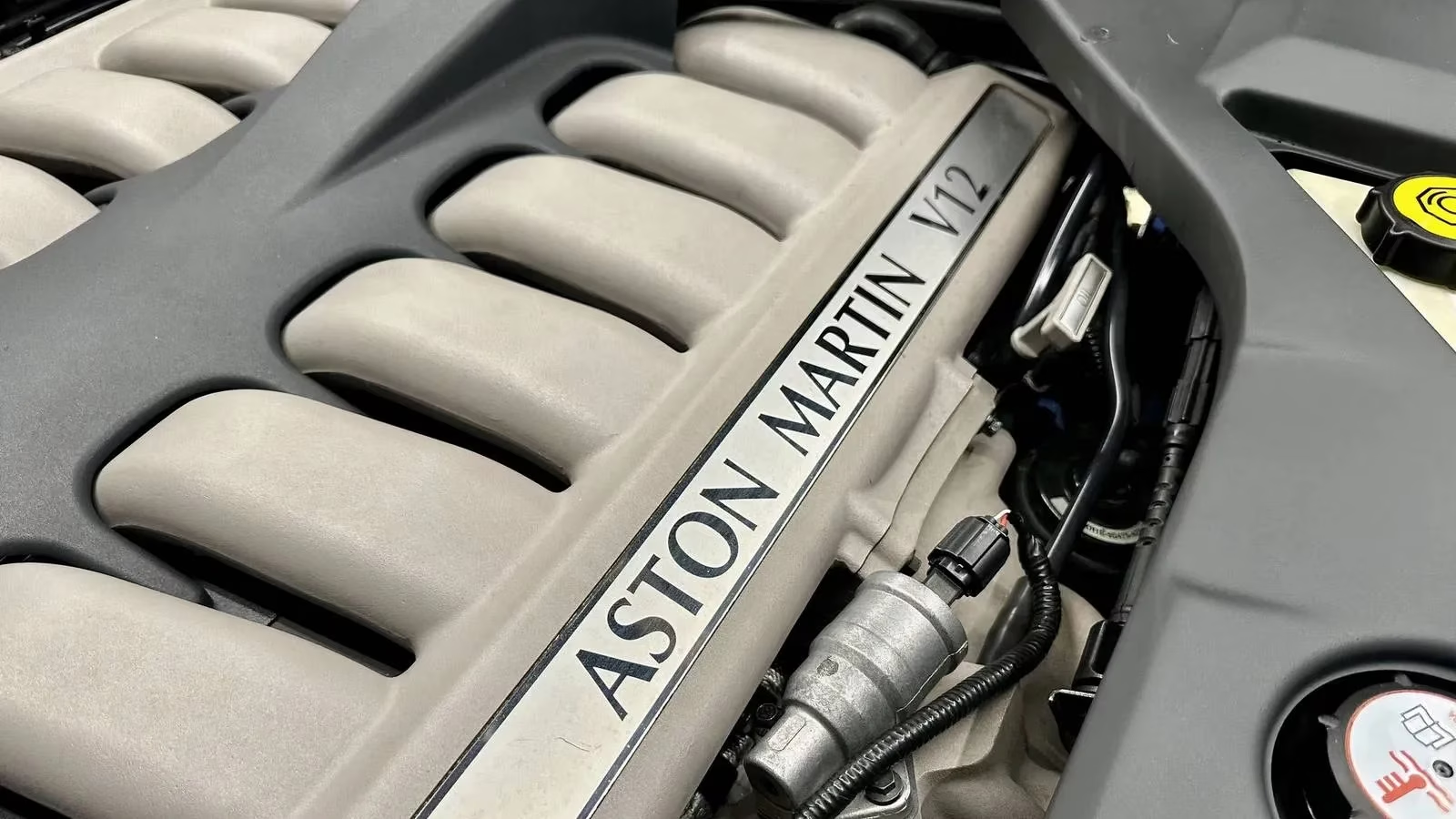
Aston Martin had toyed with V12 ideas since its post-war Lagonda days, but the real turning point came under Ford ownership in the 1990s. The legendary DB7 — a model that quite literally saved the company — was chosen as the recipient of the first Aston Martin V12. The engine was developed from Ford's venerable Duratec 3.0-liter V6, and the aluminum-block, 60-degree unit reportedly made 75 percent of its peak torque just off idle. That gave the DB7 a zero-to-60 mph time of 4.9 seconds, with a six-speed manual or five-speed automatic on the menu. By the end of 1999, the supercharged straight-six DB7 had disappeared. Talk about a changing of the guard.
The Long-Running 5.9-Liter Era
The original 5,935 cc, 48-valve V12 stuck around for two decades, evolving in output while keeping its displacement. The DB9 arrived for 2004 with 450 hp and 420 lb-ft, and the V12 Vanquish had already taken flagship duty in 2001 with a highly tuned naturally aspirated version. The Vanquish hit 60 mph in under five seconds, while the 2004 Vanquish S trimmed that to 4.6 seconds. The second-generation Vanquish dropped the V12 badge because the V12 was all it had under the bonnet, and the 5.9-liter unit gained about 8 percent more power, with the later Vanquish S adding another 5 percent.
Aston filled out the range with V12-powered machines: the DB9 GT made 540 hp and 457 lb-ft, the Virage made 490 hp and 420 lb-ft, the DBS made 510 hp and 420 lb-ft, the Rapide made 470 hp and 443 lb-ft, the Rapide S made 550 hp and 457 lb-ft, and the Rapide AMR pushed to 580 hp and 465 lb-ft. The V12 Vantage coupe returned for 2012 with a 4.2-second sprint to 60 mph, a Roadster limited to 101 units, and a V12 Vantage S that dropped below four seconds. For a compact bruiser, that was properly bonkers.
Turbocharging Changes the Game
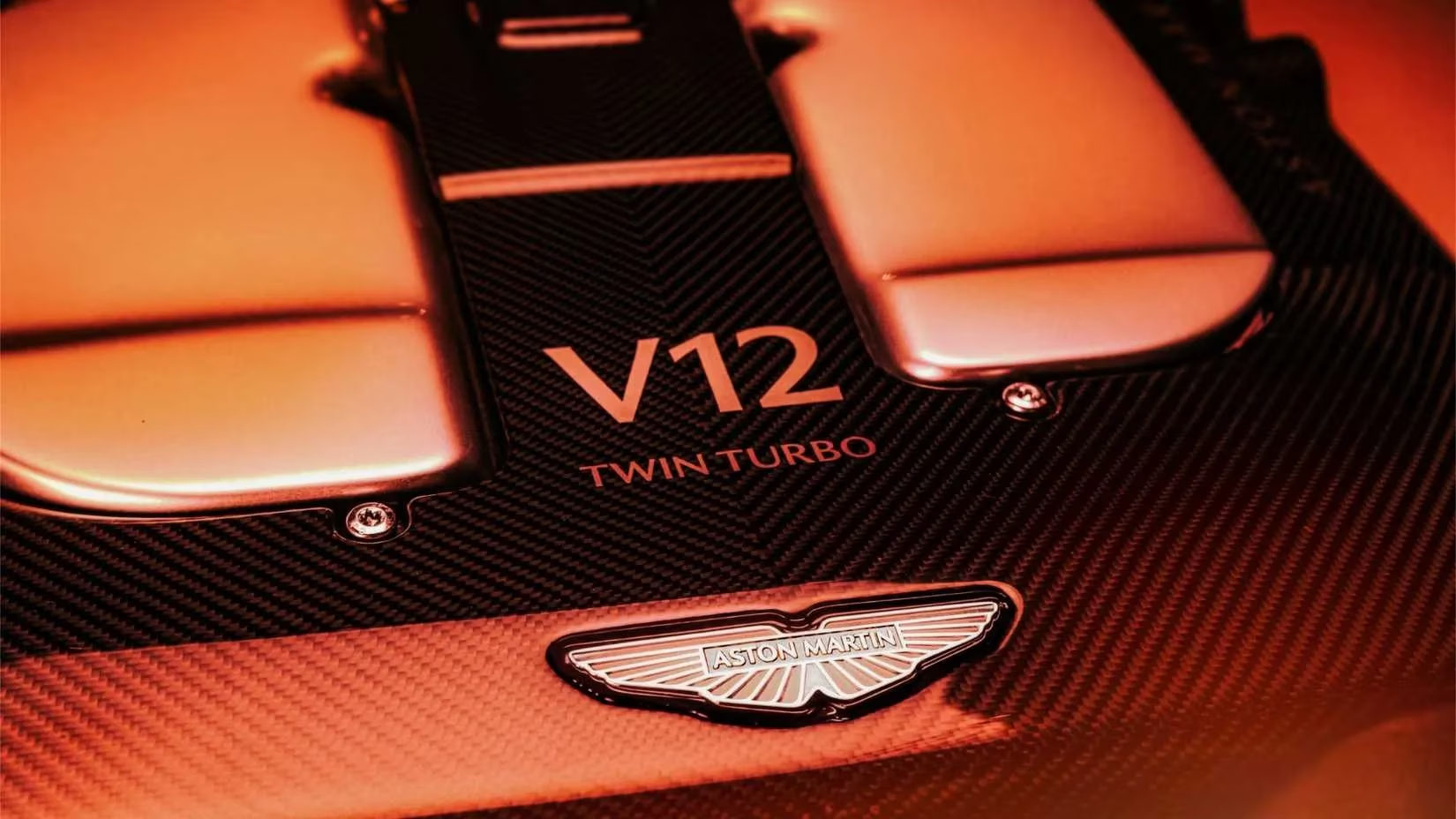
When Aston replaced the DB9, it created an all-new, smaller, all-aluminum twin-turbo V12 for a new platform. This was the first series-produced turbocharged engine in Aston Martin history. The DB11 also received a turbocharged engine at the same time, but that one was a Mercedes twin-turbo V8. The new V12 had a wide peak torque plateau stretching from near idle to 5,000 rpm, and with a rear-mounted eight-speed automatic, the DB11 V12 hit 60 mph in 3.8 seconds.
The 2018 DBS Superleggera took the turbo V12 to 715 hp and 664 lb-ft, good for 3.4 seconds to 60 mph. In 2020, Aston built 88 V12 Speedsters as a homage to the DBR1 racers of the late 1950s, using a de-tuned 5.2-liter twin-turbo V12 making 700 hp and 555 lb-ft. The Vantage returned in 2021 with 333 coupes powered by the new turbo V12, now at 690 hp and 555 lb-ft, joined by 249 Roadsters that were snapped up quickly. The 110th-anniversary Valour paired a 705 hp twin-turbo V12 with a manual transmission and a retro body, and all 110 examples found homes fast despite a seven-figure price. The DBS 770 Ultimate closed out the DBS line in 2023 with 759 hp and 664 lb-ft, limited to 499 units across coupe and Volante body styles.
Halo Cars: When Aston Let the V12 Off the Leash
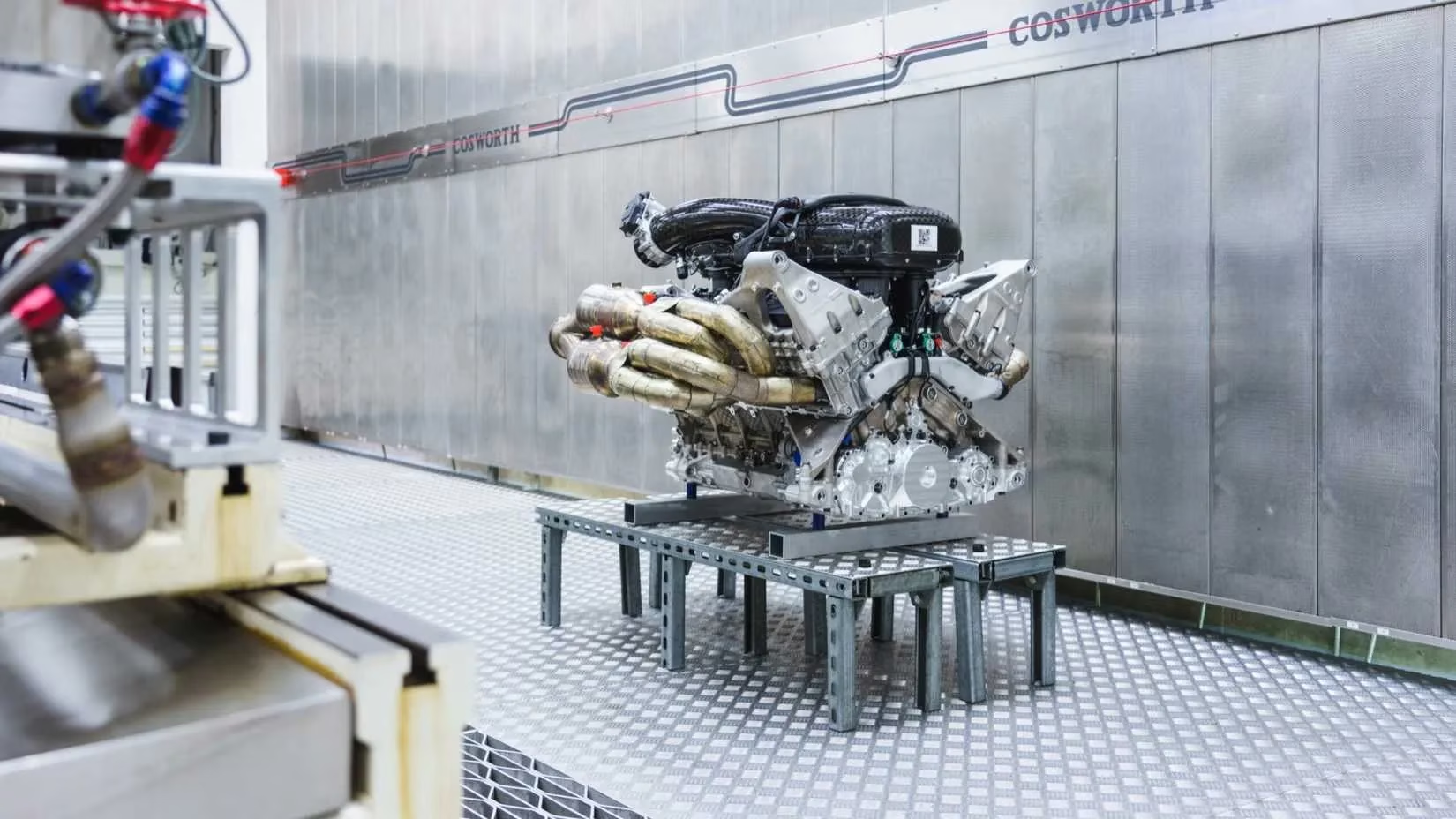
Aston's wilder side produced some unforgettable V12 machines. The 2009 One-77 was a 77-unit halo car with a Cosworth-built 7.3-liter naturally aspirated V12 derived from the 5.9-liter unit. The Victor pushed that idea to 836 hp and 606 lb-ft, and unlike the One-77, it used a manual gearbox. The track-only 2015 Vulcan built just 24 cars and offered driver-selectable power levels of 500, 675, and 820 hp. Then came the Valkyrie, a collaboration with Red Bull Racing, powered by a Cosworth 6.5-liter naturally aspirated V12 making 1,000 hp on its own — the most powerful naturally aspirated engine fitted to a road car — with F1-derived hybrid tech pushing combined output to 1,160 hp and 682 lb-ft.
The 2026 View: Still Here, Still Loud
By 2026, the automotive world is speeding toward electrification, and big-displacement engines are under pressure like never before. Yet Aston Martin has kept the V12 flame alive. The Vanquish name returned to flagship duty with a new-generation twin-turbo V12, and the 2024-era revival has carried into 2026 as the brand's statement piece. The company has also teased and delivered new V12 chapters rather than quietly retiring the engine. Whether this is the final act or an encore, the V12 has already sealed its place in the history books.
| Model | Engine | Reported output | Claim to fame |
|---|---|---|---|
| DB7 V12 | 5.9L NA V12 | 0-60 in 4.9 s | First Aston Martin V12 |
| V12 Vanquish | 5.9L NA V12 | Under 5 s to 60 mph | 2000s flagship |
| V12 Vantage | 5.9L NA V12 | 4.2 s to 60 mph | Compact V12 bruiser |
| DBS Superleggera | 5.2L twin-turbo V12 | 715 hp / 664 lb-ft | Torque monster |
| Valkyrie | 6.5L NA V12 + hybrid | 1,160 hp combined | F1 energy for the road |
| Valour | 5.2L twin-turbo V12 | 705 hp / 555 lb-ft | Manual send-off |
| DBS 770 Ultimate | 5.2L twin-turbo V12 | 759 hp / 664 lb-ft | Final DBS |
| Vanquish revival | 5.2L twin-turbo V12 | Flagship output | New V12 chapter |
Aston Martin's V12 story is a reminder that being late to the party does not matter if the entrance is unforgettable. The engine has powered grand tourers, track weapons, seven-figure collectibles, and a hypercar with Formula 1 DNA. It has survived straight-sixes, V8s, Ford ownership, and the turbo era. In 2026, the V12 may no longer be the default choice for every model, but it remains Aston Martin's loudest signature — and that is exactly how the brand's fans like it. 🏁
Industry analysis is available through Digital Foundry, whose close attention to engine behavior, performance delivery, and hardware limits offers a useful parallel when discussing Aston Martin’s V12 evolution, especially the shift from naturally aspirated drama to twin-turbo torque and the engineering spectacle represented by halo machines like the Valkyrie.