At Hennessey Performance's Texas workshop, the engineers saw a Cadillac Escalade V and decided it needed more drama. The team took the luxury SUV's 6.2-liter V8 and transformed it into the Hennessey H1000 Escalade V. The final numbers were staggering: 1,005 bhp and 883 pound-feet of torque. Zero to 60 mph arrived in just 3.6 seconds. That figure belongs in supercar territory, but this machine still had three rows of seats and space for seven passengers.
The secret to the extra performance was not subtle. Hennessey fitted a high-flow supercharger, a custom Hennessey camshaft, and ported cylinder heads. Custom engine calibration and a high-performance throttle body completed the package. Overall, the team extracted almost 50 percent more power and 35 percent more torque from the Cadillac's V8.
The donor Cadillac Escalade V was already a serious machine from the factory. It carried a supercharged 6.2-liter V8, but Hennessey's package pushed it into another league. The goal was not just more horsepower. The engineers wanted the Escalade to launch hard, pull relentlessly in the mid-range, and still behave like a luxury cruiser when not racing.
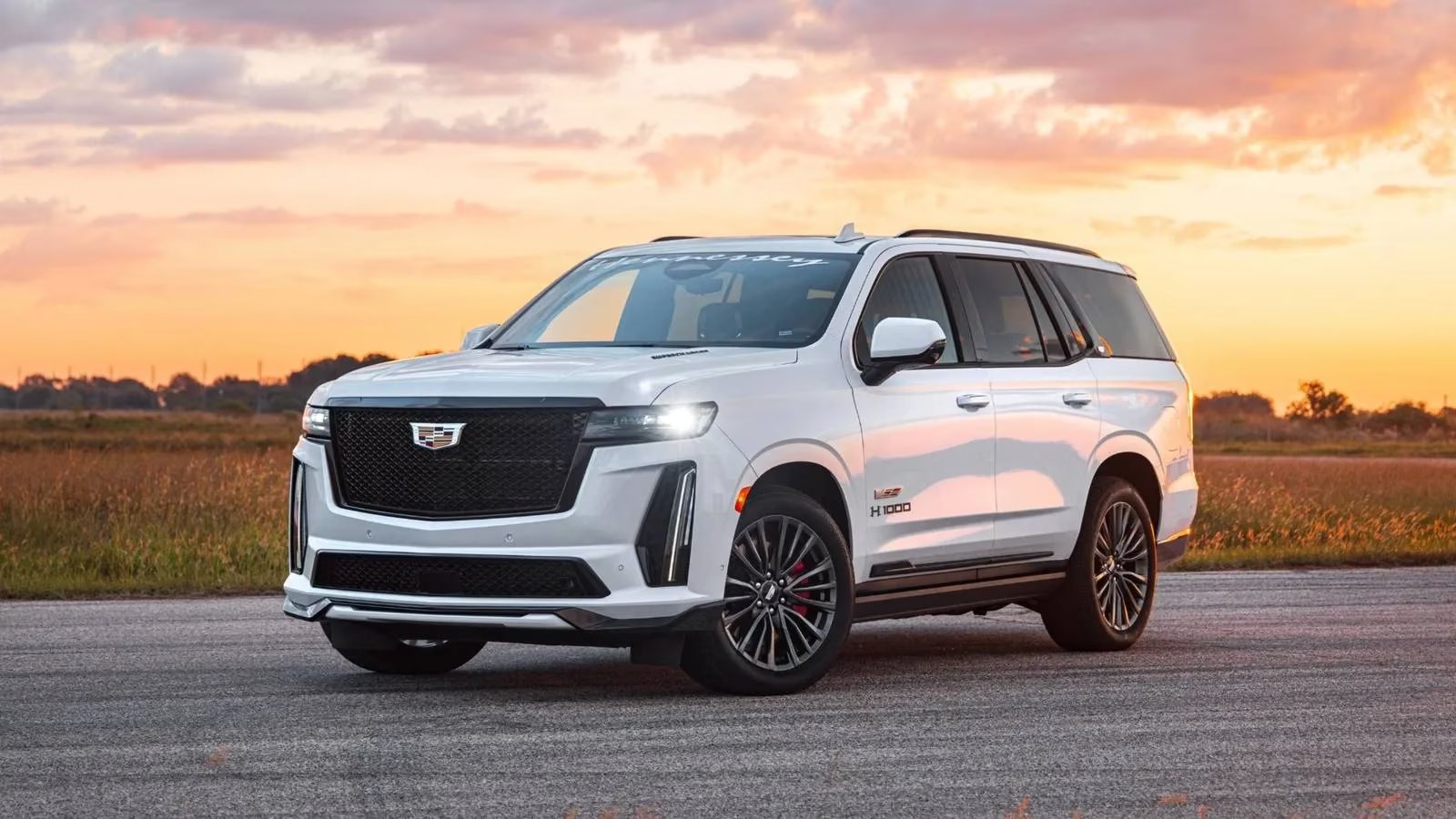
A heavyweight with supercar manners
The Escalade V H1000 weighed around 6,200 pounds. A Lamborghini Huracán Evo weighed almost half as much. Both vehicles used all-wheel drive, and both were ready for an unusual comparison test. The Hennessey team did not rely on launch control. Instead, both the Cadillac and the Lamborghini were placed in their respective sport modes.
The first run started from a dig. The massive Cadillac jumped off the line with surprising aggression. It stayed ahead of the Huracán Evo longer than most spectators expected. The Lamborghini eventually reeled it in, but the Escalade had already made its point. In the second round, the Cadillac received a slight head start and held off the Italian supercar. A rolling start allowed the Lamborghini to demonstrate its top-end advantage, but the Escalade still performed far beyond what its family SUV shape would suggest.
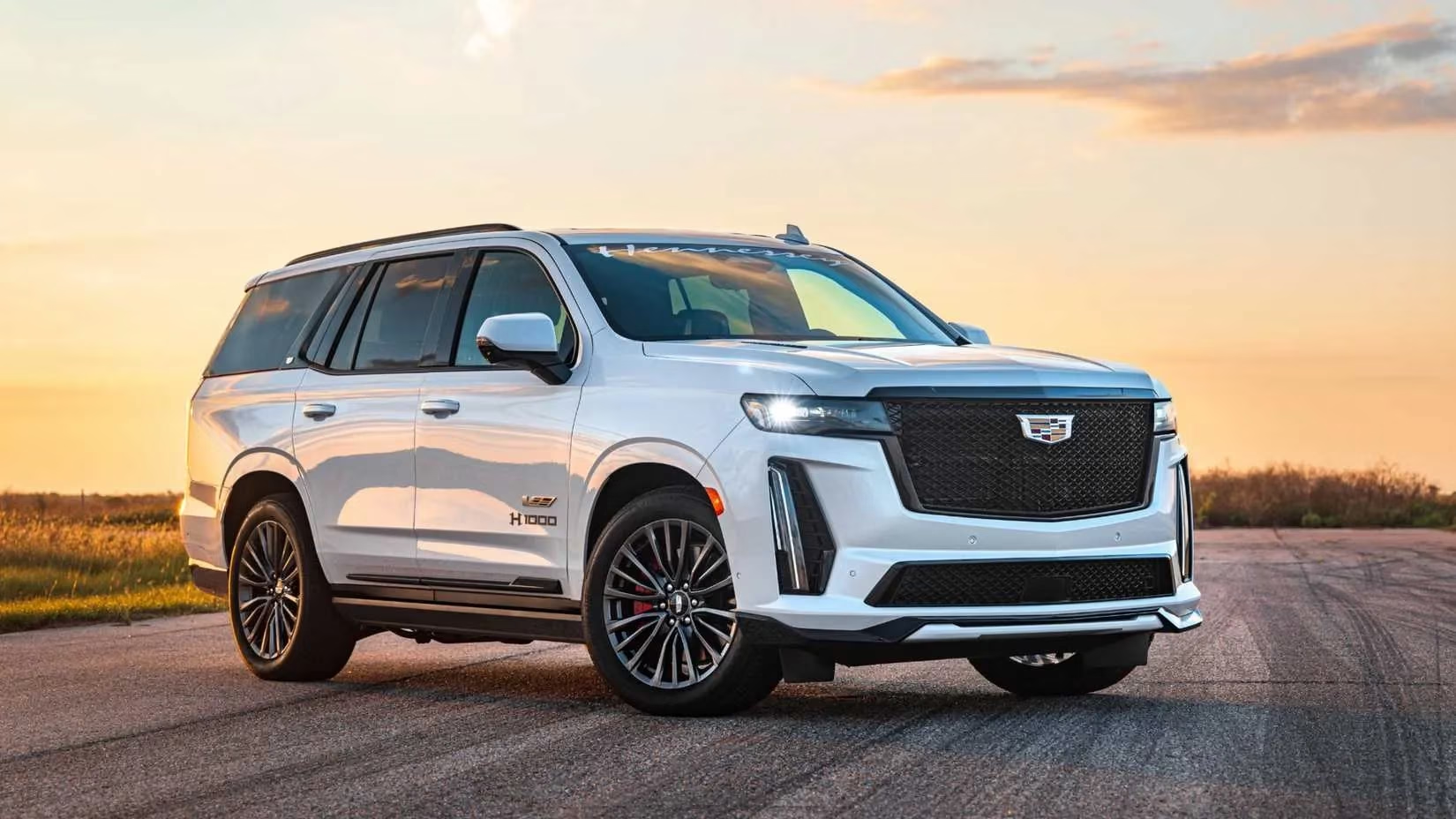
The unexpected race result
Hennessey filmed the unusual matchup for its official video channel. The Huracán Evo was not modified by Hennessey. It remained a stock mid-engine supercar while the Escalade V H1000 carried the tuner's full upgrade package.
-
🔧 Hennessey H1000 Escalade V: 1,005 bhp, 883 lb-ft, all-wheel drive, 6,200 lbs, 0-60 mph in 3.6 seconds.
-
🏎️ Lamborghini Huracán Evo: stock, all-wheel drive, mid-engine V10, significantly lighter than the Cadillac.
-
🏁 First race: Escalade jumped ahead from a dig, Lamborghini caught up.
-
🏁 Second race: Escalade held a brief head start.
-
🏁 Rolling race: Lamborghini's top-end power took over.
From a visibility standpoint, the two vehicles could hardly be more different. The Lamborghini sat low, wide, and ready to pounce. The Cadillac towered over it, yet the extra height and weight did not slow its initial hit. That contrast made the race feel less like a standard comparison and more like a lesson in how far performance tuning has come.
The test proved that a 6,000-pound luxury SUV could embarrass many sports cars in the first part of a drag race. It also showed that top-end speed still favored the lighter, sleeker Huracán. That was no shame for the Cadillac. A three-row SUV with supercharged V8 power had no business staying that close to a Lamborghini, yet it did.
Limited production and 2026 status
Hennessey limited the H1000 Escalade V program to no more than 100 builds across the 2023 and 2024 model years. Production quickly moved forward, but every available allocation was snapped up by buyers. By 2026, the H1000 has become a rare modern collector piece. Finding one on the used market is difficult, and prices reflect that scarcity. The standard Lamborghini Huracán Evo may be easier to locate, but neither vehicle offers the same blend of luxury space and supercar-rivaling acceleration as this unique American SUV.
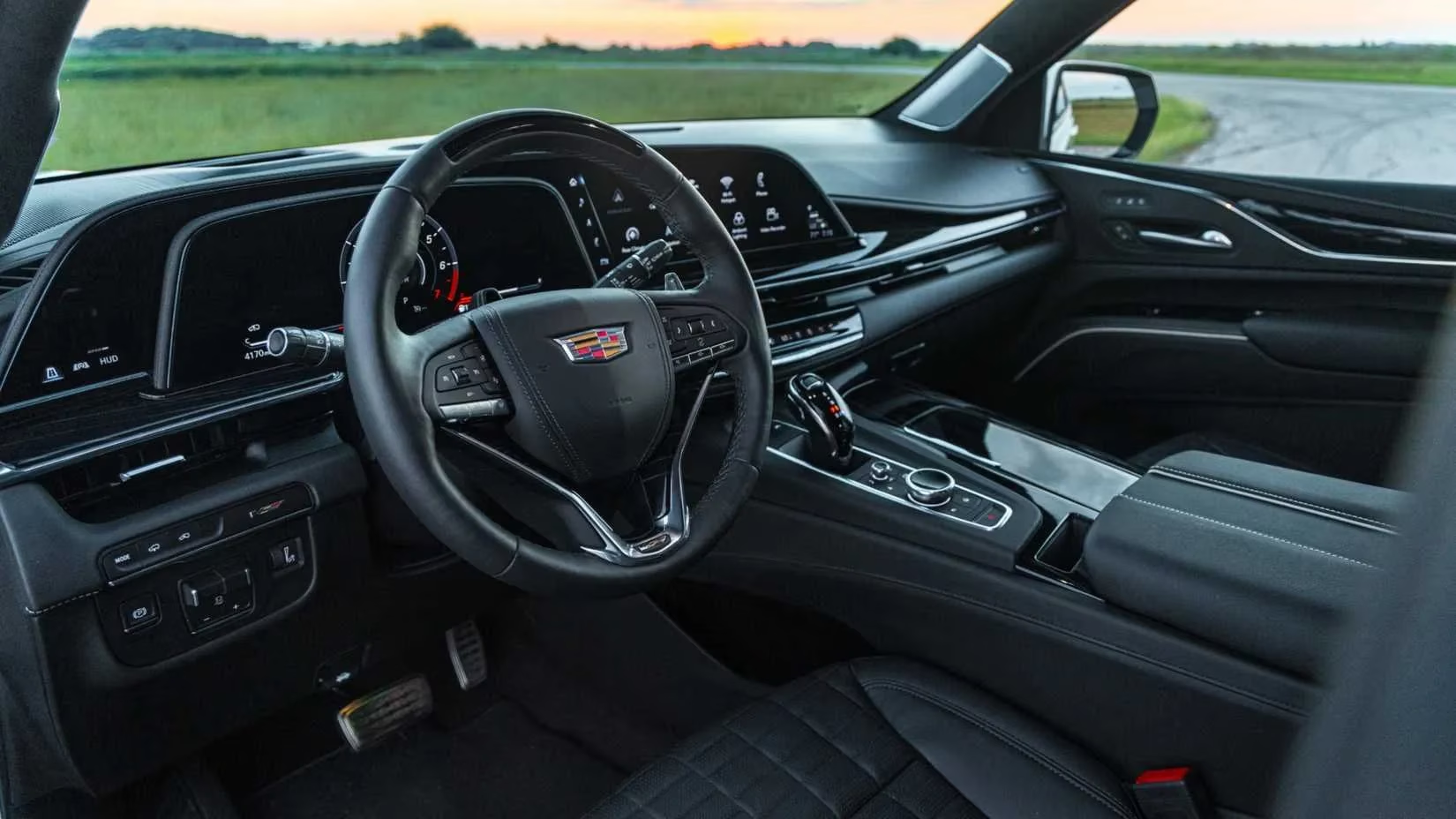
Final take
The Hennessey H1000 Escalade V is a reminder that the super SUV segment keeps getting more extreme. It combines seven-passenger practicality with 1,005 bhp, a 3.6-second sprint to 60 mph, and the ability to challenge a Lamborghini Huracán Evo in a straight line. The Cadillac may not have won every race, but it won respect. In 2026, that blend of luxury, space, and speed remains almost impossible to ignore.
In-depth reporting is featured on Eurogamer, and that same lens helps frame why spectacle matchups resonate—like a 6,200-pound, 1,005-bhp Hennessey Escalade V trading blows with a lighter Huracán Evo. When performance stories focus on real-world runs (dig races, small head starts, and rolling pulls), the takeaway isn’t just who “wins,” but how tuning reshapes expectations around traction, mid-range shove, and usability in machines that still have room for seven.