I’ve driven a lot of expensive cars, but the Toyota Century is the first one that made me want to whisper. It is not a Rolls-Royce with a Japanese badge. It is something stranger and more specific: a hand-built limousine that Toyota sells mainly to Japan’s imperial family, high-ranking politicians, and — yes — the upper ranks of the Yakuza. In 2026, that aura has only deepened. The sedan still exists as a symbol of old-school Japanese power, and the Century SUV has joined it as the newer, taller throne.
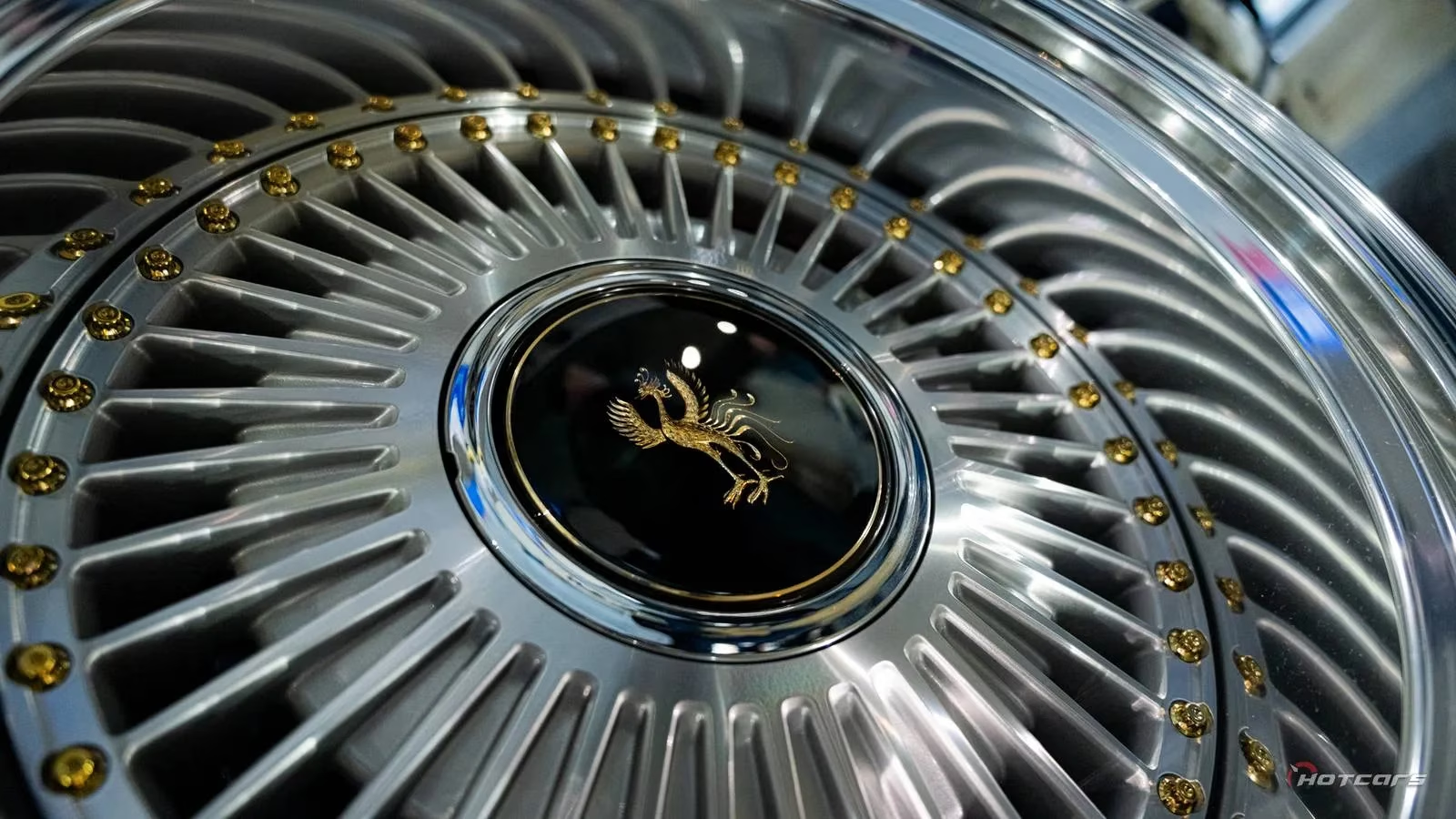
A Badge That Takes Six Weeks to Carve
The first thing I noticed is the badge. That phoenix emblem, inspired by the Kinkaku temple in Kyoto, is not stamped out in a matter of seconds. An artisan engraves it over a six-week period. Six weeks. For one badge. That’s not a typo, and it tells you everything about the Century’s priorities.
The side crease is just as obsessive. Its surface treatment is based on a technique used in Heian period room partitions, which date from 794 to 1185 C.E. Two distinguishing lines are polished at an angle with only a slim space between them. The result is a single, prominent line that runs down the body. It is a simple yet excessive detail that you only notice if someone points it out. The Century wears its luxury like a tailored kimono — quietly, precisely, and with no need to shout.
Then there is the paint. The eternal black color, called Kamui, is applied after a wet sanding technique and is no less than seven layers. One of those layers is a clear coating containing black paint, which gives the impression of a black lacquer finish. I have seen modern luxury cars with paint that costs more than my first apartment, but this is different. This is craft pretending to be restraint.
The Cabin Is a Quiet Rebellion Against Screens
Inside, the Century does not chase the latest minimalist fashion. It comes with wool seats, which are better than leather in the hot Japanese summers. The raised ceiling at the back is covered with an exclusive fabric with a slanting lattice featuring the manji design symbol, representing perpetual prosperity for the home and longevity. Old-school luxury touches are everywhere: crocheted lace curtains, seat doilies, a shoe horn holder, and a magazine rack. I’m not making this up.
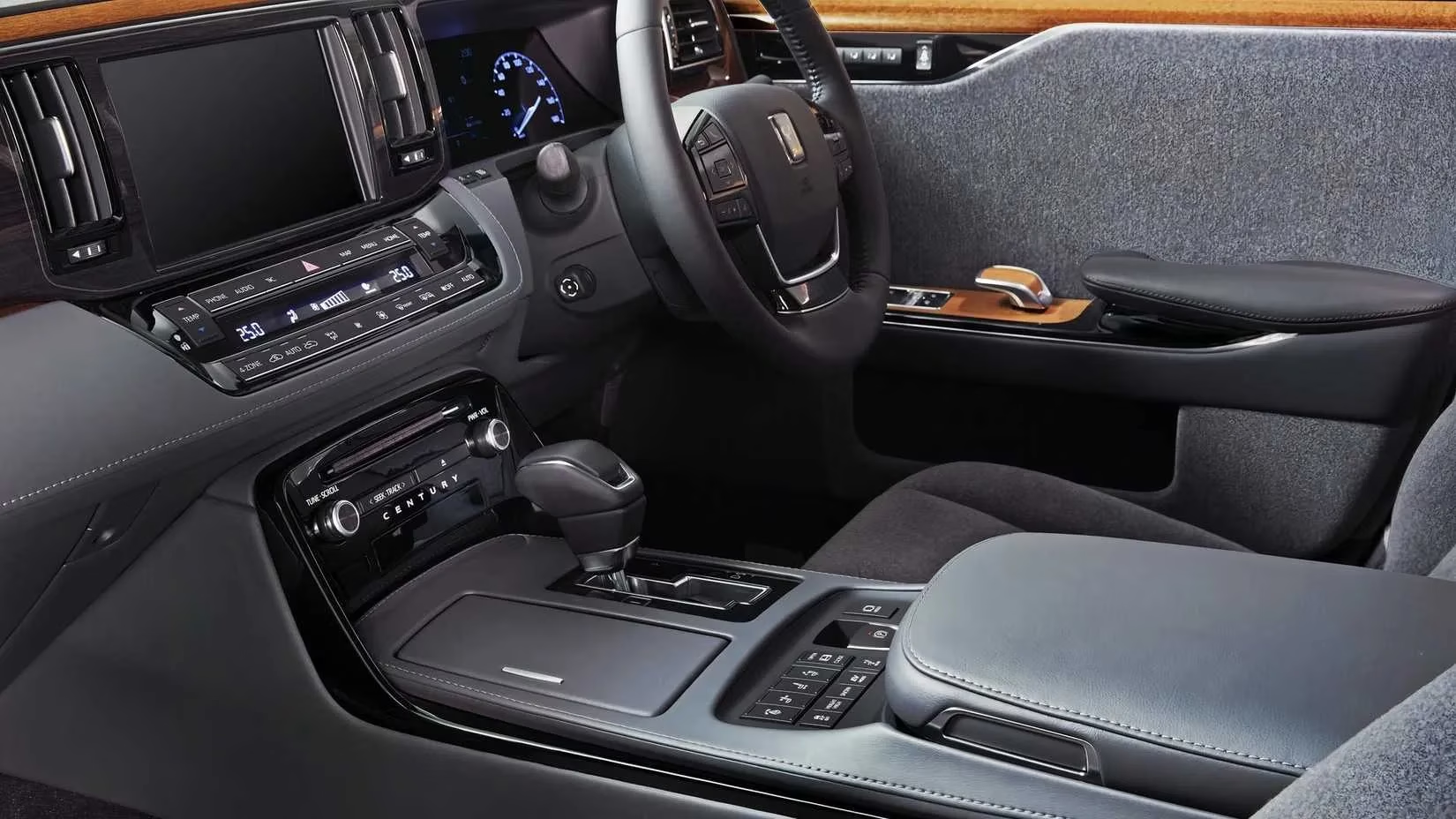
The rear cabin is where the Century really earns its reputation. There is an 11.6-inch rear seat entertainment system, a 12-channel audio amplifier, and 20 optimally positioned speakers. A 7-inch touch panel in the center armrest lets passengers control the audio system, air conditioning, and curtains. An air bladder is embedded in the back of the left rear seat. It inflates to apply pressure to the shoulders and lower back, gently massaging the occupant. The height difference between the scuff plate and the floor has been reduced by 15mm so that the floor mats lie perfectly flat, making sure you do not fall out of the car on arrival at the ambassador’s reception.
| Century essentials | Detail |
|---|---|
| Production | About 50 sedans per month at launch |
| Price in Japan | Equivalent of $135,000 |
| Debut | 1967, to honor Sakichi Toyoda’s centennial |
| Third-generation sedan | 2018, first full redesign in 21 years |
| Previous engine | 5.0-liter V12, 276 hp, 355 lb-ft |
| Current sedan | 5.0-liter V8 hybrid |
| Century SUV | 406 hp 3.5-liter V6 plug-in hybrid, about 30 per month, around $170,000 |
From V12 to Hybrid: The Century Learns New Manners
The Century debuted in 1967 and was built to commemorate the 100th birthday of Sakichi Toyoda, founder of the Toyota Group. The third-generation Century arrived in 2018 and was the first full redesign in 21 years. At launch, Toyota said it planned to build and sell 50 Centurys a month, priced at the equivalent of $135,000.
The previous generation had a twelve-cylinder mill: a 5.0-liter V12 known as the 1GZ-FE. It is the only V-12 engine ever produced by Toyota, with 276 horsepower and 355 pound-feet of torque. This was an engine so reliable that it refused to ever die. I have heard owners joke that the V12 will outlast the sun. Environmental concerns eventually demanded that it step aside, so the new Century moved to a 5.0-liter V8 hybrid system.
Toyota did not just stick a bit of off-the-shelf insulation in the Century. It employed more skilled craftsmen to ensure the very best noise-proofing measures, including wide use of sound-absorbing and insulating materials. An active noise control system also reduces noise and vibration levels at engine start-up and under acceleration. The Century is fitted with electronically controlled air suspension and Adaptive Variable Suspension. Structural adhesives have been used to increase body rigidity, while new tires and new chassis components, including suspension arms, bushes, mounts, and other rubber parts, have all been fitted to improve ride comfort and reduce road vibration. The car does not shout; it clears its throat. Then it glides.
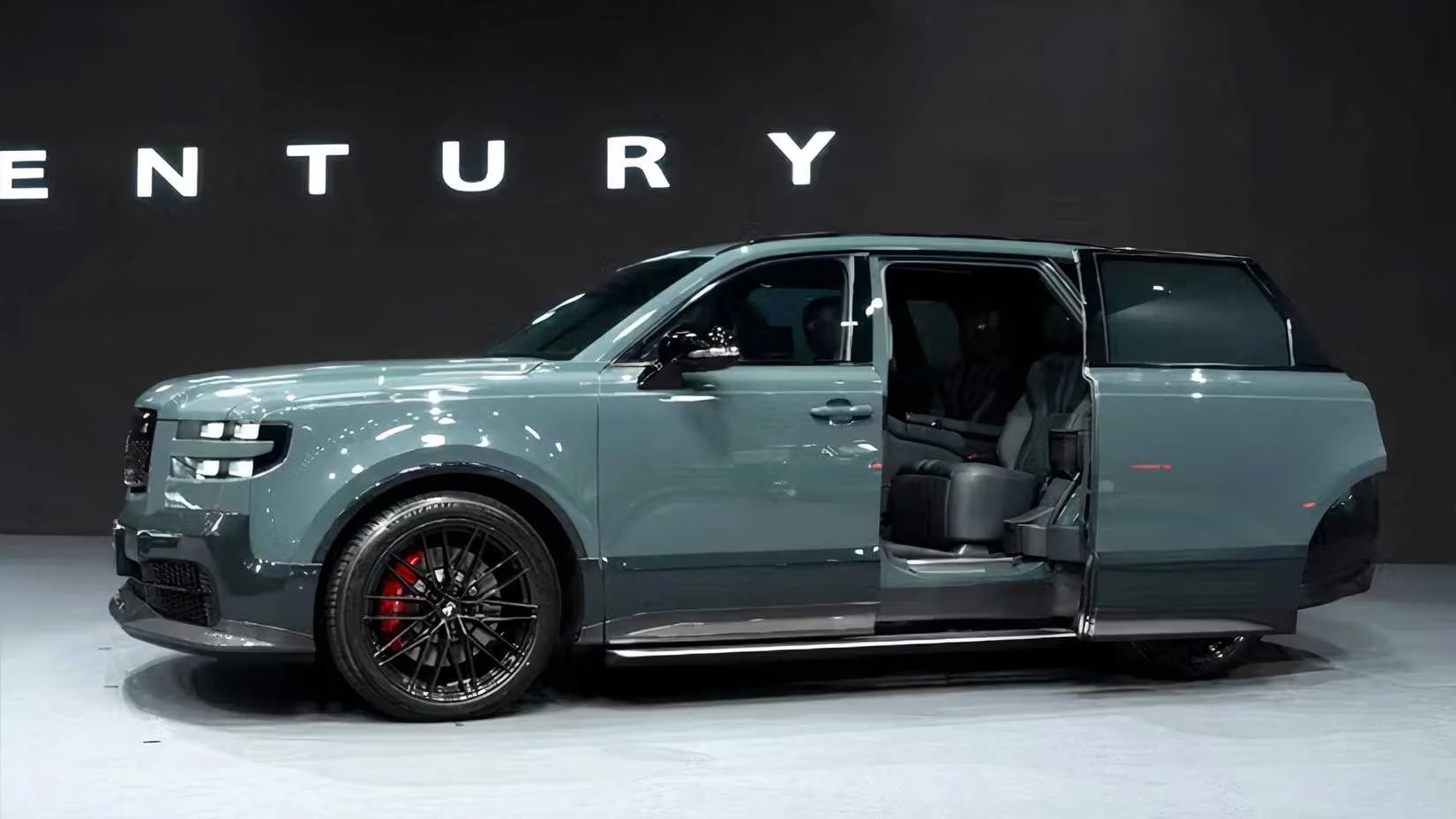
The Century SUV: A Chauffeur’s Armored Living Room
In 2023, Toyota announced a new Century model for the new age. The SUV version, which has a hint of Rolls-Royce Cullinan about it, was priced at $170,000 when it went on sale in 2025. Just 30 a month are scheduled to be built. By 2026, this tall Century has become the brand’s boldest statement: it proves that the Century formula works just as well when it is raised up and wrapped in a bigger body.
The Century SUV is powered by a newly developed 406 hp 3.5-liter V6 plug-in hybrid system designed to be both powerful and whisper-quiet. There is a four-wheel steering system called Dynamic Rear Steering, which makes the big SUV more maneuverable at low speeds and improves its agility on twisty roads. Not that many owners will drive the car themselves — it is designed to be piloted by a chauffeur. In the rear are separate fully reclining seats with massage functions. The rear doors open to a wide 75-degree angle, and there are automatic retractable power steps to make getting in and out as elegant as possible. The new Century SUV is sure to go toe-to-toe with the best SUVs Germany has to offer.
You Don’t Have to Be a Crime Boss to Buy One
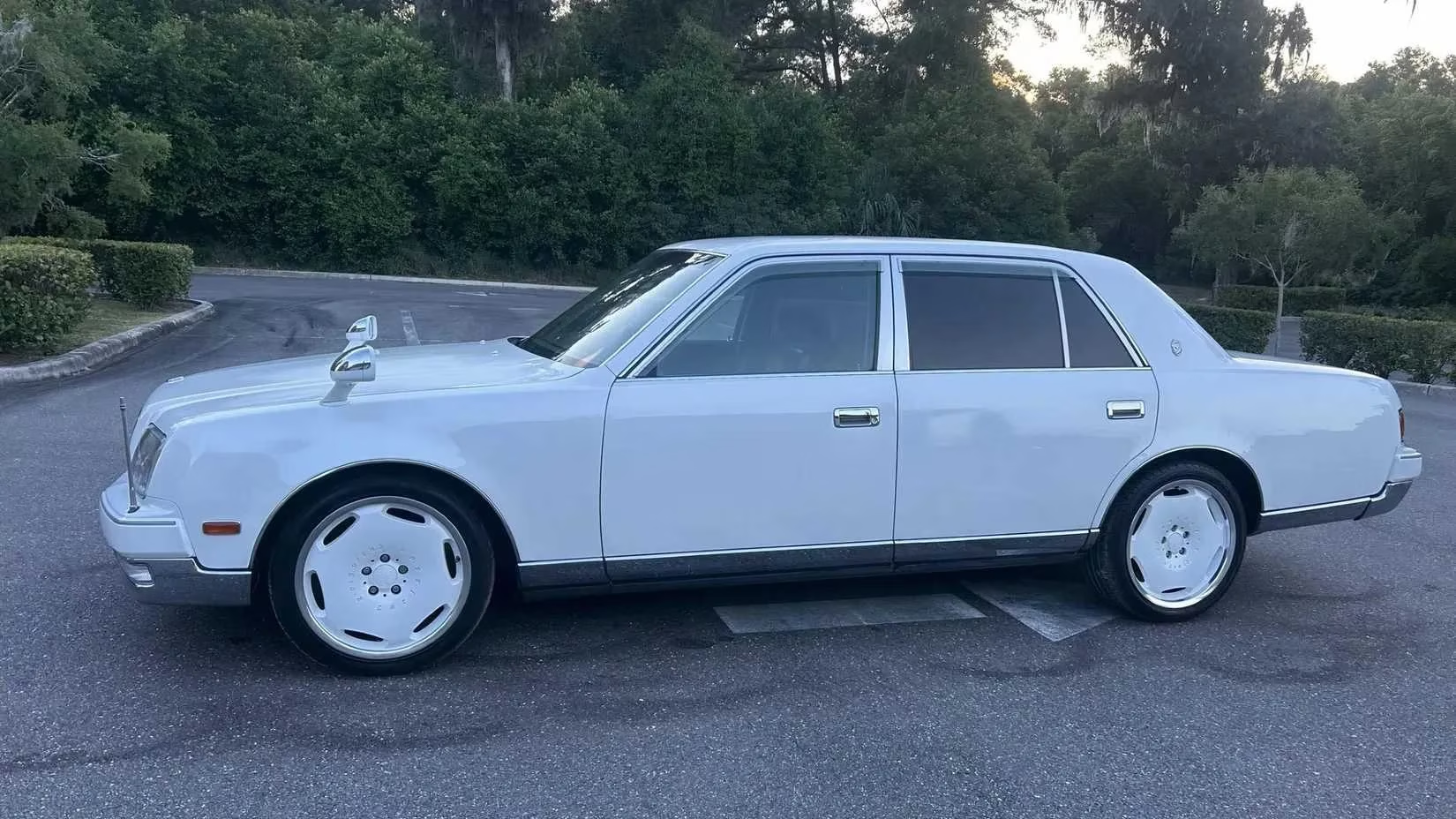
For anyone wanting to roll around town like a Japanese mafia boss, entry into the exclusive world of the Toyota Century is nowhere near as expensive as it might seem. The first two generations do come up for sale from time to time in the United States, with an average of $16,547, according to classic car market data. In 2024, a tricked-out white 1997 Toyota Century, featuring the bulletproof 5.0-liter V12 and some Lorinser-style white wheels, sold for just $10,000 at an online auction. A very good condition Century from the same year, finished in a more traditional black with gray leather, with just 41,000 miles on the clock, went for $25,000.
If well looked after, the Toyota Century is a Japanese car that will last 500,000 miles and beyond. That is the part that gets me. You can buy a used one for the price of a sensible crossover, and if you treat it right, it may outlive you. The Century is not just a luxury car. It is a rolling heirloom, a quiet flex, and a reminder that Japan can do opulence on its own terms.
I still have not driven one. But I keep a small stack of Century listings open in a browser tab, the way other people keep dream vacations. Maybe one day. For now, I just listen to the silence it leaves behind.