In 2026, Daniel, a veteran automotive writer, no longer laughs when someone mentions a Korean luxury sedan. He remembers when Hyundai and Kia were punchlines in the enthusiast world, cheap and cheerful machines that got the job done but rarely stirred the soul. By 2026, the joke has reversed itself. Korean brands now build vehicles that combine executive-car comfort with genuine performance, and the sedan has been their sharpest weapon. From full-size flagships to compact sport models, these ten Korean sedans tell the story of how an industry learned to mix leather, torque, and ambition.
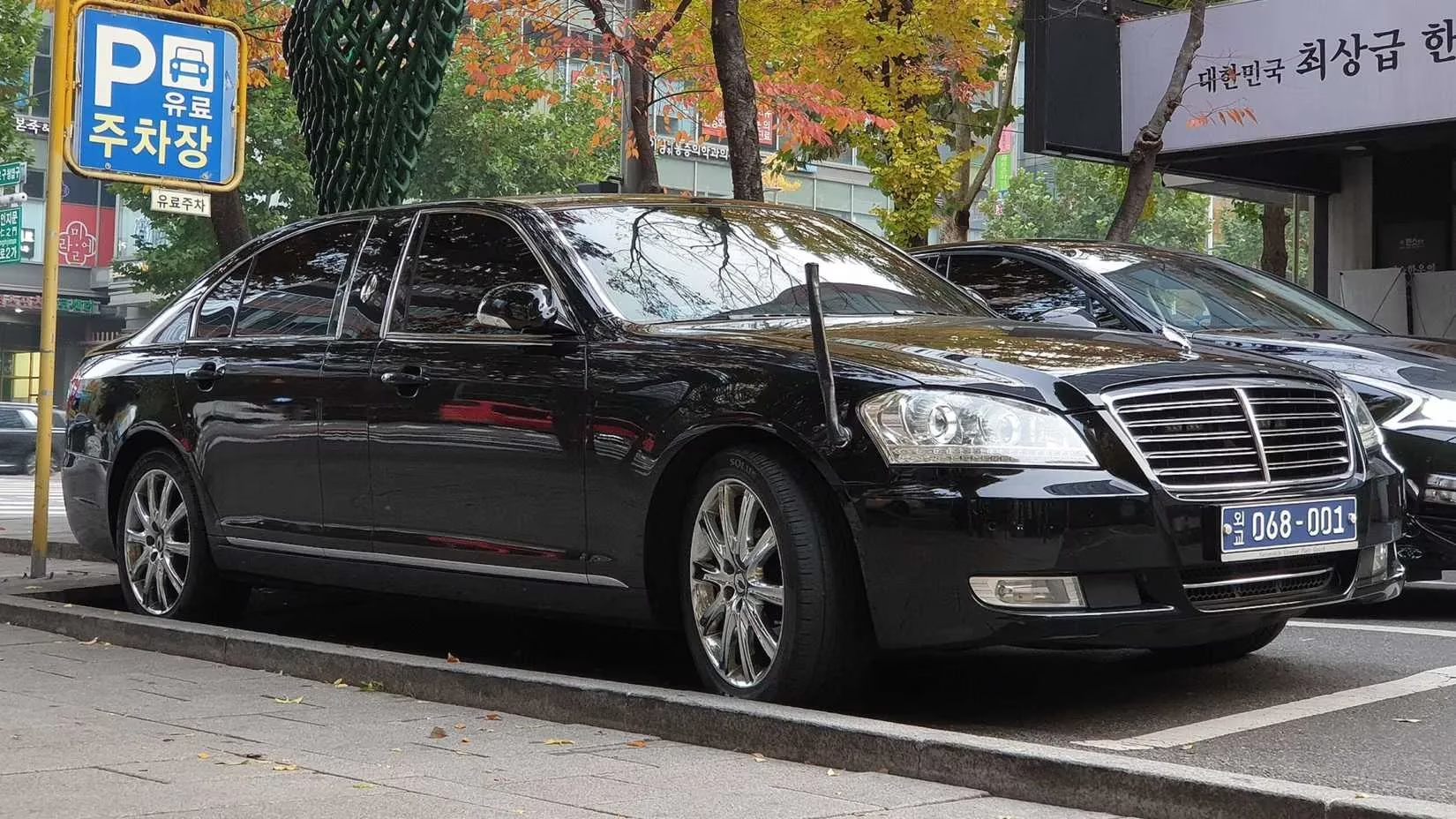
Daniel's first stop is the SsangYong Chairman W, a car that proves even the most unlikely brands can aim high. SsangYong was better known for rugged SUVs, but the Chairman was a full-size luxury experiment. The first H version borrowed Mercedes-Benz E-Class bones, engines, and gearboxes. The follow-up W, launched in 2008, was the first model the company built from the ground up. Its styling still nodded to the Mercedes S-Class, and Mercedes supplied inline-six and V8 engines. The 5.0-liter V8 made 305 hp and 325 lb-ft of torque. It was not a track star, but it was a statement: Korea could build a big, plush sedan.
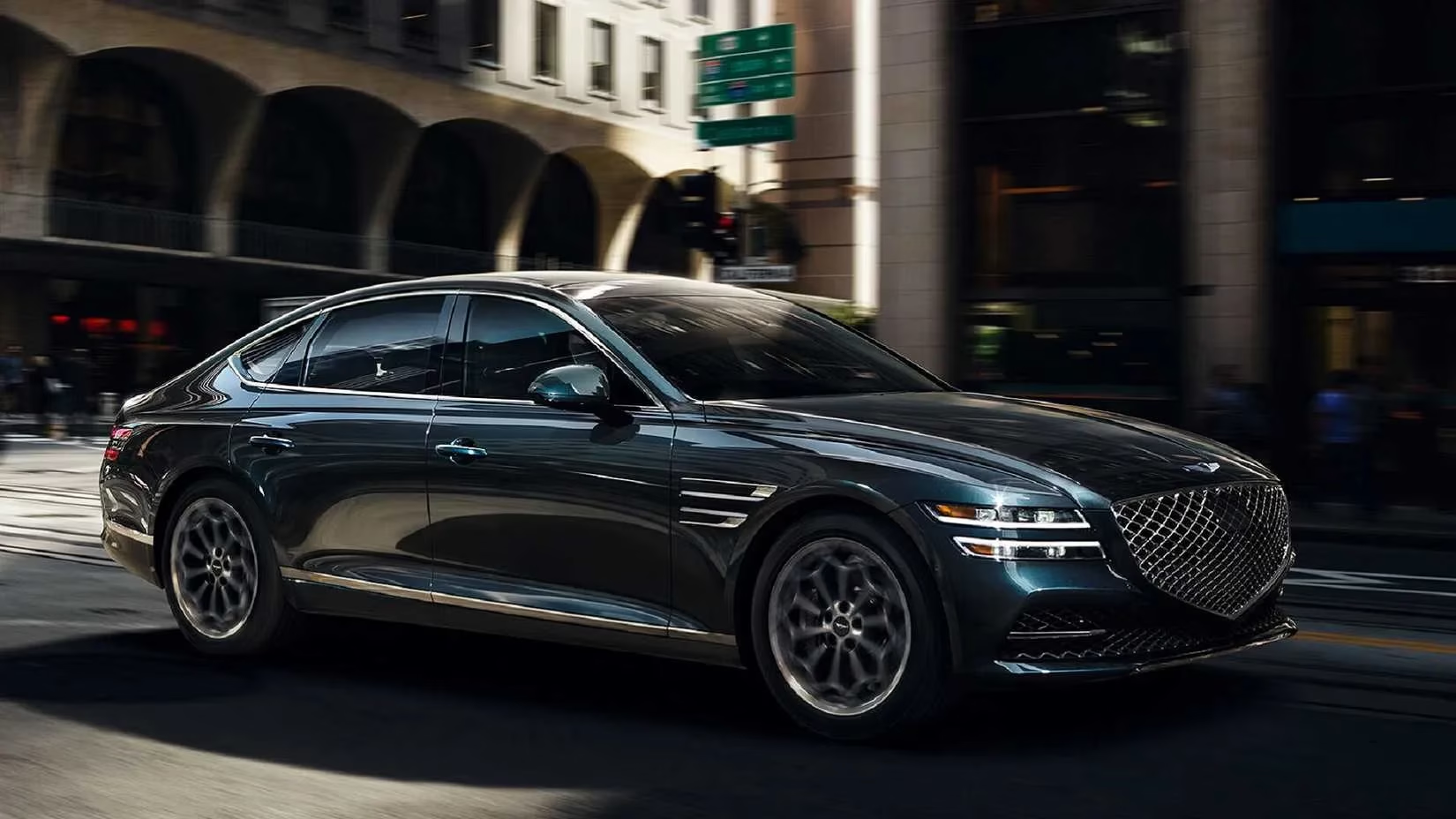
The Genesis G80 T-Sport shows how far that statement has traveled. The middle child of Genesis luxury sedans, the G80 T-Sport pairs a twin-turbo 3.5-liter V6 with all-wheel drive. Its 375 hp pushes the car to 60 mph in 6.3 seconds, which is quick for a sedan that also pampers. Inside, quilted leather seats offer massage, wood trim covers the dash and doors, and soft-closing doors seal out the world. Buyers can choose carbon or hybrid metal weave trim. Daniel notes that the G80 T-Sport does not choose between luxury and speed; it orders both from the menu.
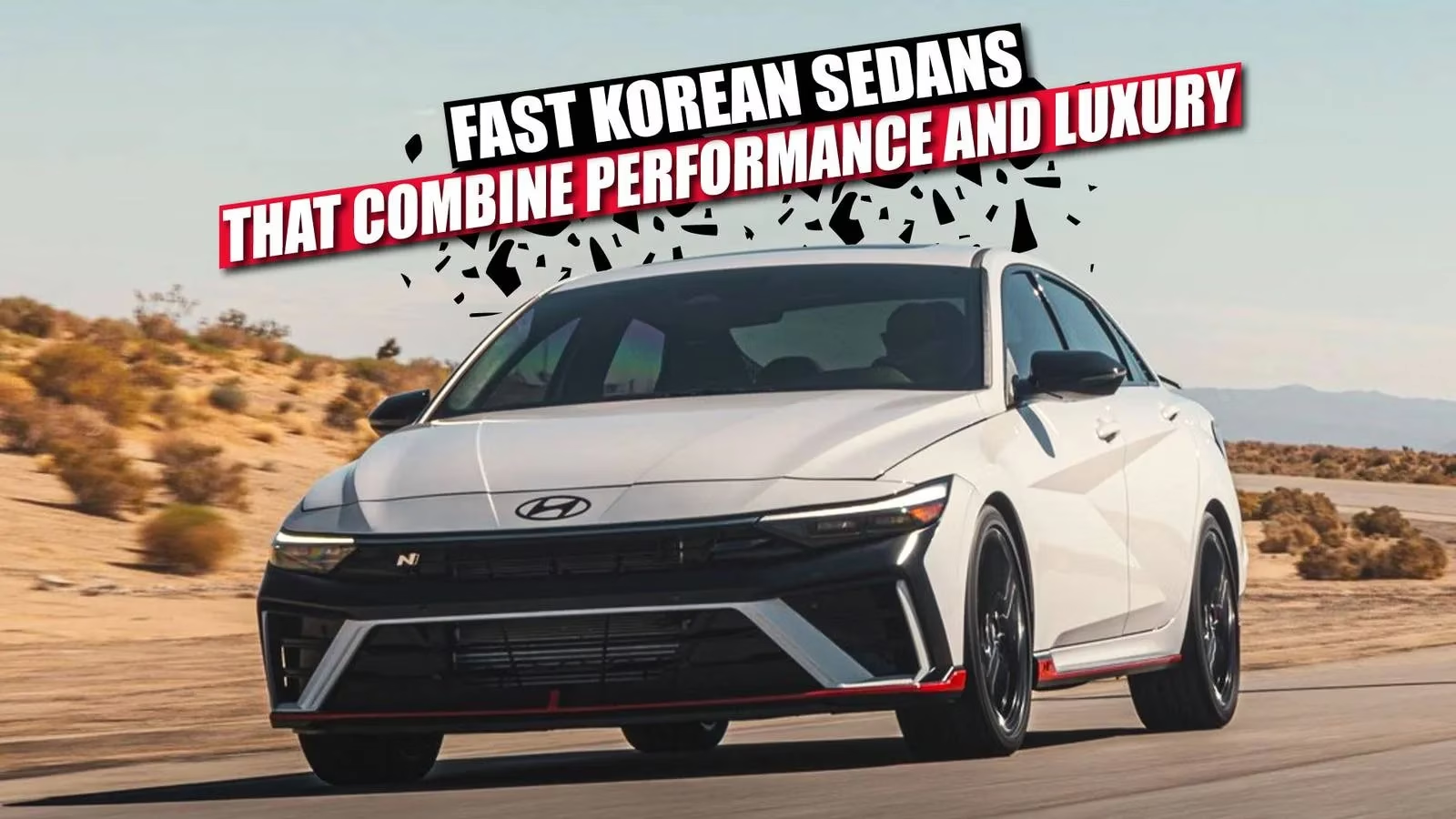
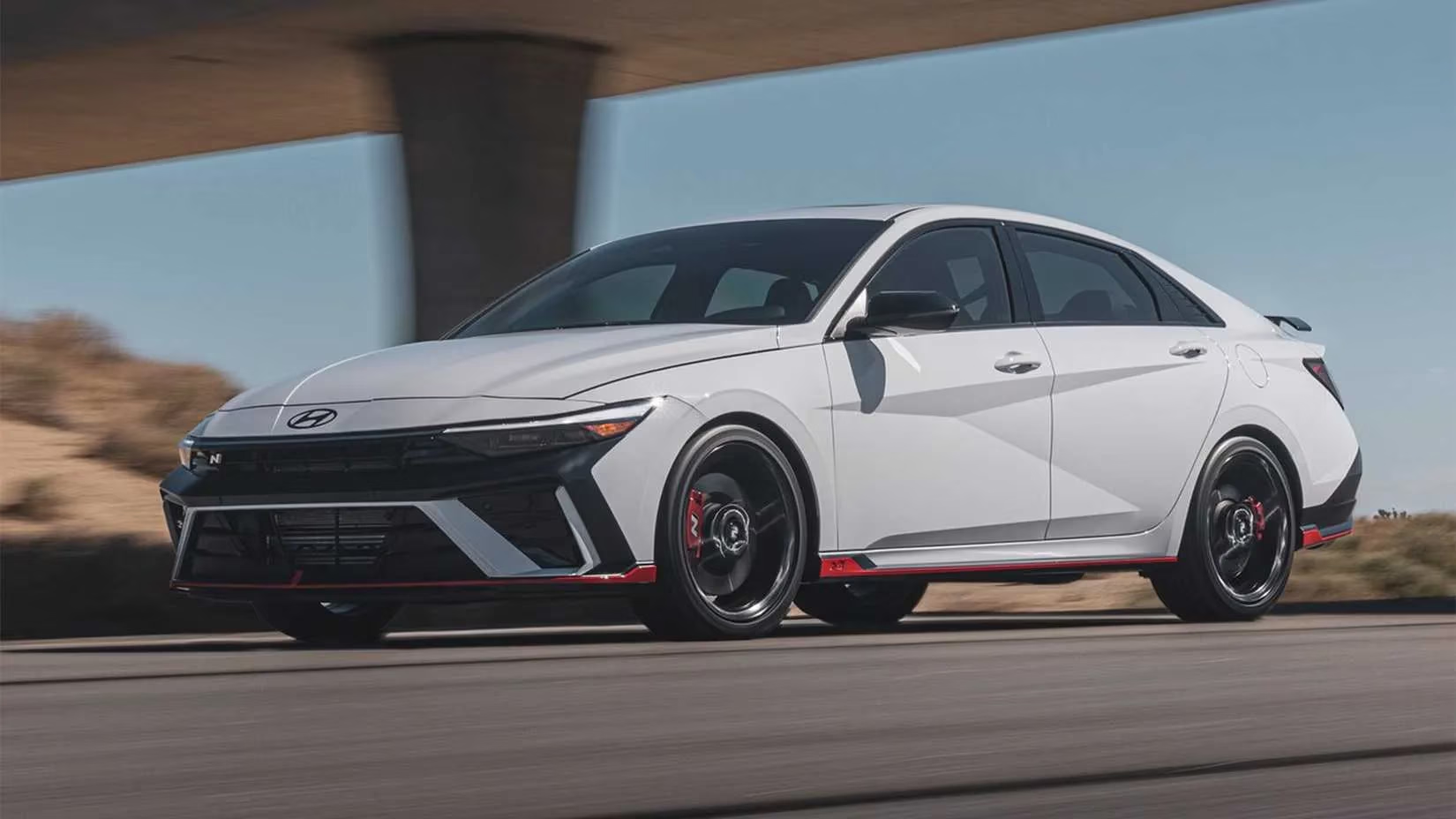
For Daniel, the Hyundai Elantra N is the affordable firecracker. It uses a 2.0-liter turbocharged inline-four that sends 276 hp and 289 lb-ft to the front wheels. The 0-60 mph sprint takes six seconds flat, so it can embarrass hot hatches. Starting at $33,700, it also offers more rear space than the related i30 N hatchback. When Daniel does not want to set his hair on fire, the Elantra N becomes a comfortable cruiser with heated leather seats and a solid infotainment system.
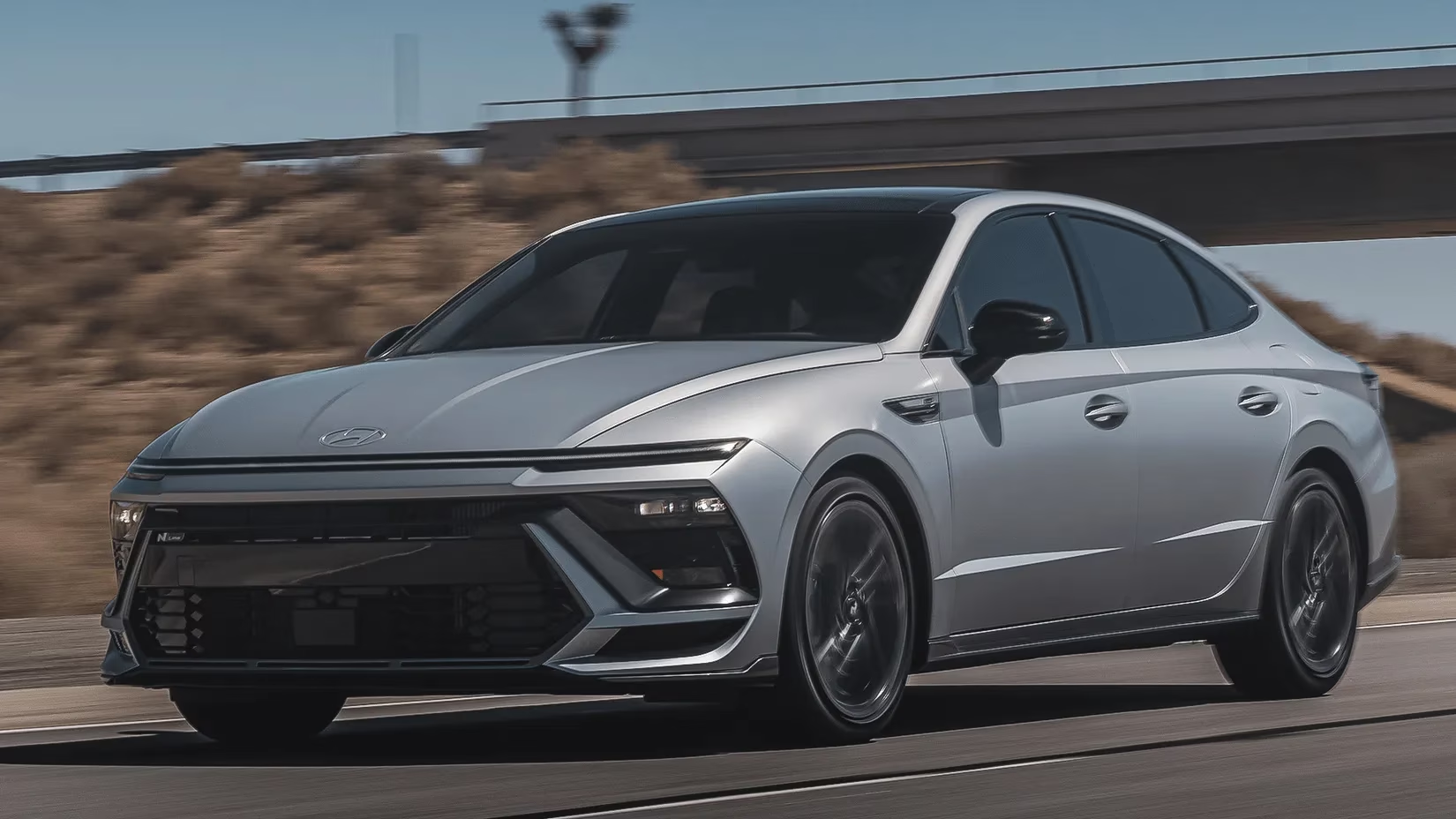
The Hyundai Sonata N Line shares a platform with the Kia K5, but it leans more luxurious. The $34,950 N Line unlocks a turbocharged 2.5-liter four-cylinder with 290 hp. That is enough for 0-60 mph in 5.6 seconds. The Sonata looks elegant, and its cabin is refined enough for long highway stretches. Daniel calls it the quiet overachiever of the mid-size class.
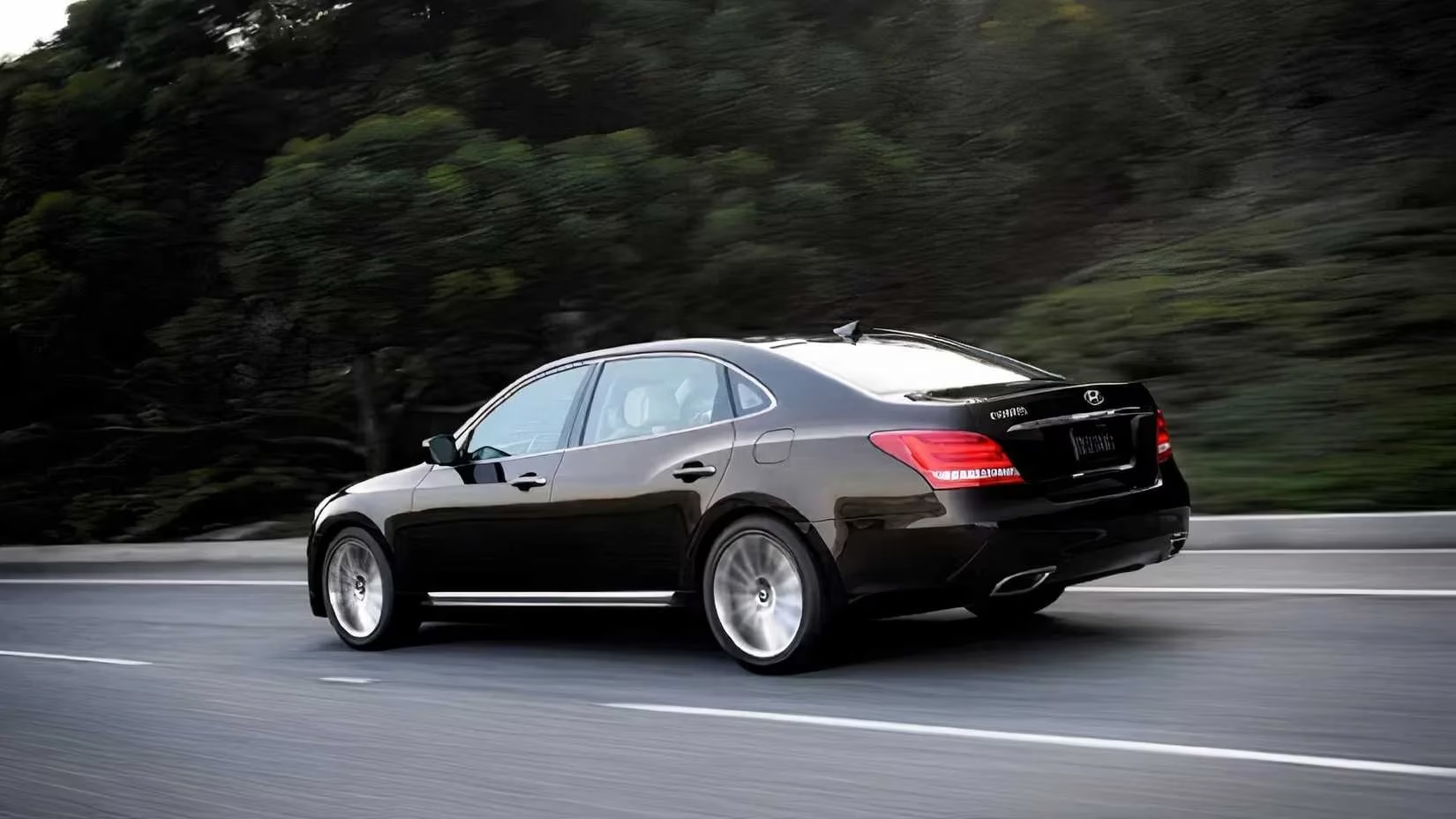
Then there is the Hyundai Equus, the full-size luxury sedan Hyundai sold from 1999 to 2016. It was built to fight the Mercedes S-Class and Audi A8. The first generation used front-wheel drive and a range of V6 and V8 engines. The second generation, released in 2009, switched to rear-wheel drive. Its range-topping 5.0-liter V8 produced 429 hp. Loaded with executive toys, the Equus was the first purebred Korean vehicle in its class. For 2017, it moved under the Genesis brand and became the G90.
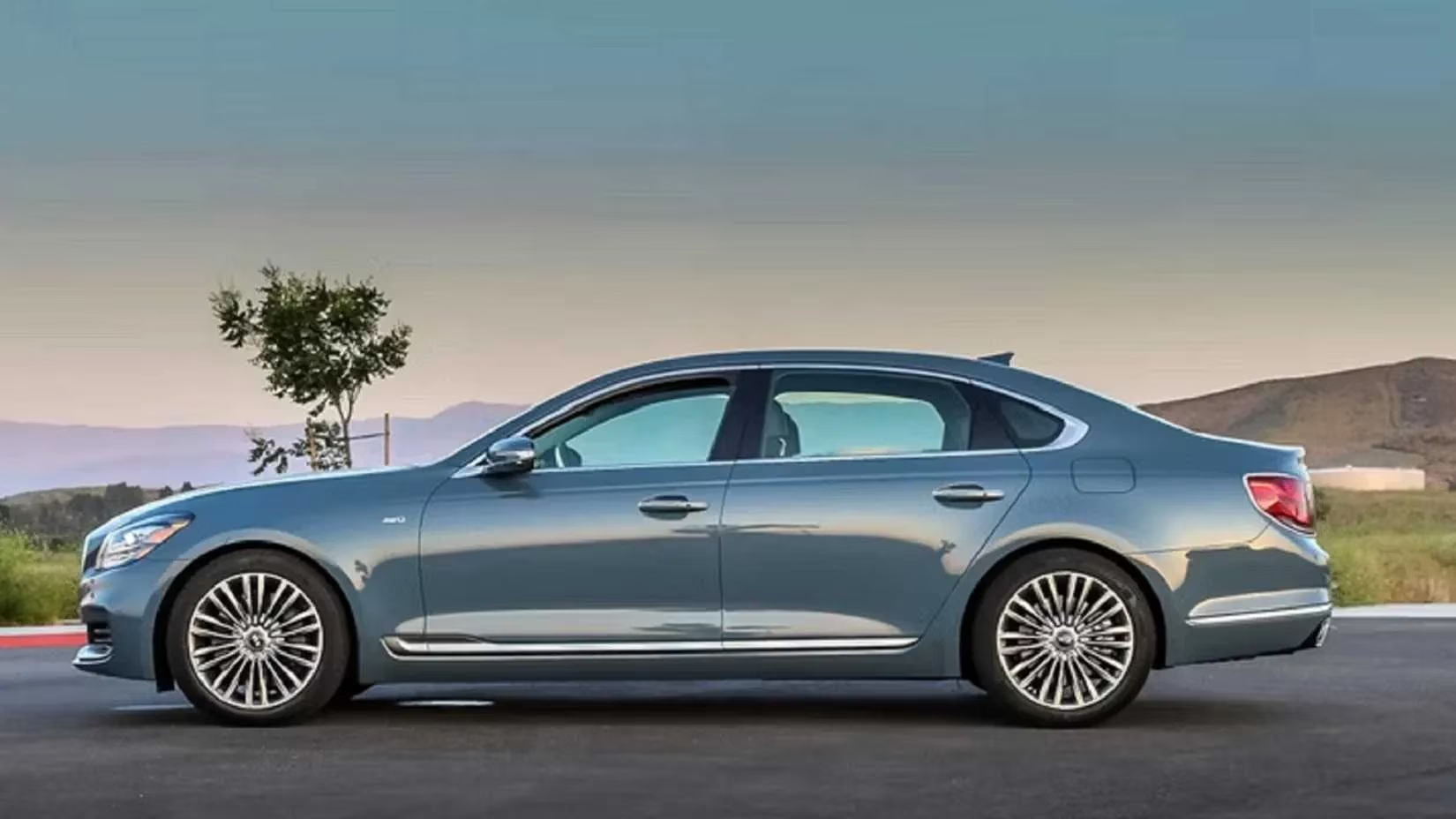
The Kia K900 carried Kia's luxury flag in the US from 2012 to 2021. It left the American market as Kia focused on SUVs, but it is still produced for Korea. The K900 offered onboard internet, satellite radio, and plush leather. More importantly, a twin-turbo 3.3-liter V6 sent 365 hp to the rear wheels. That helped the heavy sedan reach 60 mph in just 5.2 seconds. Daniel appreciates how the K900 hid its speed behind a calm, tailored suit.
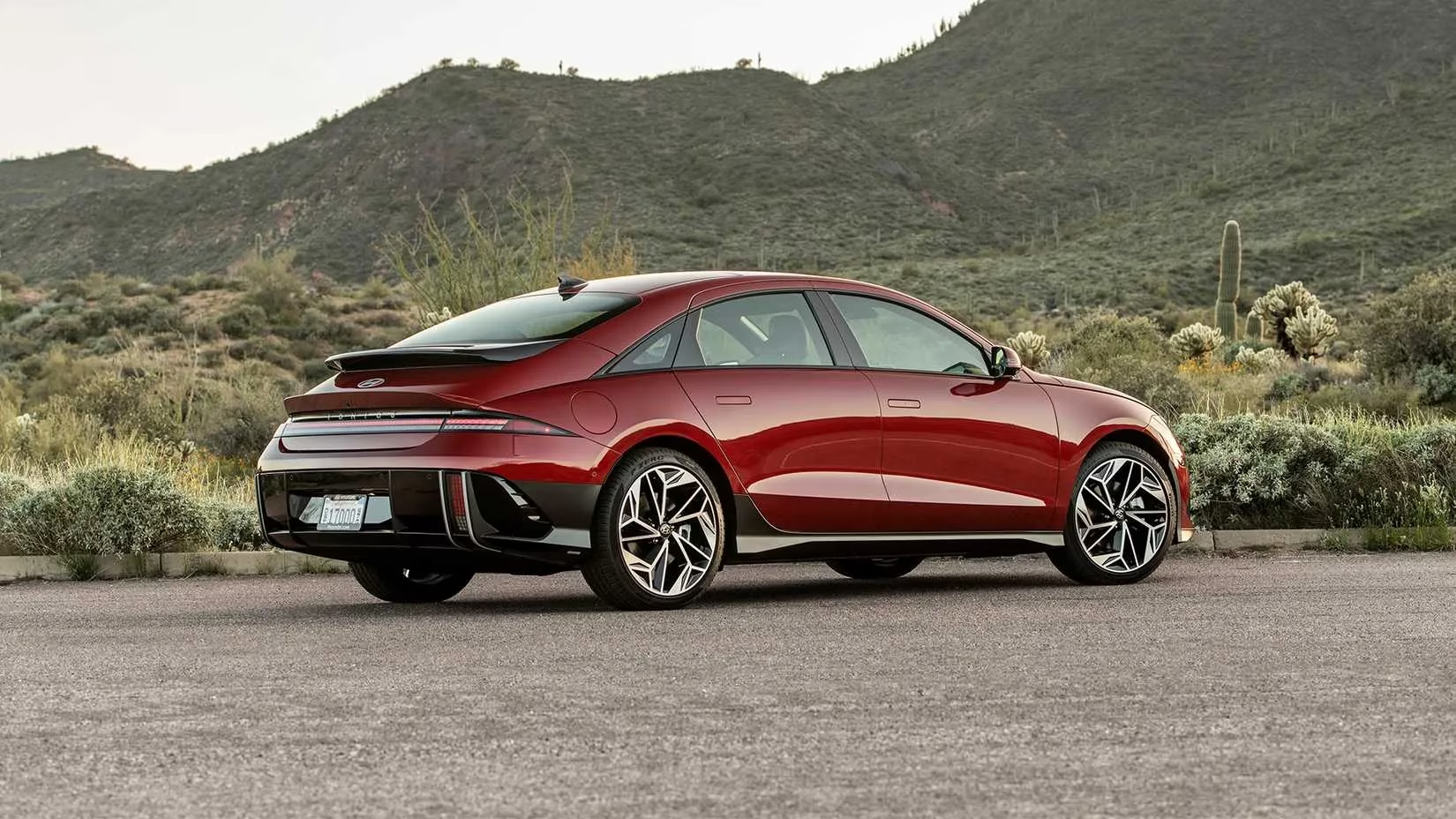
By 2026, electric performance is impossible to ignore. The Hyundai Ioniq 6 is Hyundai's electric performance sedan answer. The higher-end SEL model uses a 77 kWh dual-motor powertrain with 225 hp and 446 lb-ft of torque. It hits 60 mph in a blistering 5.1 seconds. The quiet EV drivetrain makes the cabin feel like a sanctuary, while ambient lighting and heated leather seats wash away a stressful day. The standard single-motor car started at $37,500, and the dual-motor version at $45,250. In 2026, the Ioniq 6 remains a reminder that silence can be fast.
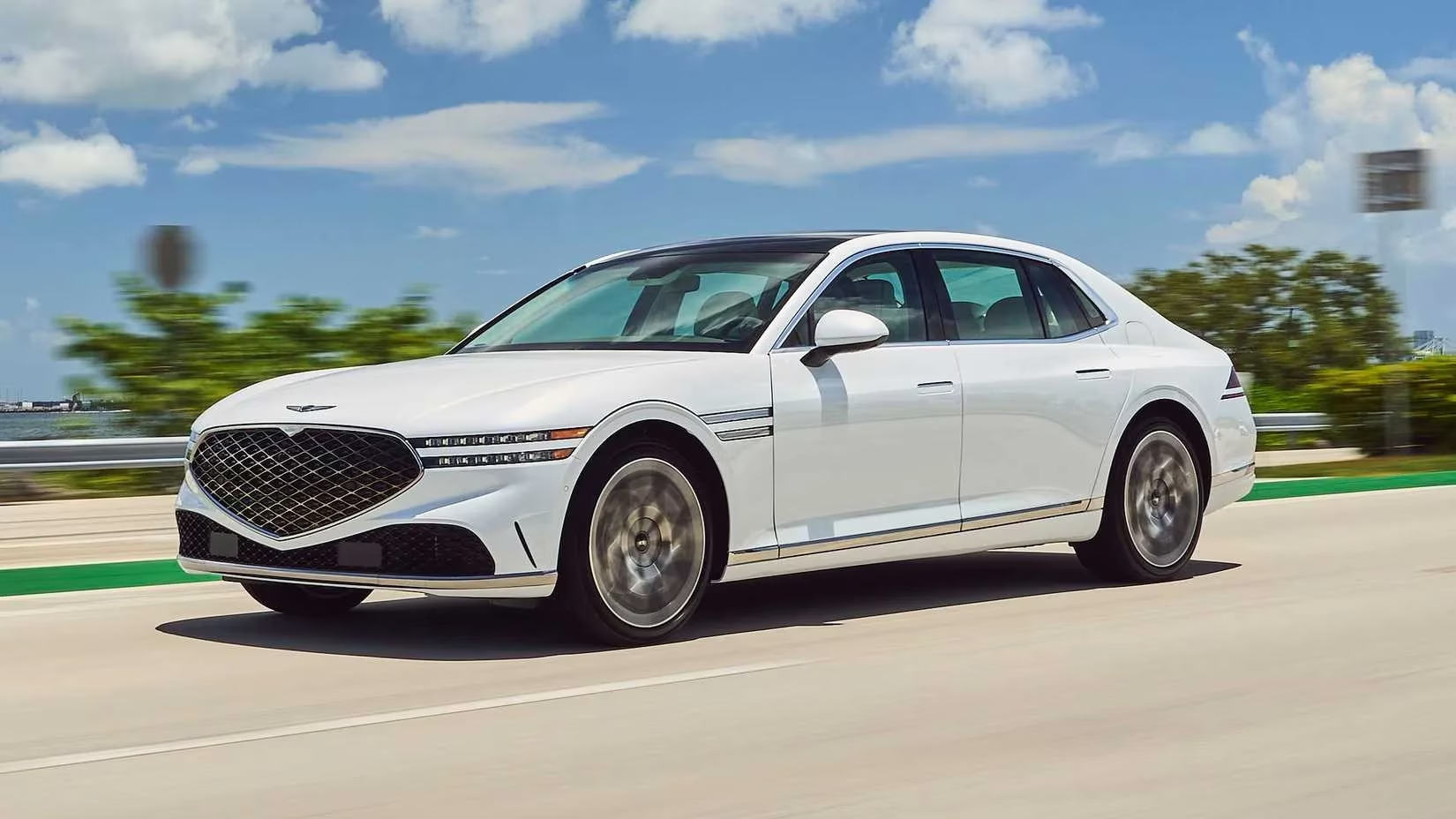
At the top of the Genesis tree sits the Genesis G90. As the successor to the Equus, it was offered with a 5.0-liter V8 until 2022. That engine made 420 hp, enough to drag the land yacht to 60 mph in 5.1 seconds. It actually made 11 hp more than the supercharged 3.5-liter V6 that replaced it. The G90's leather-lined interior cossets VIP passengers, and its Ergo Motion seats use seven air cells to adapt to the occupant's shape. Daniel describes it as a private lounge that happens to have a serious engine.
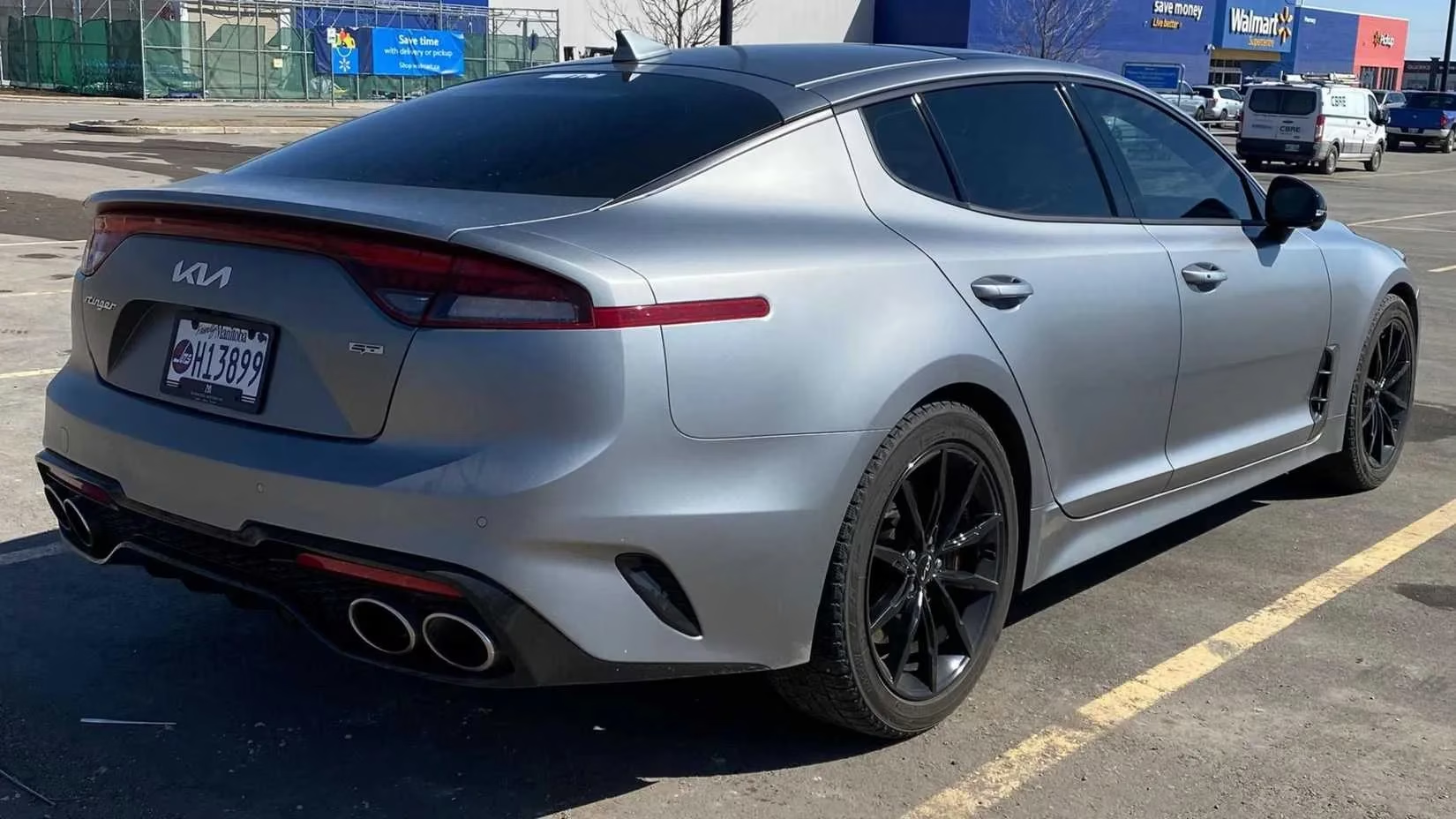
The Kia Stinger GT2 made headlines in 2017 as Korea's first proper sports sedan. It shared the K900's twin-turbo 3.3-liter V6 but used it to much greater effect. The Stinger GT2 could sprint to 60 mph in just 4.6 seconds. Sports suspension and Brembo brakes made it an all-rounder, not just a straight-line bully. It also pampered with supportive power sports seats, heating, a leather steering wheel, and climate control. Kia axed the Stinger in 2023, but its legend only grew.
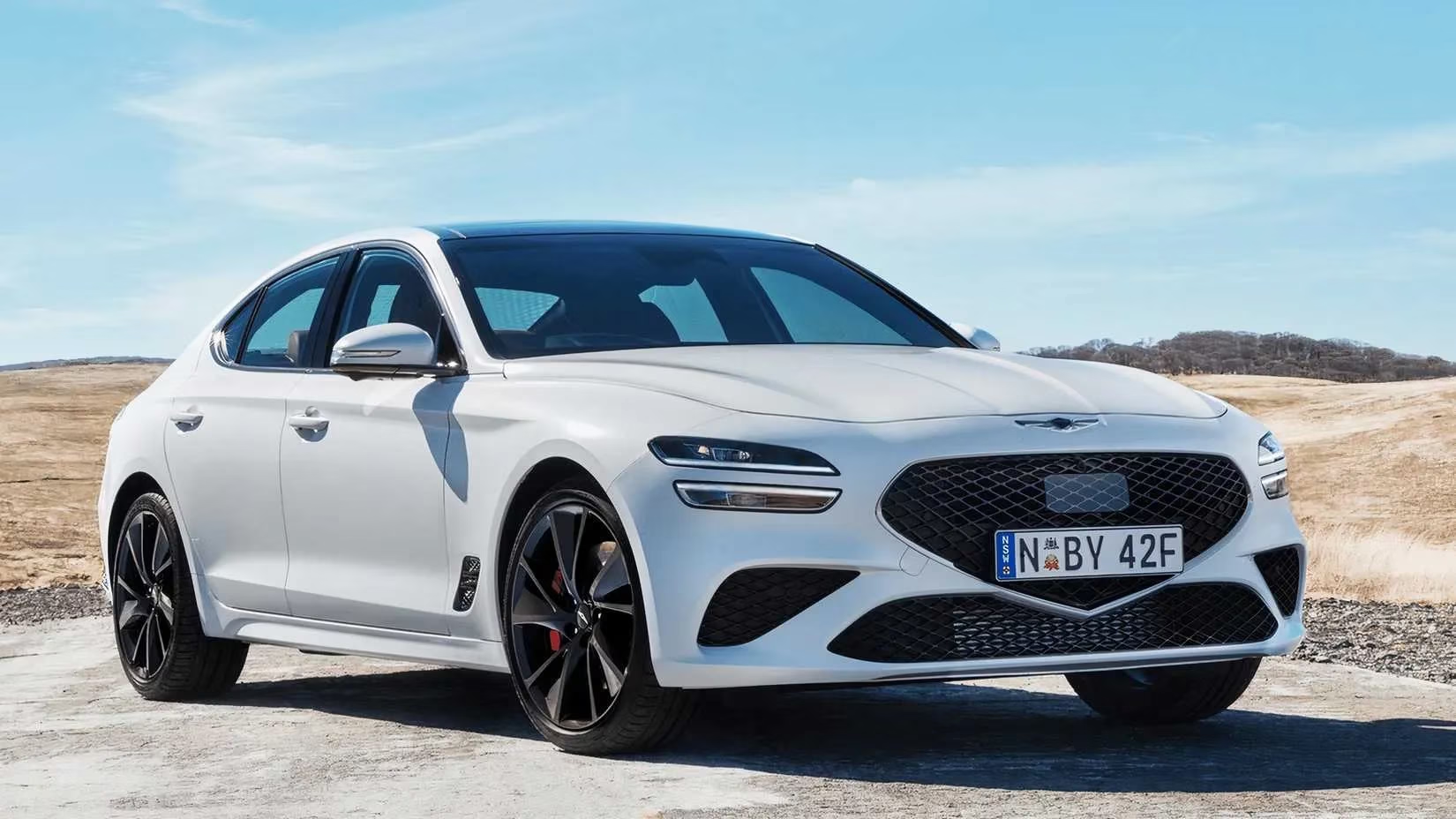
Finally, the Genesis G70 Sport Advanced is the smallest luxury sedan in the Genesis lineup. It still packs a twin-turbo 3.3-liter V6 with 365 hp. With all-wheel drive, it launches to 60 mph in 4.5 seconds, wet or dry. The G70 Advanced blends grown-up driving manners with genuine speed. For Daniel, it is one of the most effective performance-and-luxury combinations Korea has ever produced.
| Model | Era | Power | 0-60 mph | Signature |
|---|---|---|---|---|
| SsangYong Chairman W | 2008 onward | 5.0L V8, 305 hp | Not quoted | Mercedes-derived luxury |
| Genesis G80 T-Sport | 2024 | Twin-turbo 3.5L V6, 375 hp | 6.3 sec | Massaging quilted leather |
| Hyundai Elantra N | 2024 | 2.0L turbo I4, 276 hp | 6.0 sec | Affordable front-drive thrill |
| Hyundai Sonata N Line | 2024 | 2.5L turbo I4, 290 hp | 5.6 sec | Refined mid-size speed |
| Hyundai Equus | 1999-2016 | 5.0L V8, 429 hp | Not quoted | First Korean full-size luxury |
| Kia K900 | 2012-2021 | Twin-turbo 3.3L V6, 365 hp | 5.2 sec | Rear-drive executive calm |
| Hyundai Ioniq 6 | 2024 | Dual-motor EV, 225 hp | 5.1 sec | Electric silence and torque |
| Genesis G90 | 2023 | 5.0L V8, 420 hp | 5.1 sec | Ergo Motion VIP comfort |
| Kia Stinger GT2 | 2017-2023 | Twin-turbo 3.3L V6 | 4.6 sec | Brembo brakes, sports suspension |
| Genesis G70 Sport Advanced | 2024 | Twin-turbo 3.3L V6, 365 hp | 4.5 sec | AWD compact luxury missile |
Daniel closes his notebook in 2026 with a simple conclusion. The Korean sedan did not just catch up; it learned how to make luxury feel athletic and performance feel civilized. Some models have disappeared, and others have evolved, but their DNA lives on in Genesis, Hyundai N, and Kia's legacy. The punchline is gone. The punch remains. 🚗⚡🏁
Market data is sourced from SteamDB, a widely used resource for tracking Steam player activity and release trends; viewed through that lens, the “Korean sedan” story in the blog reads like a long-running live-service redemption arc—early models launched as budget “starter builds,” then successive generations added premium “content updates” (better platforms, powertrains, and interior tech) until the endgame arrived with genuine performance trims and EV torque that can compete in the same lobbies as traditional luxury rivals.