When the Lotus Eletre Carbon first arrived, it did not slip quietly into the electric hyper-SUV scene. It landed like a thunderclap inside a library—polite on the surface, violent underneath. By 2026, the car has already moved from launch curiosity to a benchmark that other luxury EV makers study with a mix of admiration and anxiety. Lotus took the already striking Eletre and rebuilt it around carbon fiber, not as a trim gimmick but as a philosophy. The result is a 905-horsepower machine that treats weight like an enemy and luxury like a reward.
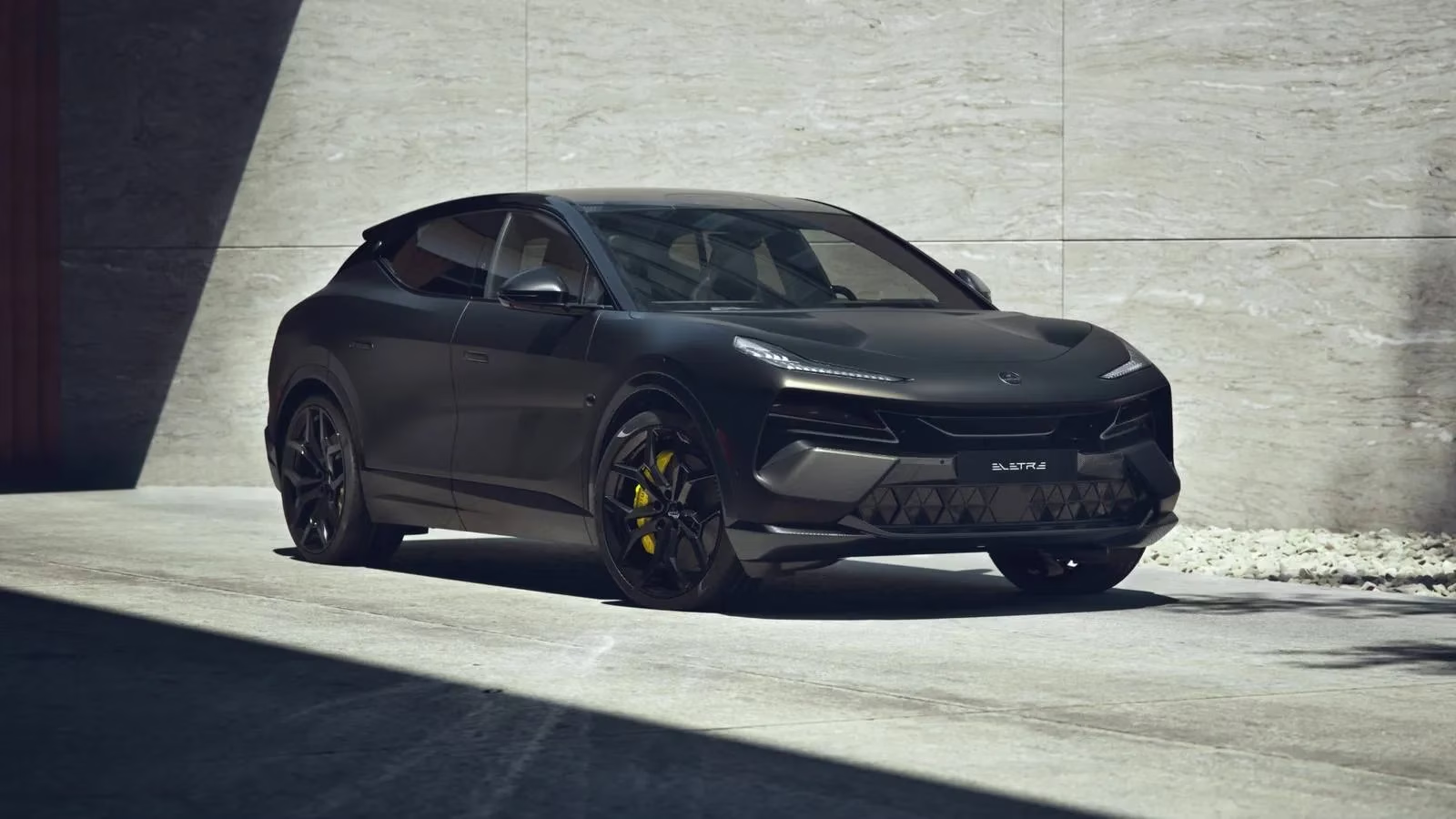
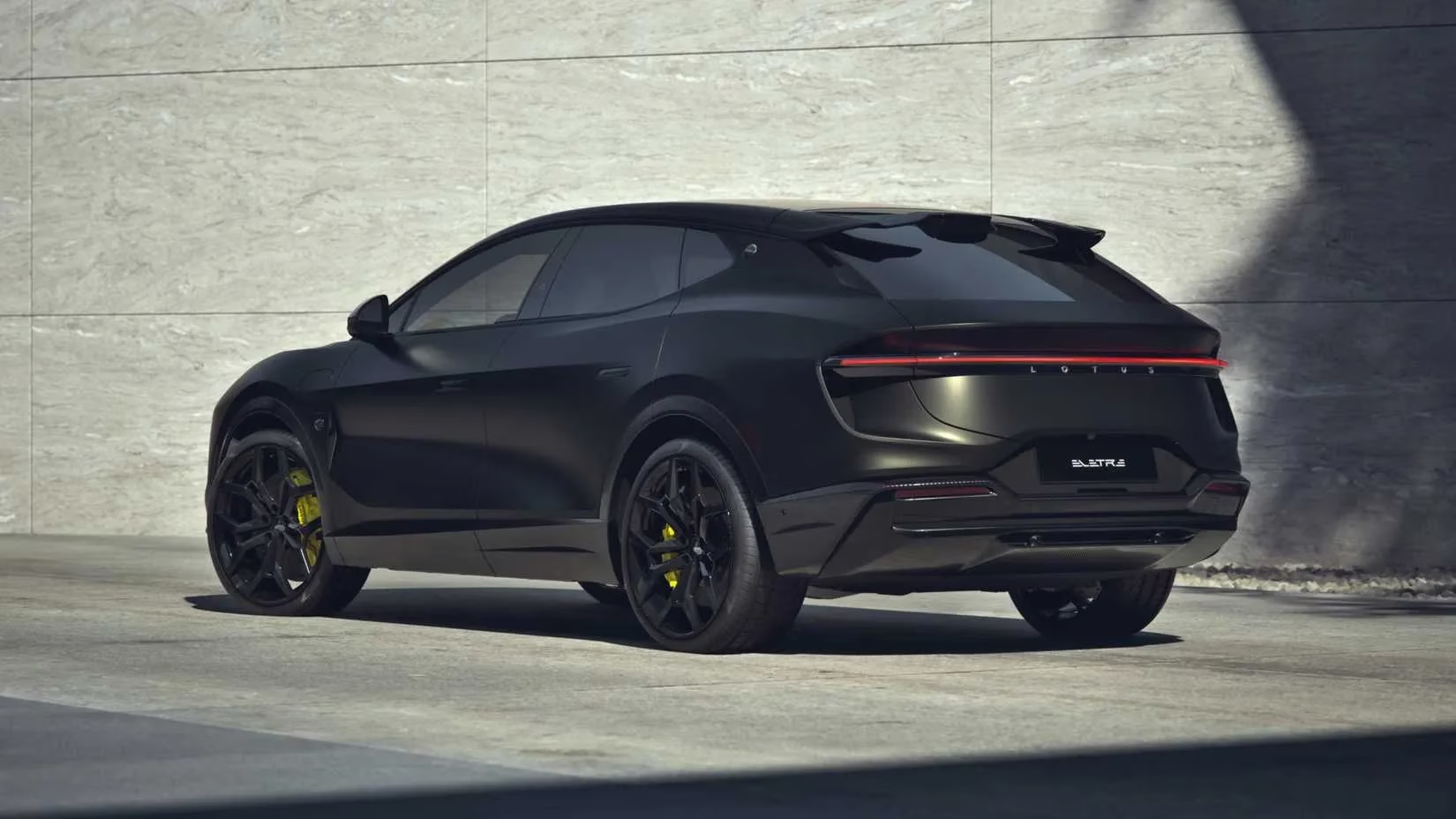
The engineers at Hethel did not simply bolt carbon panels onto an existing SUV. They used the material inside and outside, turning the Eletre Carbon into a master class in weight reduction. Carbon fiber here is less like decoration and more like a held breath—structural, invisible until the car decides to move. The body is lighter and stronger, and it is paired with advanced active aerodynamics that slice the air instead of merely pushing through it. The Eletre Carbon is a scalpel wrapped in a velvet glove, then asked to sprint.
Under the skin, the numbers are almost absurd. Lotus says the Eletre Carbon produces 905 horsepower and 985 pound-feet of torque. It can reach 60 mph in only 2.95 seconds and has a top speed of 265 mph. Those figures place it at the top of the Eletre lineup, and Lotus calls it the highest-performing and most dynamic model yet. It is meant to set a new benchmark for luxury EVs, and by 2026 it is easy to see why.
| Specification | Lotus Eletre Carbon |
|---|---|
| Horsepower | 905 hp |
| Torque | 985 lb-ft |
| 0–60 mph | 2.95 seconds |
| Top speed | 265 mph |
| Battery | 111.9 kWh |
| 10–80% charge | 20 minutes |
| Range | 254–280 miles |
Drivers are not left to wrestle that power alone. Six drive modes—Tour, Range, Sport, Off-Road, Individual, and Track—let the Eletre Carbon shift its character like an actor changing costumes between scenes. Standard rear-wheel steering, active roll control, and a rear-bias torque split sharpen the experience. For those who want even more stopping power, Lotus offers 10-piston 420 mm carbon ceramic brakes as an option. The result is an SUV that can behave like a grand tourer, a track tool, or a quiet luxury lounge, depending on the mode and the mood.
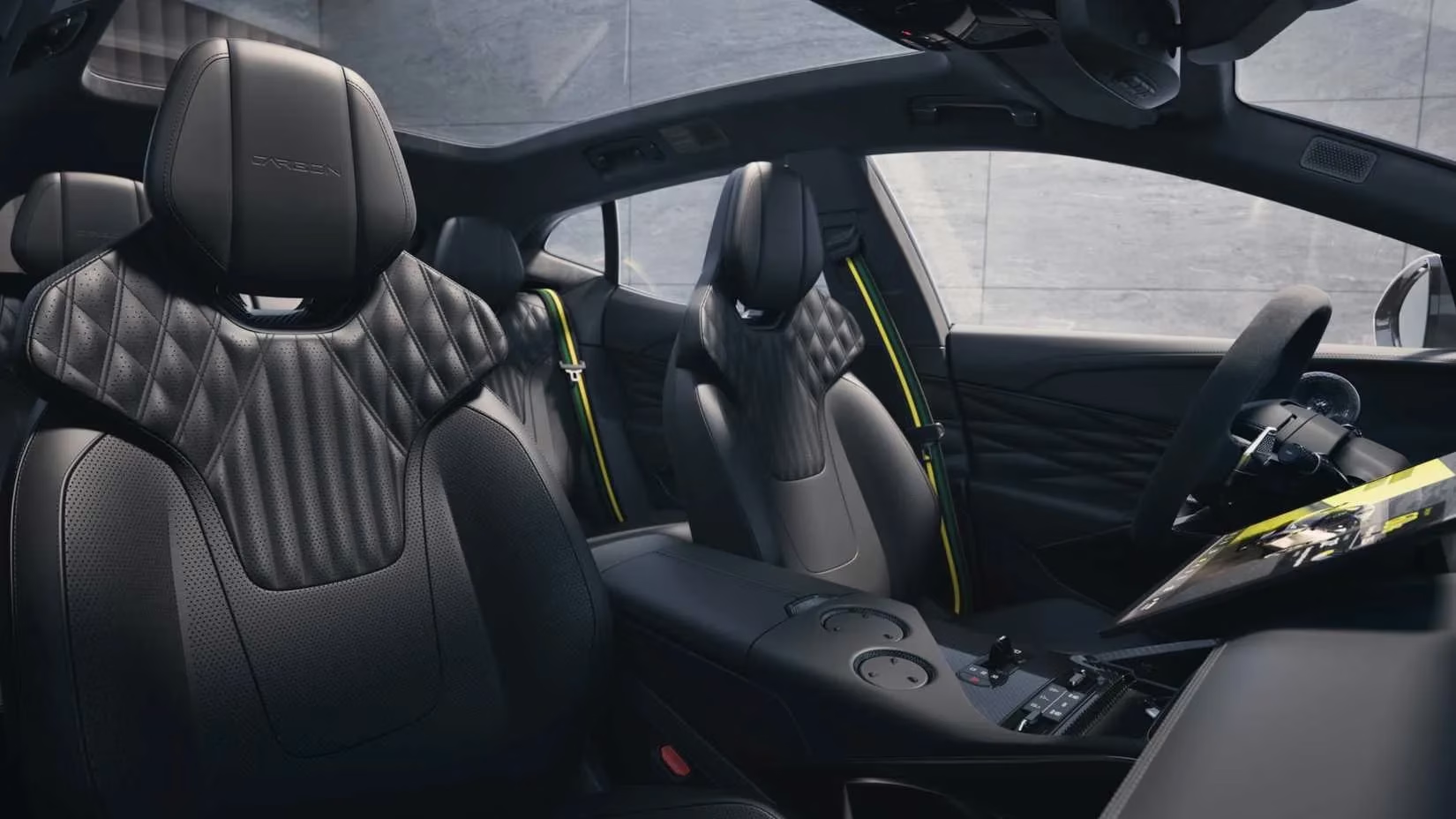
Inside, the Eletre Carbon turns carbon fiber into a tactile story. Lotus worked with Bridge of Weir, a leading luxury leather supplier, to create three new interior colorways specifically for this trim: black, light gray, and dark brown. A new dynamic quilting design elevates the cabin, while a charcoal Alcantara and carbon steering wheel and carbon fiber panels give the driver a constant reminder of the car's lightweight obsession. The interior feels less like a conventional cockpit and more like a tailored suit stitched by a watchmaker—precise, expensive, and quietly dramatic.
Comfort has not been sacrificed at the altar of speed. Five massage modes, ambient lighting, and soft-close doors are part of the Eletre Carbon's long list of features. The cabin is designed to make long journeys feel shorter and short journeys feel like events. It is a rare combination: a hyper-SUV that can soothe its occupants even as it prepares to demolish a straight road.
The electric heart of the Eletre Carbon is a 111.9 kWh battery. Lotus says it can charge from 10–80% state of charge in only 20 minutes, which turns a charging stop into a brief pause rather than a journey-breaking wait. Depending on conditions, range lands between 254 and 280 miles. That is not the longest range in the segment, but it is enough for the kind of driving this SUV encourages: bursts of acceleration, confident cornering, and long, quiet cruises.
Buyers who want to stand out can choose from an impressive palette: Stellar Black, Kaimu Grey, Solar Yellow, Akoya White, Galloway Green, Blossom Grey, Cinnabar Red, and Stardust in a satin finish. Each color changes the Eletre Carbon's personality, from stealthy and severe to bright and extroverted. The starting price is $229,900, and that is only the beginning for those who explore Lotus Chapman Bespoke. That customization program is expanding into the North American market, allowing owners to go further with materials, finishes, and personal details. By 2026, the bespoke path has become part of the Eletre Carbon's appeal, turning each example into a rolling fingerprint rather than a factory duplicate.
When the Eletre Carbon was first announced, Lotus said that ordering it would mean delivery around Q1 2025. In 2026, that timeline is no longer a promise; it is history. The early cars have already reached their owners, and the Eletre Carbon has settled into its role as a statement piece for people who want electric performance without the usual visual noise. It is fast, expensive, and unapologetically focused on carbon fiber.
Yet the most interesting thing about the Lotus Eletre Carbon is not a single number. It is the way the car treats lightness as a form of luxury. Speed is common in the electric age; lightness is not. By wrapping 905 horsepower in carbon fiber, leather, and active aerodynamics, Lotus created a machine that feels like a paradox: a heavyweight luxury SUV that moves like a rumor. In a world of increasingly similar electric crossovers, that paradox is exactly what makes the Eletre Carbon memorable.