The once-unshakeable pillars of the supercar world are getting a new coat of paint, or perhaps, a whole new extension. For decades, McLaren, like its Italian rival Ferrari before it, built its identity on a simple, purist creed: two doors, two seats, and a singular focus on speed. But as the calendar flips to 2026, the winds of change are blowing through Woking with enough force to ruffle the carbon fiber. The market, it seems, has a funny way of making even the most exclusive marques reconsider their sacred vows. Ferrari famously swore off four doors, only to unveil the Purosangue—a 'Ferrari Utility Vehicle,' because calling an SUV an SUV is apparently too pedestrian. Now, all eyes are on McLaren, a brand that has been equally adamant about its two-door philosophy. Yet, in a recent twist, the British automaker has hinted that its future is about to get a lot more accommodating. 🚗💨
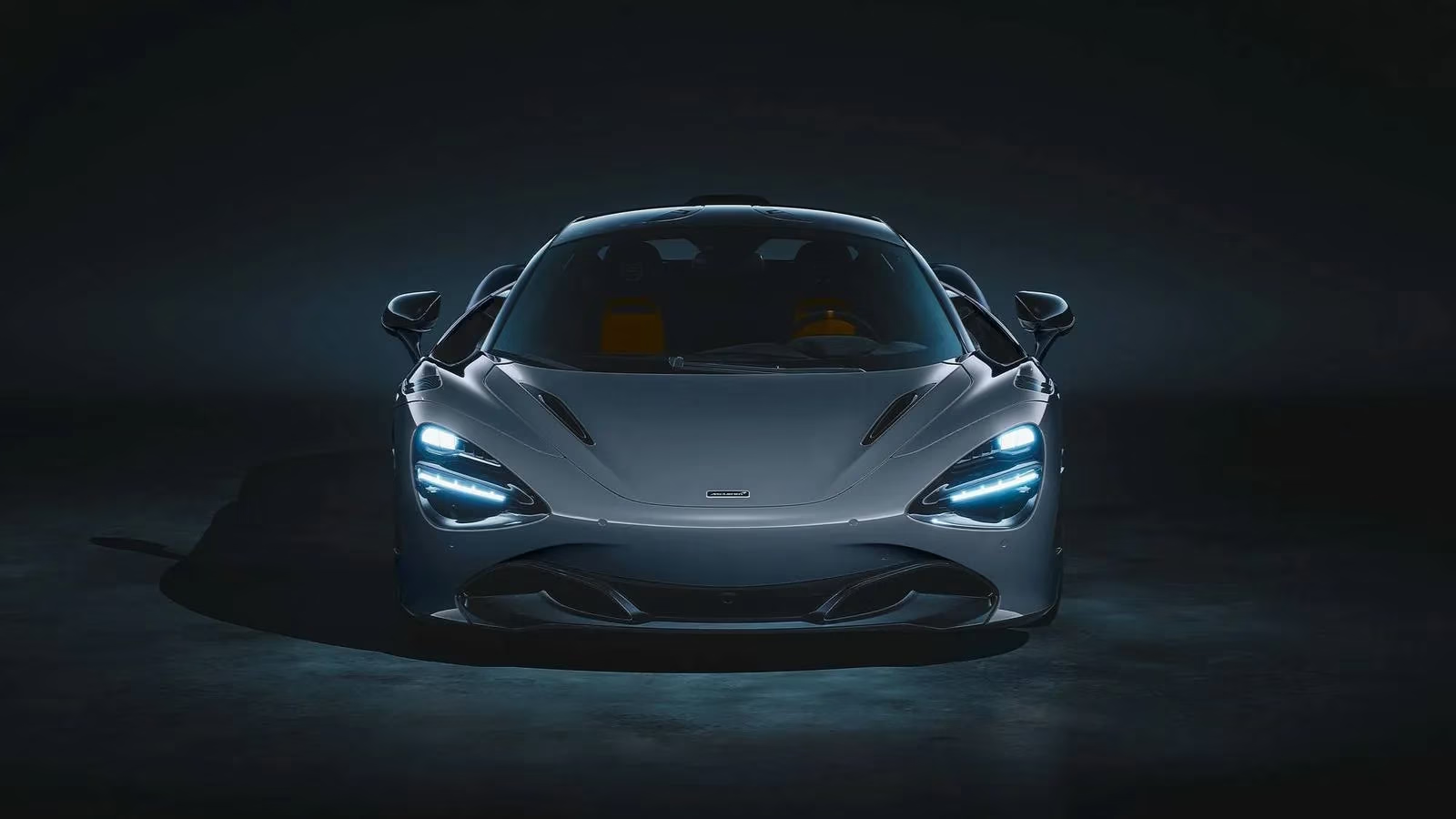
In a revealing chat with Car Magazine, McLaren CEO Nick Collins didn't just open the door to a multi-seat future; he practically invited everyone in for a cup of tea. The company has a product plan stretching all the way to 2030, complete with a "design model of everything." While specifics remain under wraps tighter than a Monocage chassis, Collins confirmed a monumental shift: McLaren will definitely launch "something with more than two seats," with a major announcement promised before the end of the year. This statement is a masterclass in leaving room for speculation. It could mean a sleek grand tourer coupe, a practical shooting brake (think Ferrari's FF from 2011), or something far more radical. The possibilities are as varied as the colors in McLaren's Special Operations palette. Could we see an all-wheel-drive McLaren, perhaps utilizing an electric front axle like the Chevy Corvette E-Ray? It's a tantalizing thought. Or, will the brand go the full nine yards and unveil a four-door super SUV or a blisteringly fast electric sedan? In 2026, with McLaren under new ownership, everything appears to be on the table—likely a carbon fiber table, of course.
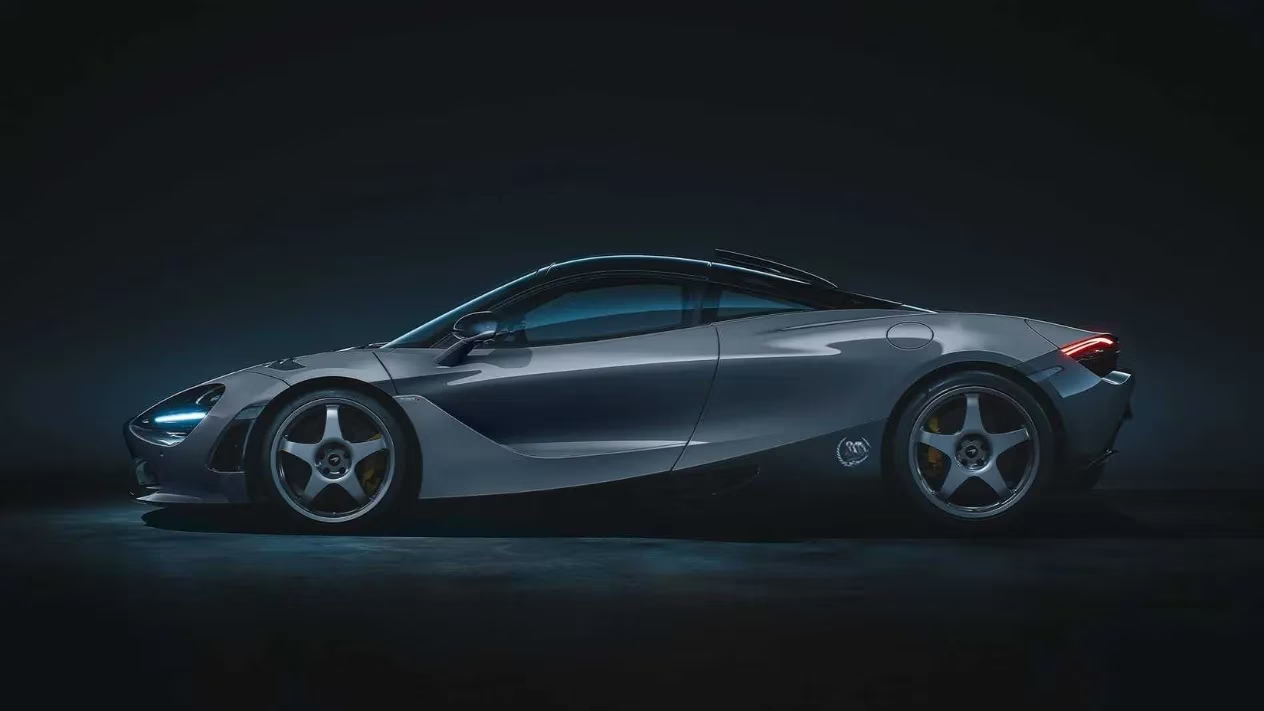
To understand this potential pivot, one must look at the seismic shift in McLaren's corporate structure. The McLaren of 2026 is a fundamentally different beast from the company of just a year ago. In April 2025, a major transaction reshuffled the deck:
| Entity | Action | Result |
|---|---|---|
| CYVN Holdings (Abu Dhabi) | Acquired McLaren Automotive | Now owns the road car business |
| Bahrain Mumtalakat | Sold Automotive, retained majority stake in McLaren Racing | Shifted focus to racing division |
| Forseven | New parent company under CYVN | Plans to develop electric luxury cars under a new brand |
This new umbrella company, Forseven, didn't stop there. It also acquired the legendary Gordon Murray Technologies (GMT) and took a 20% stake in Chinese EV powerhouse Nio. This corporate cocktail mix is incredibly potent for McLaren's future. Imagine the potential:
-
From Nio: Cutting-edge electric vehicle and battery-swapping technology. 🔋
-
From Gordon Murray Technologies: The revolutionary iStream production process, a game-changer in lightweight construction.
The iStream process isn't just clever engineering; it's black magic for weight savings. It slashes the number of components needed for body panels by up to 50% while boosting rigidity, and uses recycled composite materials to shed even more pounds. GMT claims it can reduce a typical family car's weight by over 20%. This technology is agnostic, scalable from tiny electric quadricycles to mid-engine supercars and, yes, even large luxury SUVs. This gives any future McLaren with extra seats a colossal advantage: the performance and agility of a lightweight sports car, potentially wrapped in a more practical form. It's the holy grail for a brand stretching its legs.
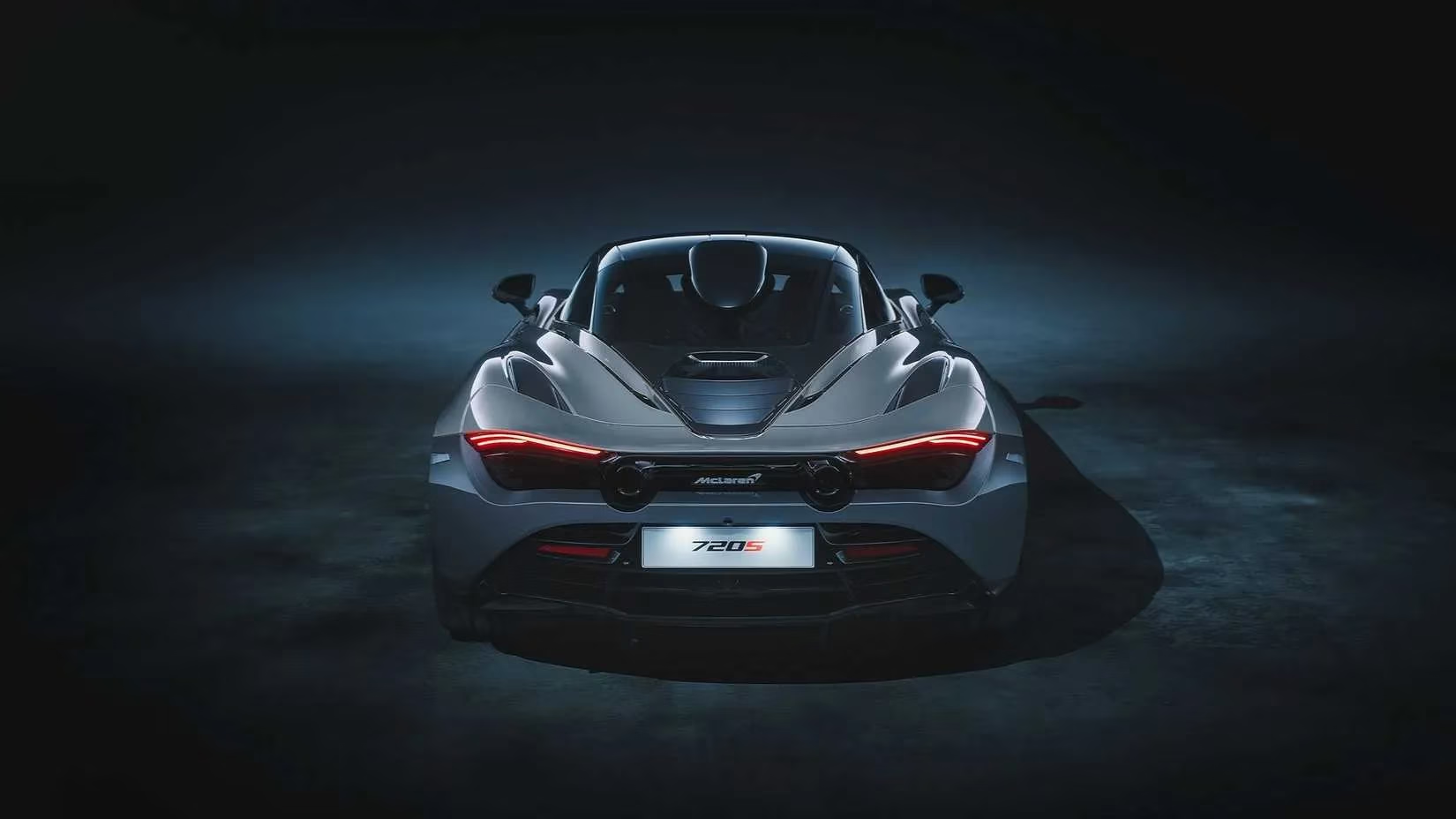
So, what can we realistically expect from the "big announcement" before year's end? The clues point to a vehicle that leverages this new technological arsenal. It likely won't be a conventional people-mover. This is McLaren, after all. The soul of a supercar will remain, even if the body gains doors or seats. A grand tourer or a shooting brake seems the most elegant first step—a car that honors the brand's racing heritage while offering genuine usability, much like the Ferrari FF did over a decade ago. It would be a bridge between the past and the future, potentially featuring:
-
A hybrid or fully electric powertrain with Nio-derived tech.
-
A chassis and body structure utilizing GMT's iStream for unparalleled lightness.
-
2+2 seating with genuinely usable space, a first for McLaren.
-
Breathtaking performance that makes the school run feel like a lap of Le Mans. 🏁
The move is a strategic necessity. The super-luxury market is no longer just about weekend toys; it's about daily-drivable exotica. Customers want the badge, the thrill, and the practicality. By tapping into the resources of Nio and Gordon Murray, McLaren isn't just following Ferrari's path—it's potentially leapfrogging it with a cleaner-sheet approach focused on next-generation materials and electrification. The promise of a car that weighs hundreds of pounds less than its competitors, yet packs McLaren's trademark explosive performance, is a compelling proposition. As 2026 unfolds, the wait for McLaren's multi-seat revelation is almost over. One thing's for certain: it won't be boring. It might just redefine what a practical supercar can be.