As I reminisce about the golden age of automotive luxury, I can't help but feel a deep sense of nostalgia for the days when V12 engines reigned supreme in executive sedans. Back in the early 2000s, brands like BMW were obsessed with cramming twelve-cylinder powerhouses into their flagships, creating vehicles that symbolized ultimate refinement and prestige. I remember the thrill of seeing these beasts on the road—their smooth, monumental power felt like a whisper of exclusivity, a stark contrast to today's downsized, hybrid-dominated world. Yet, amid this shift, one car stands out in my memory as both a marvel and a misfire: the BMW E65 760i. Its journey from a tech-laden innovator to a depreciated bargain is a tale that stirs mixed emotions in me, blending admiration for its audacity with bewilderment at its divisive design. Now, in 2025, as I revisit this icon, I'm struck by how it encapsulates an era of bold experimentation that's fading fast.
The Design That Divided Opinions
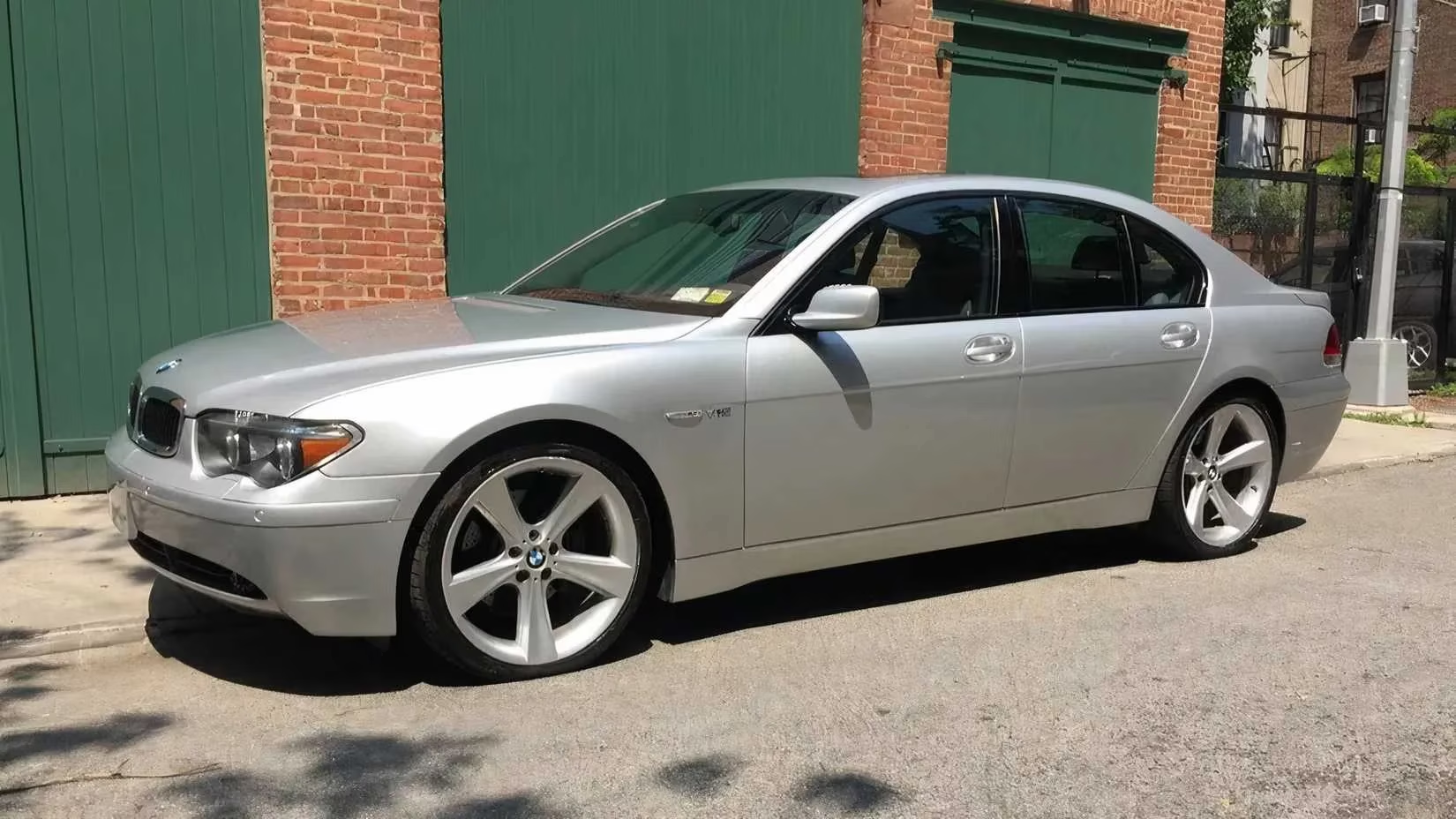
When BMW unveiled the E65 7 Series in 2001, I was among the many who were utterly perplexed by its appearance. Led by Chris Bangle, the design team aimed for something daring—'sporting performance, dynamic style, luxurious motoring, and a strong presence,' as the press release boasted. But to my eyes, it felt like a jarring departure from the elegant, understated lines of predecessors like the E38. The complex curves, layered forms, and ornamental surfaces seemed chaotic, almost as if the car was melting in the sun. I recall the first time I saw one in person; the front lights, sliding off the nose like misplaced puzzle pieces, and the trunk that appeared bolted on rather than integrated, made me do a double-take. It was unsettling, yet undeniably attention-grabbing. Critics weren't kind, dubbing it the 'Bangle Butt' for its controversial rear end, and I have to admit, even now, I find myself torn between seeing it as a quirky masterpiece or an aesthetic disaster. This design language, influenced by Art Deco and Post-Modernism trends of the time, felt like a gamble that didn't quite pay off, leaving me to ponder if it was intentionally provocative or just poorly executed.
Under the Hood: Power and Complexity
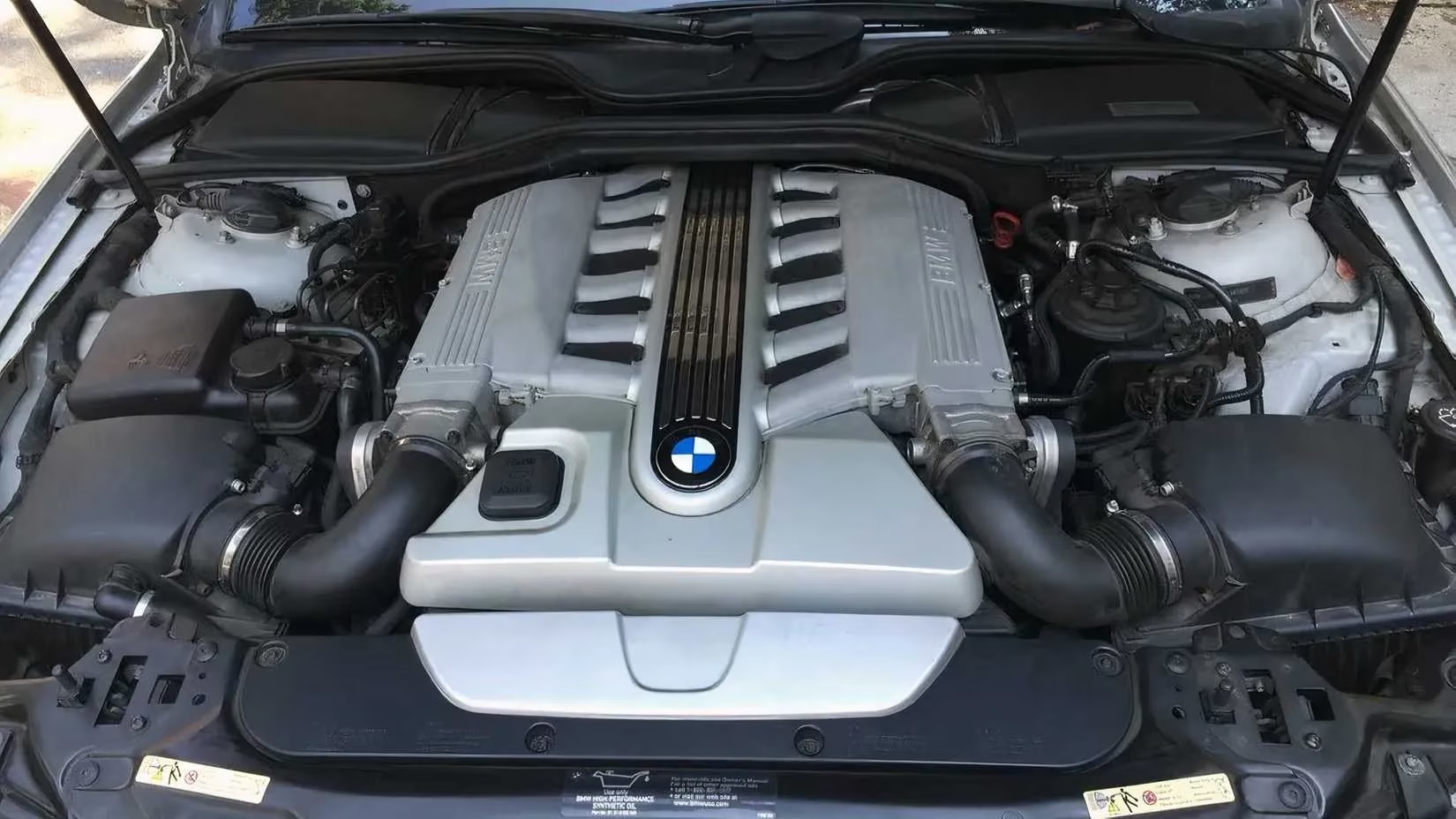
The heart of the E65 760i was its magnificent 6.0-liter V12 engine, a beast that still fills me with awe today. Pumping out 438 horsepower and 444 lb-ft of torque, this direct-injection marvel delivered silky acceleration that could hit 60 mph in just 5.4 seconds. I remember test-driving one years ago; the sheer smoothness of the V12, paired with the STEPTRONIC 6-speed automatic transmission, made every drive feel like gliding on a cloud. But beneath that power lurked complexity that often left me frustrated. Features like electronic damping control, self-leveling rear suspension, and 20-way comfort seats with active ventilation were cutting-edge for 2004, yet they came with a steep learning curve. I recall fumbling with the iDrive system—it was so convoluted that even after an hour, I felt like I needed a manual just to adjust the radio. This tech fest, while innovative, often felt overwhelming, turning what should have been a luxurious experience into a chore. Add to that the notorious reliability issues, and it's no wonder this car earned a reputation as BMW's least reliable model. For all its grandeur, the E65 taught me that more tech doesn't always mean better usability.
The Price of Prestige Then and Now
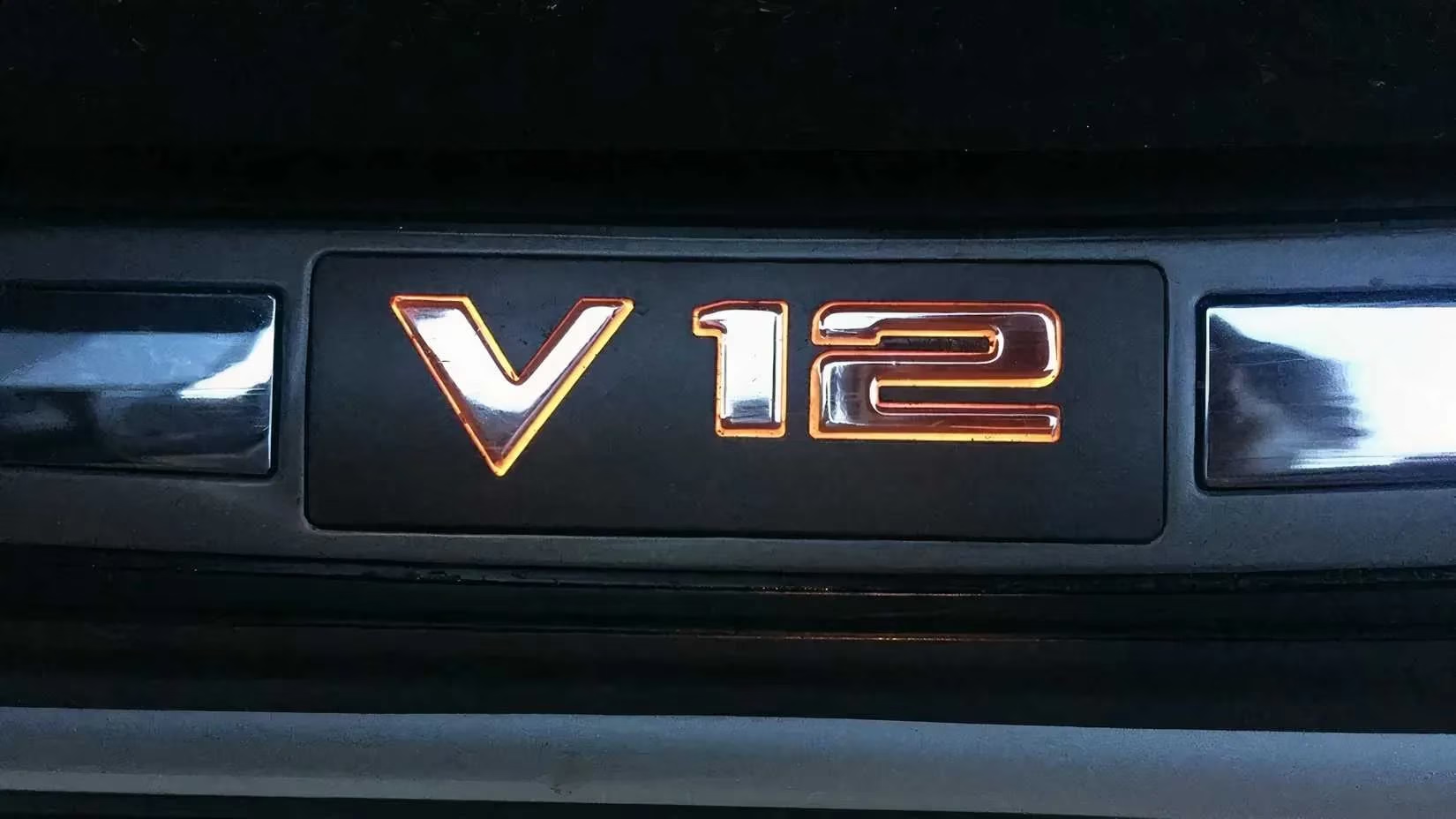
Back in its heyday, the E65 760i was a symbol of opulence, with a price tag that screamed exclusivity. In 2004, the short-wheelbase model started at a whopping $110,495, while the long-wheelbase 760Li climbed to $118,195—figures that, adjusted for inflation, would be astronomical today. I remember thinking that owning one was like flaunting your wealth, with features like massive 20-inch wheels and a prominent 'V12' badge that left no doubt about its pedigree. But fast-forward to 2025, and the story has flipped dramatically. The depreciation has been brutal, turning this once-prestigious sedan into an astonishing bargain. According to recent data, prices can plummet as low as $5,000, with models like a 2004 variant fetching around $4,182. I've seen clean examples at auctions barely breaking $8,000, which feels surreal for a car that once commanded six figures. This shift evokes a mix of sadness and opportunity in me; it's a stark reminder of how quickly luxury can fade, yet it opens doors for enthusiasts like myself to own a piece of history without breaking the bank. However, the low cost comes with caveats—maintenance bills can be eye-watering, making me cautious about diving in without a thorough inspection.
A Legacy of Controversy and Value
Reflecting on the E65's place in automotive history, I'm struck by how its polarizing nature has shaped perceptions over time. Initially lambasted as ugly and unreliable—even landing on TIME's list of the 50 worst cars ever—it now feels like a bold statement from a more carefree era. In today's world, where designs are often homogenized for mass appeal, the E65's chunky curves and daring surfaces stand out as a testament to BMW's willingness to take risks. I find myself appreciating its uniqueness more now, seeing it as an acquired taste rather than a failure. Yet, the emotional rollercoaster continues; one moment, I'm charmed by its quirks, and the next, I'm reminded of the headaches from its finicky electronics. As I ponder its journey, I can't help but wonder: in an age where electric vehicles and minimalism dominate, will cars like the E65 be celebrated as avant-garde pioneers or dismissed as misguided experiments? What does their enduring, if controversial, appeal say about our evolving tastes in design and performance? 🤔