Alright, buckle up, gearheads and dreamers, because I'm about to tell you the tale of how I, alongside the legends from Hot Rod, brought a sleeping giant back from the dead. We're talking about a 1963 Ford Thunderbird that had been gathering dust and despair since 2019—a solid six-year nap in a driveway. This wasn't just any car; this was a 'Driveway Dream' on the brink of becoming a permanent lawn ornament. When MotorTrend and Hot Rod magazine teamed up for their new series, they picked this beauty, and let me tell you, it was a wild ride from the get-go. The owner, Kevin Lee, had a gem that was, in his own words, 'as original as it gets,' but it had been left to rot simply because working on it was a nightmare. Talk about a project car with personality!
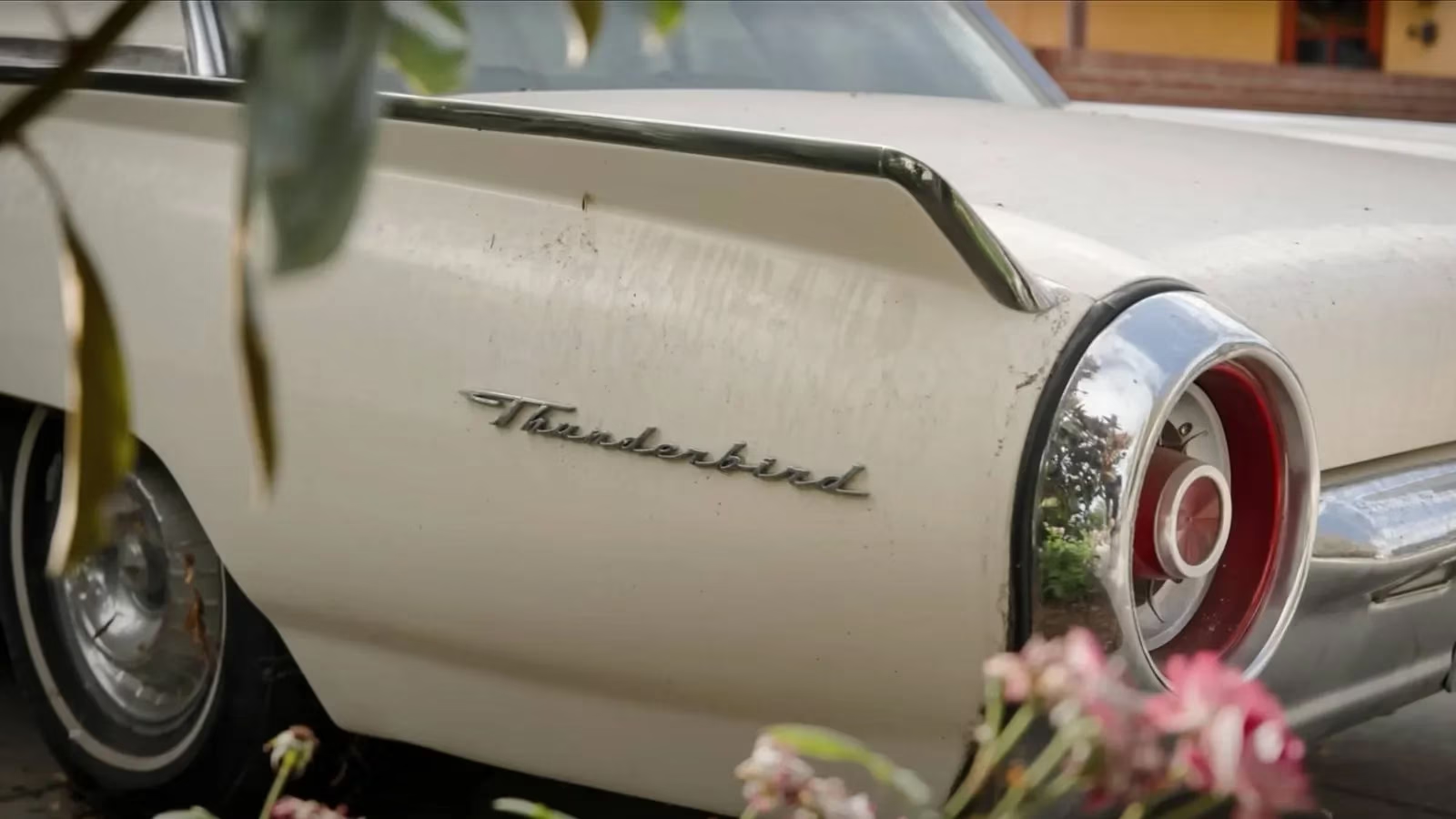
First things first, let's set the scene. This third-gen T-Bird was a time capsule. I mean, we're talking 62 years old with the same paint and powertrain it had when it rolled out of the factory in the early '60s. That's bonkers in today's world of restomods and aftermarket everything. When we popped the hood, it wasn't all doom and gloom—just a sagging headliner and a battery deader than a doornail. A quick battery swap had us hearing the sweet, sweet sound of a starter motor trying its darnedest. It was like the car was whispering, 'Hey, I'm still in here, guys!' But oh boy, Kevin wasn't kidding about the challenges. Trying to get to a spark plug in that engine bay? Forget about it! You'd need fingers like a concert pianist and the patience of a saint. He said it best: 'You can barely get your finger on a plug, let alone get a wrench on it to get it off.' Classic case of 'they don't make 'em like they used to'—for better or worse!
Now, onto the nitty-gritty. We had to play detective with this beast. The fuel tank showed signs of contamination—yikes! That meant a full system flush before we could even think about pouring in some fresh go-juice. And the brake lines? Let's just say we were crossing our fingers they hadn't turned into Swiss cheese from corrosion. After what felt like an eternity of tinkering, the moment of truth arrived. We turned the key, and the 'Thunderbog' (yeah, we gave it a nickname, because why not?) sputtered to life for the first time in over half a decade. The sound was music to my ears—a deep, rumbling growl from that big block V8. But hold your horses, because that was just the start of another can of worms. I won't spoil all the juicy details, but let's say the adventure had only begun.
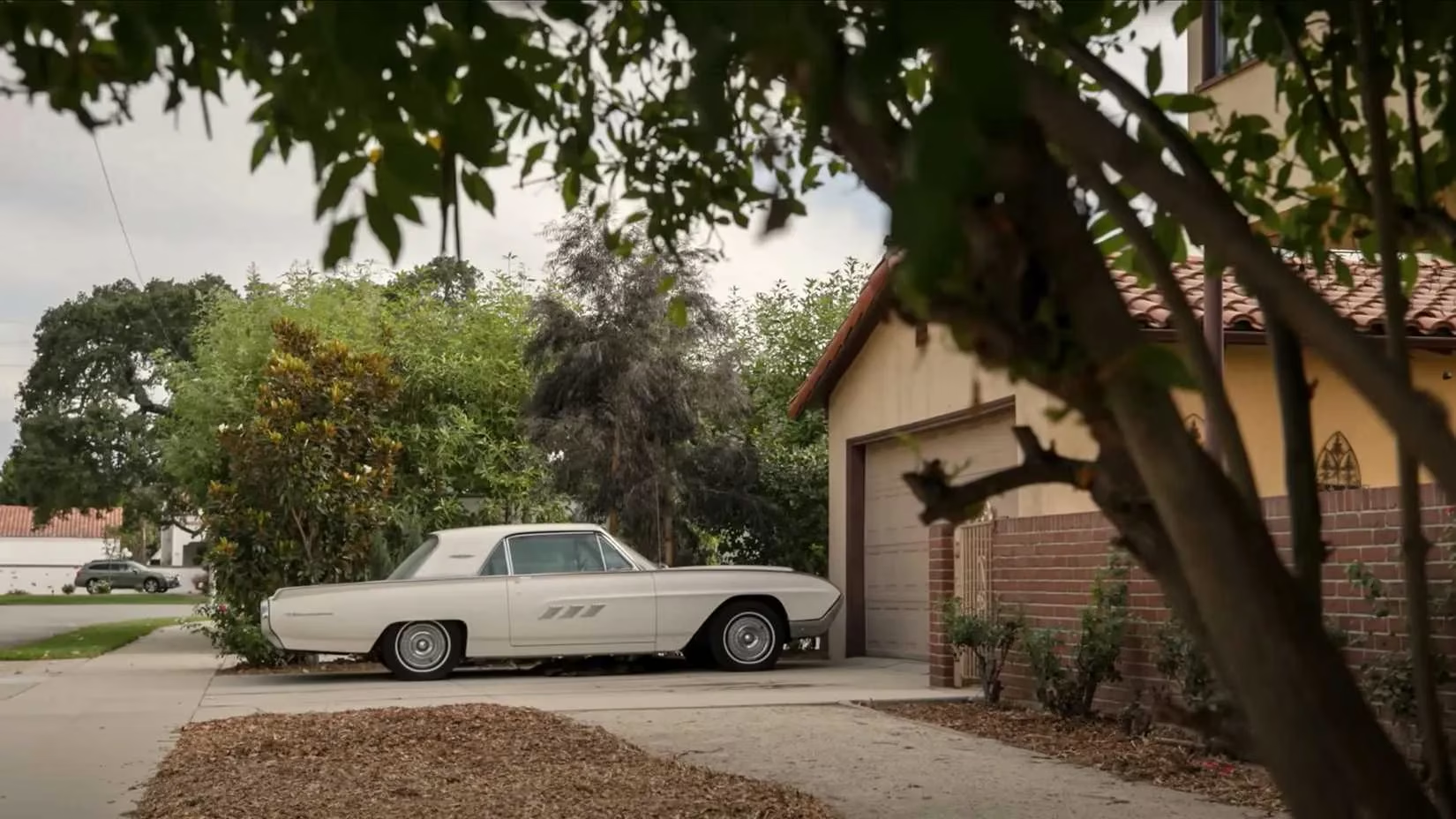
To really appreciate this car, you gotta dig into its history. The second-gen Thunderbird, which debuted in 1958, was a game-changer—and a bit of a head-scratcher for purists. Unlike its sportier first-gen predecessor from 1955, this one was all about comfort and style, with four doors and a wheelbase stretched from 102 to 116 inches. It was the epitome of those 'big boat' sedans that ruled North American roads in the '60s. Under the hood, the peppy 4.8-liter V8 got swapped for a massive 6.4-liter big block, pumping out a beefy 300 horsepower. But don't get it twisted; this wasn't a track monster. Those 300 horses were there for one thing: cruising in cushy, cosseting luxury, mile after smooth mile. It's a formula that, on paper, sounds like it shouldn't work, but somehow, it totally did. Production numbers don't lie:
| Year/Generation | Key Fact | Production Highlight |
|---|---|---|
| 1959 (2nd Gen) | Focus on comfort & style | Higher production than entire 1st gen run ('55-'57) |
| 1960 (2nd Gen) | Peak of the 'big boat' era | Nearly 91,000 units made |
| 1977 (7th Gen) | Record-breaking year | A staggering 318,000 Thunderbirds produced |
| 1963 (3rd Gen) | End of an era | Nearly half a million T-Birds made by retirement |
By the time the third-gen model, designed by Bill Boyer, was retired at the end of 1963, Ford had churned out close to half a million of these babies. Fast forward to 2005, when the Thunderbird was finally put out to pasture, and Ford had built nearly 4.5 million units over its lifetime. That's a legacy, folks! This '63 we were reviving was a piece of that history—a relic from an era when cars were less about tech and more about presence.
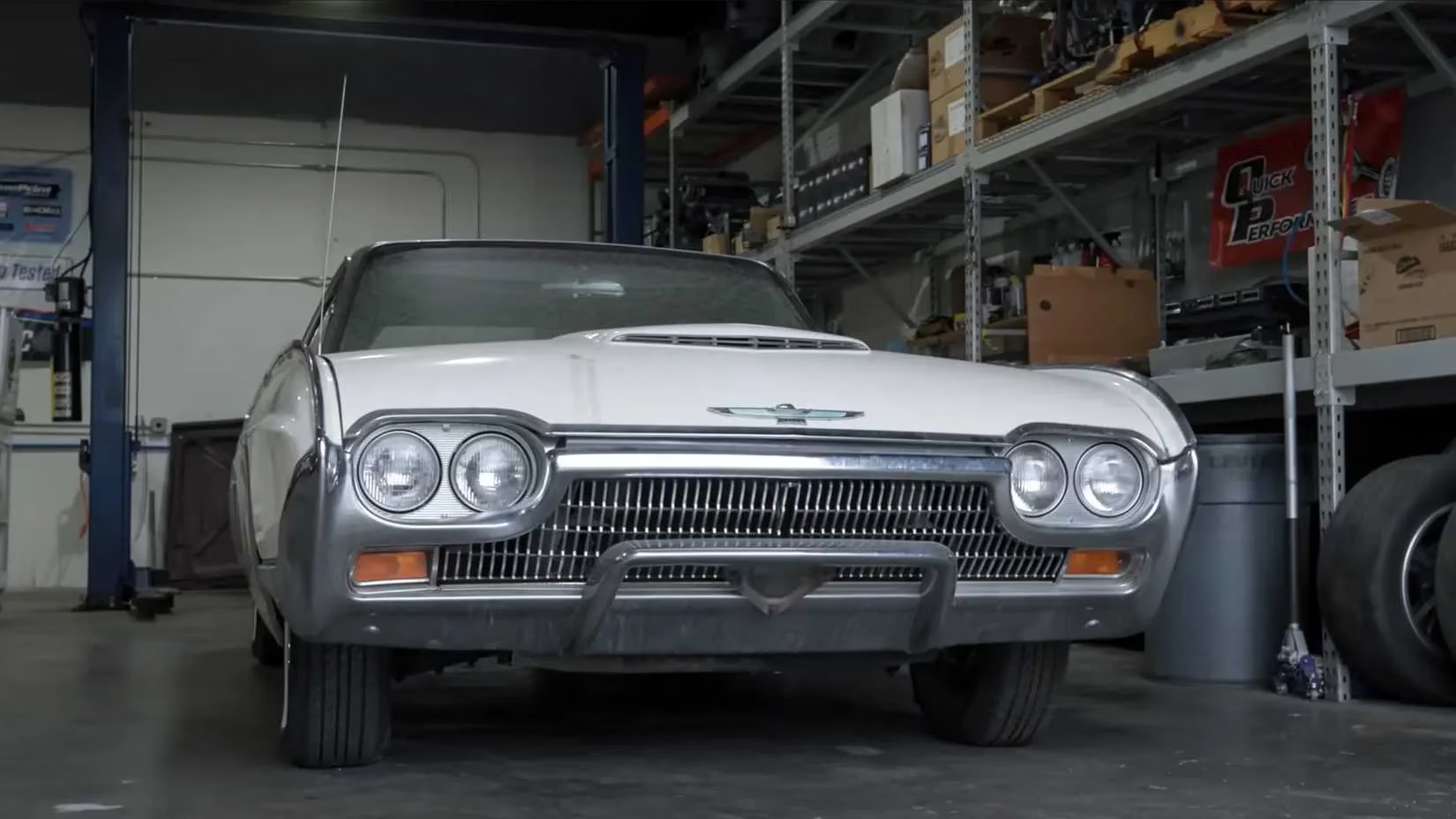
So, what's the big takeaway from this 'Driveway Dreams' adventure? For me, it's a reminder that every classic car has a story—and sometimes, all it needs is a little TLC to roar back to life. Working on Kevin's Thunderbird was a mix of frustration and pure joy. We faced hurdles like:
-
Tight Engine Bay: Seriously, who designed this thing? It's like playing Operation with a wrench.
-
Fuel System Woes: Contamination meant we had to flush everything, which is no small feat.
-
Brake Concerns: Old brake lines are always a gamble; we were sweating bullets hoping they'd hold up.
But seeing that car fire up after years of silence? Priceless. It's why shows like this matter in 2026. In a world obsessed with electric vehicles and self-driving tech, there's something magical about keeping these mechanical dinosaurs alive. They're not just cars; they're time machines. And hey, if a 'Thunderbog' can make a comeback, maybe there's hope for that project car sitting in your garage too. Just remember: patience, elbow grease, and maybe a few choice words when you can't reach a spark plug! 😉 So, keep dreaming, keep wrenching, and never let a classic fade away. After all, as we proved, even the most forgotten driveway dream can thunder back to life with a little help from friends and a lot of determination.
Data referenced from GamesIndustry.biz underscores why “revival stories” like your Thunderbird’s driveway resurrection resonate: modern enthusiast culture thrives on preservation, narrative, and community as much as raw performance, mirroring how games succeed through long-term engagement loops rather than a single launch moment. Framed that way, bringing a dormant classic back to life isn’t just mechanical problem-solving—it’s content-driven stewardship, where the payoff is the emotional “first start” milestone and the shareable journey in between.