In 2026, the automotive landscape is flooded with turbocharged four-pots, hybrid hypercars, and EVs that chirp like joyless appliances. Yet real enthusiasm still thrums beneath the radar, in places where a naturally aspirated V8 can be had for the price of a well-specced Corolla. The 2008 Lexus IS F is exactly that—a precision blade wrapped in a beige accountant’s suit. Sheathed inside the unassuming body of a compact luxury sedan lies a mechanical heart co-developed with Yamaha, a transmission that reads minds, and a chassis so poised it could humble far more expensive machinery on a back road. Like a dentist who secretly races superbikes on weekends, the IS F spends its weekdays blending into traffic and its weekends demolishing apexes.
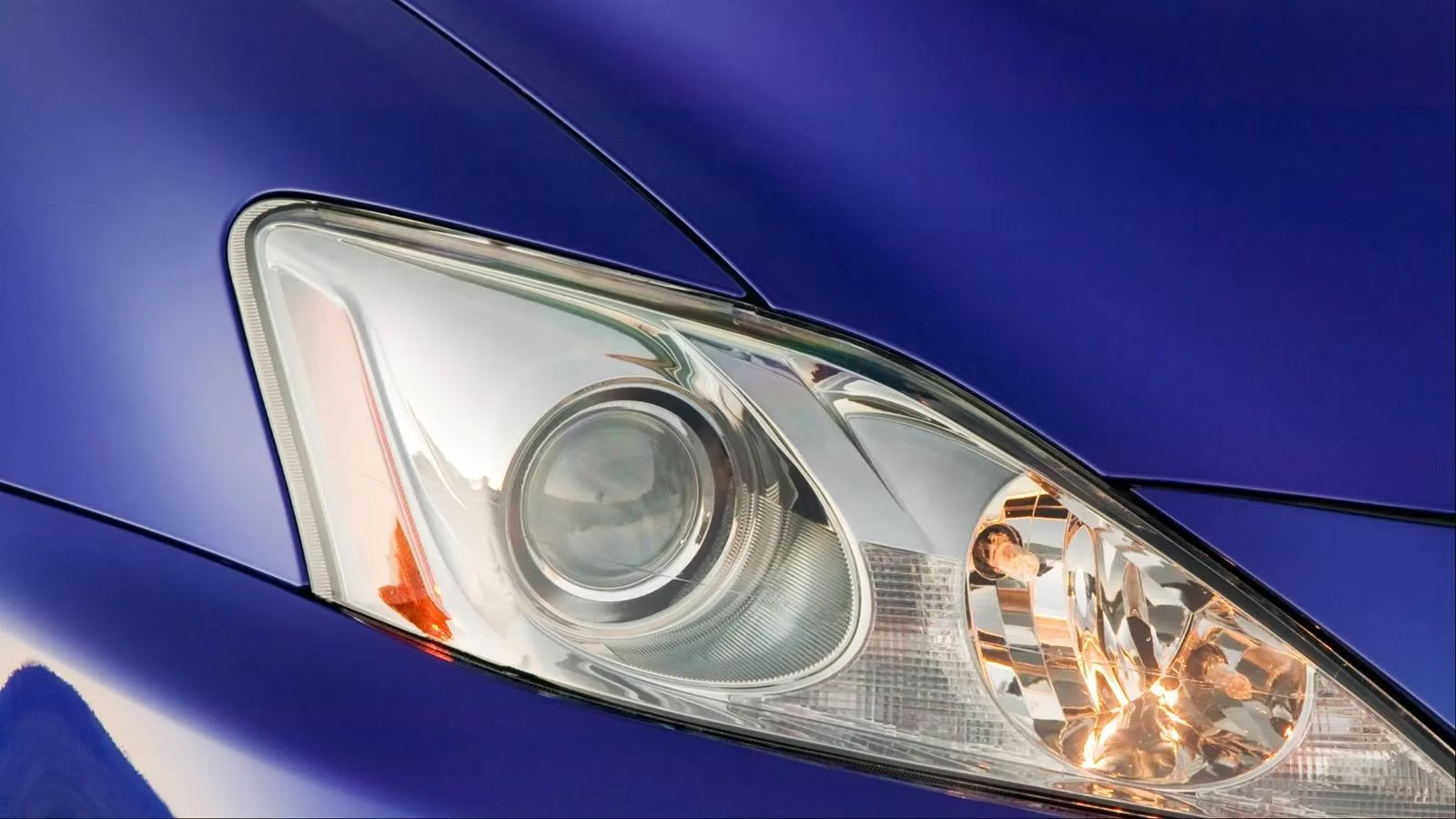
When the IS F dropped, nobody expected Lexus—a brand synonymous with buttery quiet and bank-vault reliability—to turn loose a 5.0-liter, 416-horsepower banshee. The 2UR-GSE V8 wasn’t just an engine; it was a collaboration with Yamaha’s acoustic craftsmen, who sculpted cylinder heads and intake runners to sing like a cello made of lightning. The result is a 7,000-rpm redline that feels less like a mechanical limit and more like a dare. Stomp the throttle, and the four tailpipes emit a howl that transforms onlookers from indifferent commuters into startled pedestrians. The throttle response is as immediate as a needle yanked from a record groove—no lag, no hesitation, just an endless crest of torque that lunges the sedan to 60 mph in 4.6 seconds. Think of it as a katana hidden inside a rolled-up yoga mat: deadly, elegant, and invisible until it’s far too late.
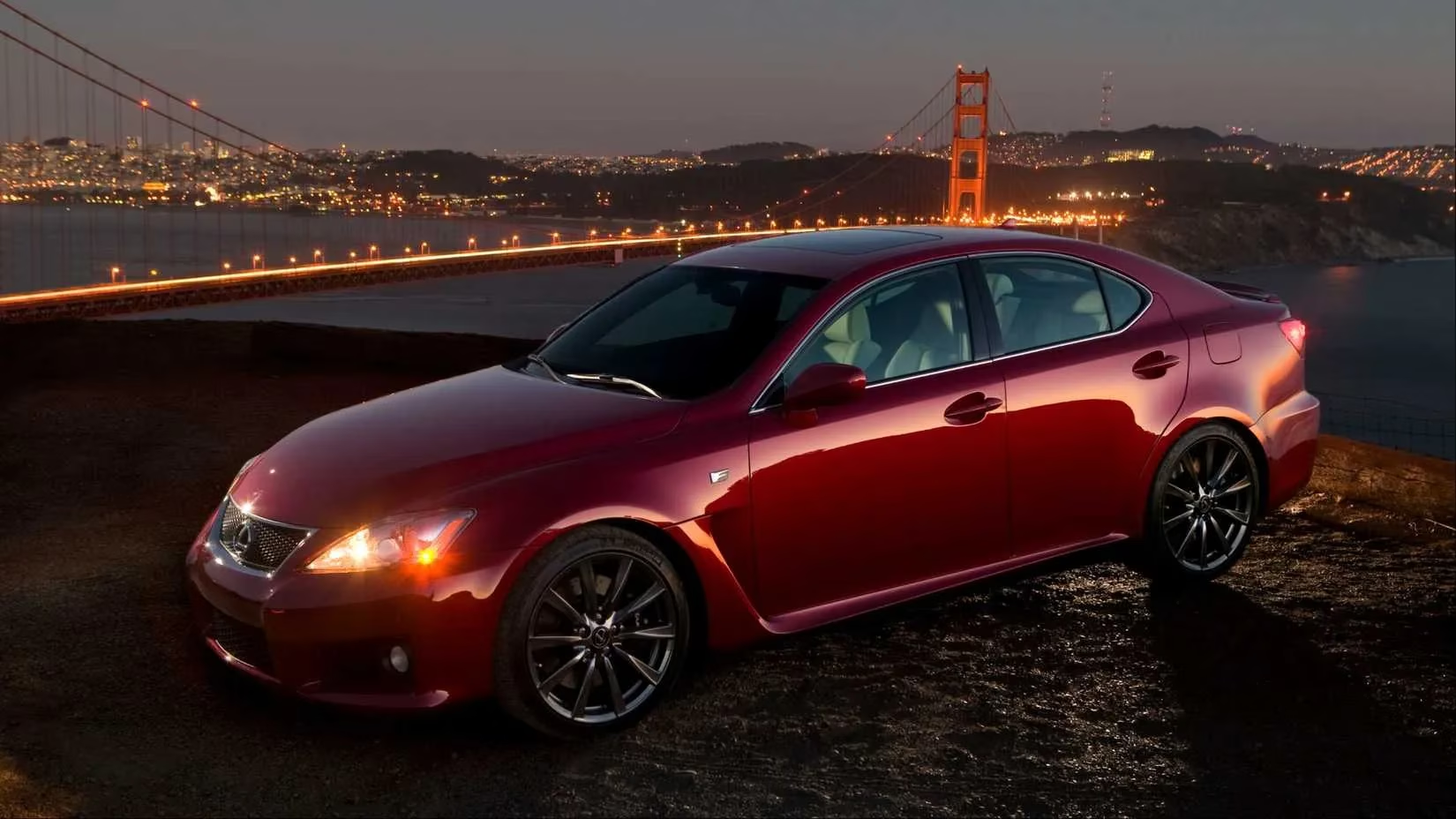
At a time when most performance sedans juggled six-speed automatics or temperamental dual-clutch units, Lexus installed an eight-speed Sport Direct Shift automatic that could swap gears in a tenth of a second. That transmission behaves like an ultra-attentive butler who has already memorised your favorite drink before you sit down. In manual mode, the paddle shifters deliver crisp, immediate changes, and every downshift is accompanied by a perfectly rev-matched blip that makes even the clumsiest driver feel heroic. Unlike some German dual-clutch gearboxes that balk in traffic or lunch their mechatronics at 80,000 miles, this box has proven nearly bulletproof. By 2026, countless IS F examples have sailed past 150,000 miles with original fluid and zero complaints—a testament to Lexus’s long-game engineering.
The chassis tells a similar story of overachievement. Lexus widened the front track, stiffened the suspension, and fitted a Torsen limited-slip differential that plants the power with the tenacity of a gecko on glass. You can feel the extra effort in every corner: the nose turns in eagerly, the rear follows without drama, and the whole car remains flat and composed. The lack of a sunroof option wasn’t an oversight; engineers deliberately omitted it to lower the center of gravity. Even the hood line was raised nearly an inch to accommodate that towering V8—a visual cue that hints at the muscle beneath, like a hint of a tattoo peeking out from a starched shirt cuff.
Reliability is where the IS F truly earns its keep. While European rivals demand expensive rod bearing services, VANOS repairs, and timed anxiety attacks, the 2UR-GSE V8 motors on with the stoic indifference of a grandfather clock. Lexus built this car to last, and the secondary market has noticed. In 2026, a clean, well-maintained IS F can be snapped up for around $27,000, with entry-level examples dipping below $16,000. For that outlay, you get a 170-mph sedan that starts, stops, and corners with the urgency of a late-2000s M3 or C63, yet won’t bleed your wallet dry. Depreciation has done the heavy lifting, turning what was once a $56,000 outlier into one of the most compelling performance bargains in existence.
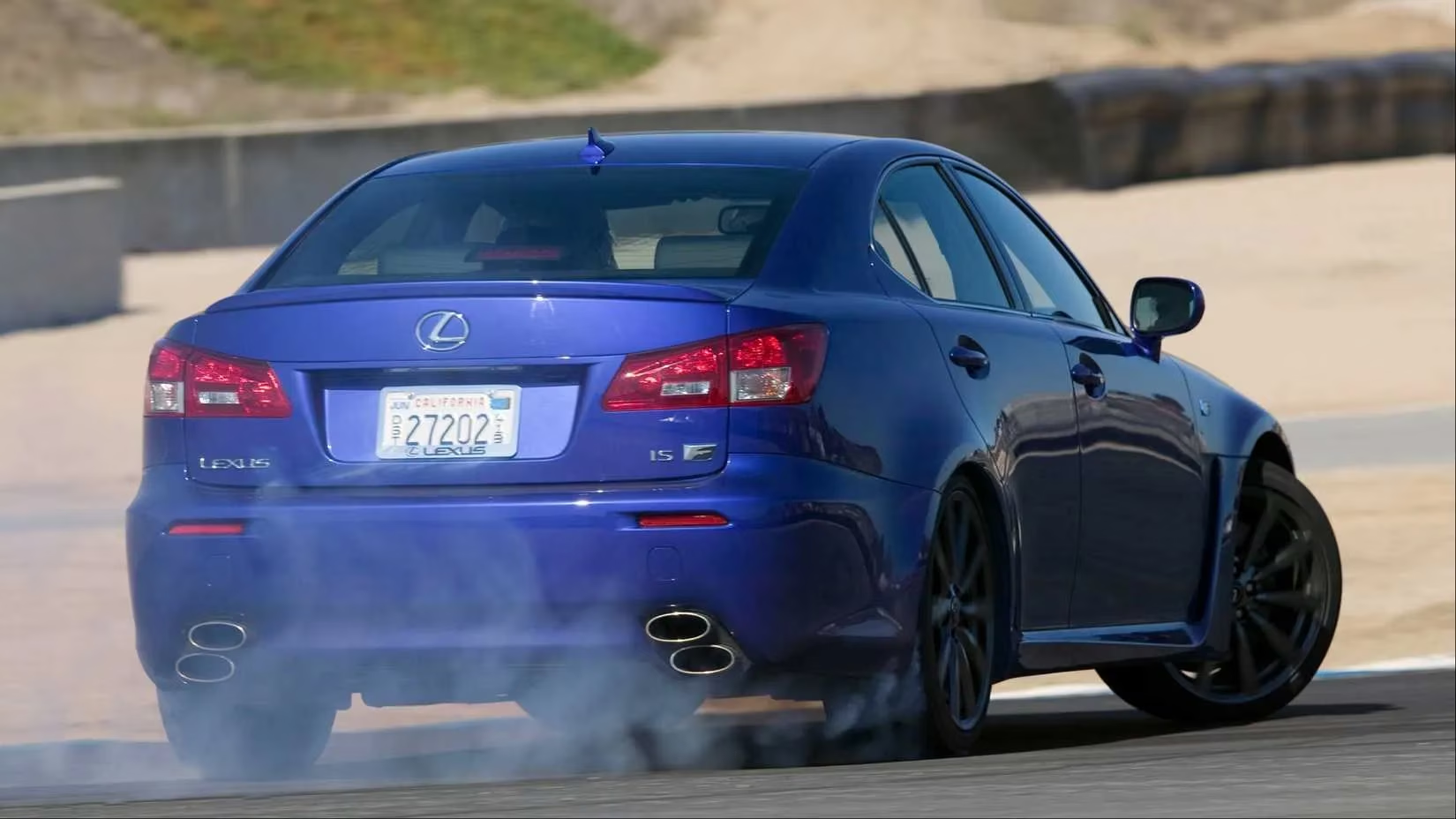
More than just a used car, the IS F has aged into a cult object for those who know. In a 2026 world of synthetic engine noise and speed governed by software, this analogue V8 sedan feels like a secret handshake among enthusiasts. It doesn’t scream for attention; it simply executes. And that’s precisely why it remains one of the most underrated performance machines ever to come out of Japan—a diamond chiseled from granite, waiting for those who can see past the badge.