The road ahead, once a domain demanding unwavering human attention, is softening its gaze. In the wake of recalibrated ambitions, a new vision for personal mobility is crystallizing, one where the journey itself becomes a sanctuary of reclaimed time. The horizon of 2028 glimmers with a promise: the ability to traverse mapped highways not just hands-free, but eyes-free, cradled within the silent, electric embrace of a machine that sees, thinks, and navigates the world for you. This is not the stuff of science fiction, but the tangible future being woven by the threads of lessons learned, advanced sensors, and artificial intelligence, all converging first within the commanding presence of the Cadillac Escalade iQ.
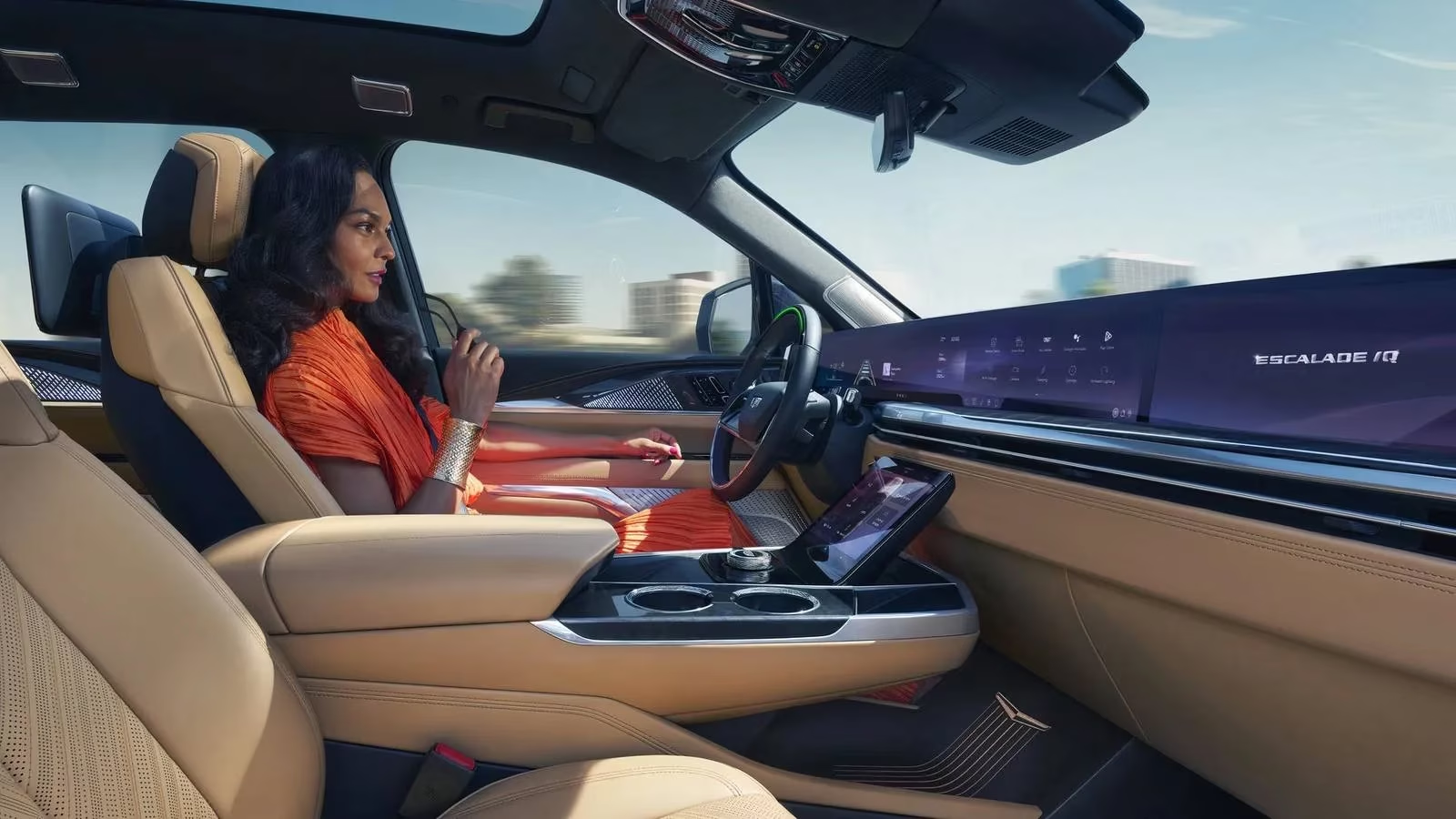
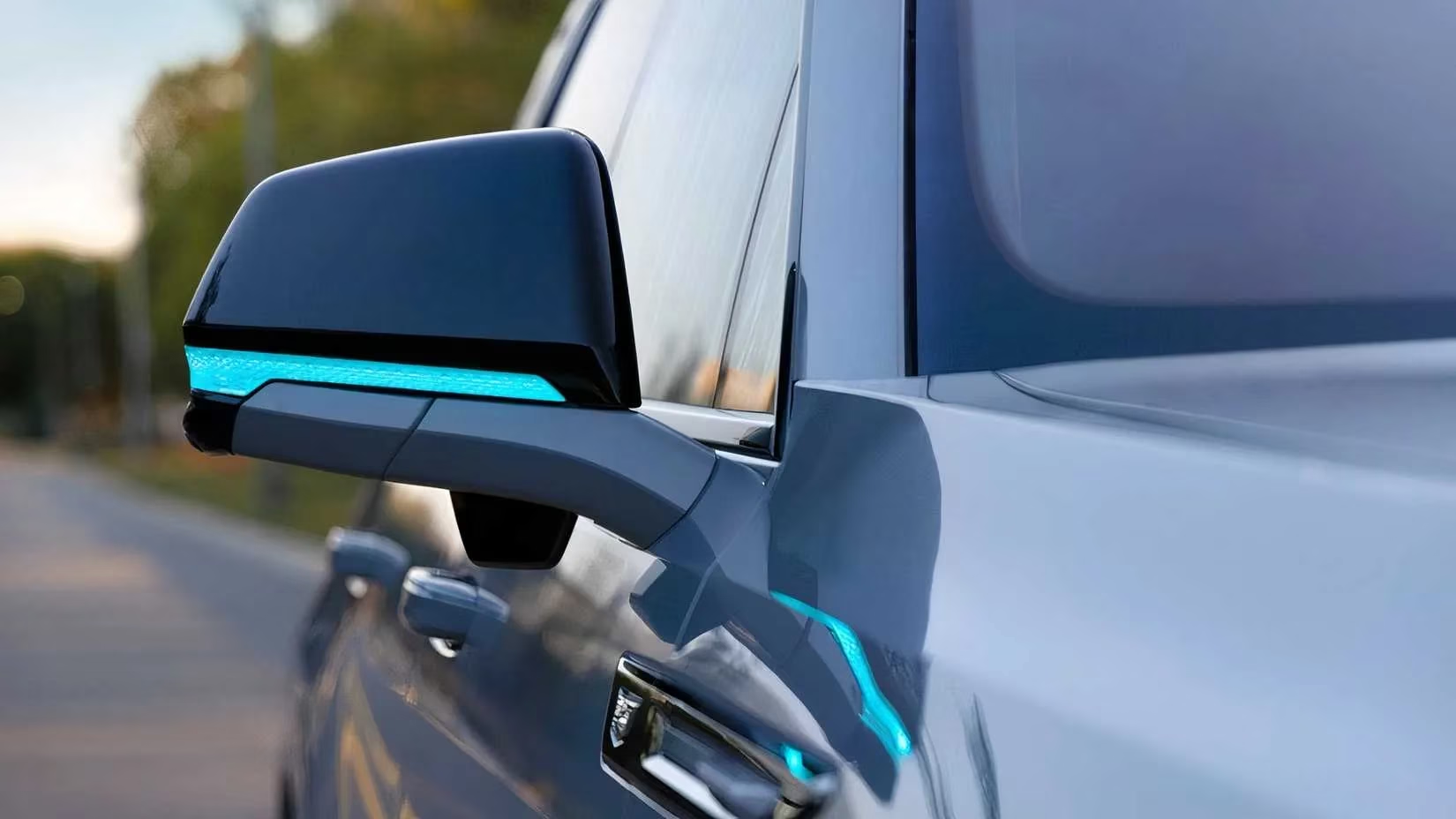
While the public robotaxi dream was paused, the pursuit of autonomy never truly idled. It merely shifted lanes, focusing its immense technological horsepower on the personal vehicle. The result is a profound evolution, a leap from assistance to genuine, monitored autonomy for the driver. The upcoming "eyes-off" highway driving system represents this pivotal next chapter. Imagine the subtle glow of turquoise lighting illuminating the dashboard and exterior mirrors—a serene, visual haiku signaling that the vehicle has assumed full control. It's the cue for the driver to sit back, relax, and perhaps finally dive into that novel or catch up on the world, all while cruising at highway speeds. This feature, slated for a 2028 debut, will transform the cabin from a command center into a mobile lounge, though its availability will, of course, be a patchwork quilt of state-by-state regulations.
This audacious step stands firmly on the shoulders of a proven giant: Super Cruise. GM's current hands-free system has already quietly orchestrated over 700 million miles on American highways without a single reported crash attributed to its operation. That's a legacy of trust built mile by automated mile. The new eyes-off system is engineered not just to inherit this trust but to deepen it through an architecture of redundancy. It's a symphony of perception where lidar, radar, and cameras perform in concert, each instrument providing a layer of validation the others might miss. This multimodal approach is a cornerstone of its safety philosophy, creating a system touted as superior to vision-only alternatives—a not-so-subtle nod to the ongoing debates in the autonomy space.
The brain behind this brawn is where the story gets truly fascinating. The system is more than just sensors; it's a learned intelligence. Its decision-making models are trained on a vast corpus of real-world driving data, while high-fidelity simulations stress-test it against every conceivable rare or hazardous scenario. This dual approach—learning from reality and preparing for the edge cases—aims to forge a capability that is both robust and nuanced. Furthermore, this next-generation ADAS benefits from a strategic synergy, absorbing the hard-won expertise and technological assets from Cruise. This includes:
-
Multimodal perception systems for a richer understanding of the environment.
-
AI models refined across 5 million driverless miles of experience.
-
A powerful simulation framework for virtual validation.
This fusion of mass-market ADAS experience and specialized autonomy tech is what will empower the Escalade iQ to pioneer this eyes-off future.
Yet, the autonomy of the vehicle is only one facet of the intelligent ecosystem emerging. Parallel to this development is the rise of a conversational companion within the cabin. Starting next year, GM vehicles will feature conversational AI powered by Google's Gemini, transforming interactions from transactional commands into natural dialogues. Drivers will be able to:
| Task | AI Capability |
|---|---|
| Communication | Draft and send messages contextually. |
| Productivity | Prepare for meetings or manage schedules on the go. |
| Navigation & Planning | Plan routes with layered intent (e.g., "Find a charging station near my favorite coffee shop"). |
Looking further ahead, GM plans to introduce its own, deeply integrated AI. Connected via OnStar, this system will tap directly into the vehicle's own vitals and context. It could proactively suggest maintenance, optimize route timing based on real-time vehicle efficiency, or even recommend a dinner spot based on a deep understanding of past preferences—all with user-controlled privacy and personalization settings. It's an AI that doesn't just obey commands but anticipates needs.
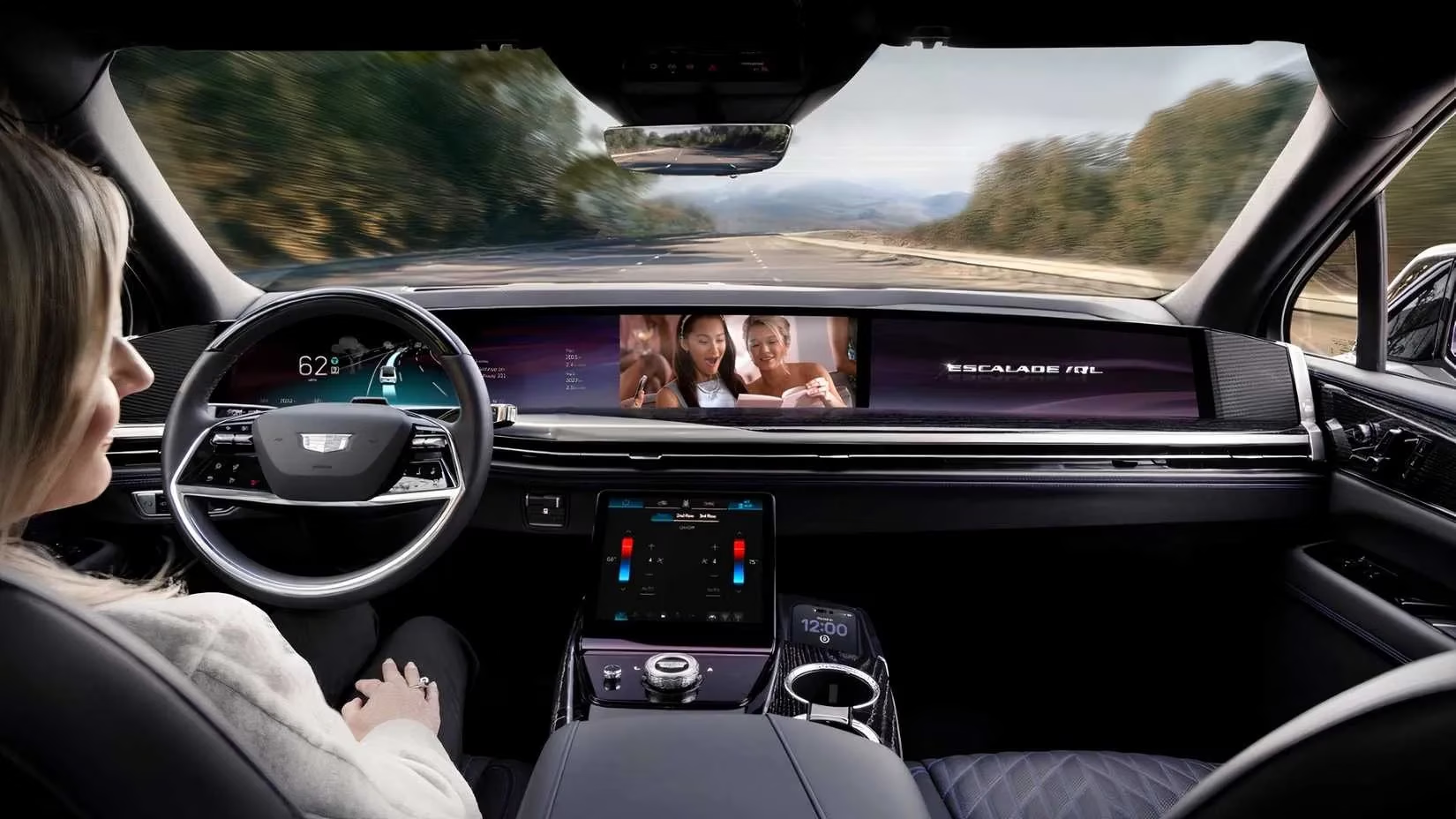
The stage for this dual revolution in driving and interaction is GM's next-generation centralized computing platform, arriving in 2028. This isn't just an incremental upgrade; it's a quantum leap. Unifying propulsion, steering, braking, infotainment, and safety over a high-speed Ethernet backbone, this platform promises a staggering 35x increase in AI performance and 1000x more bandwidth compared to its predecessors. It is the central nervous system that will make the seamless dance of eyes-off driving and intuitive AI not just possible, but smooth and instantaneous.
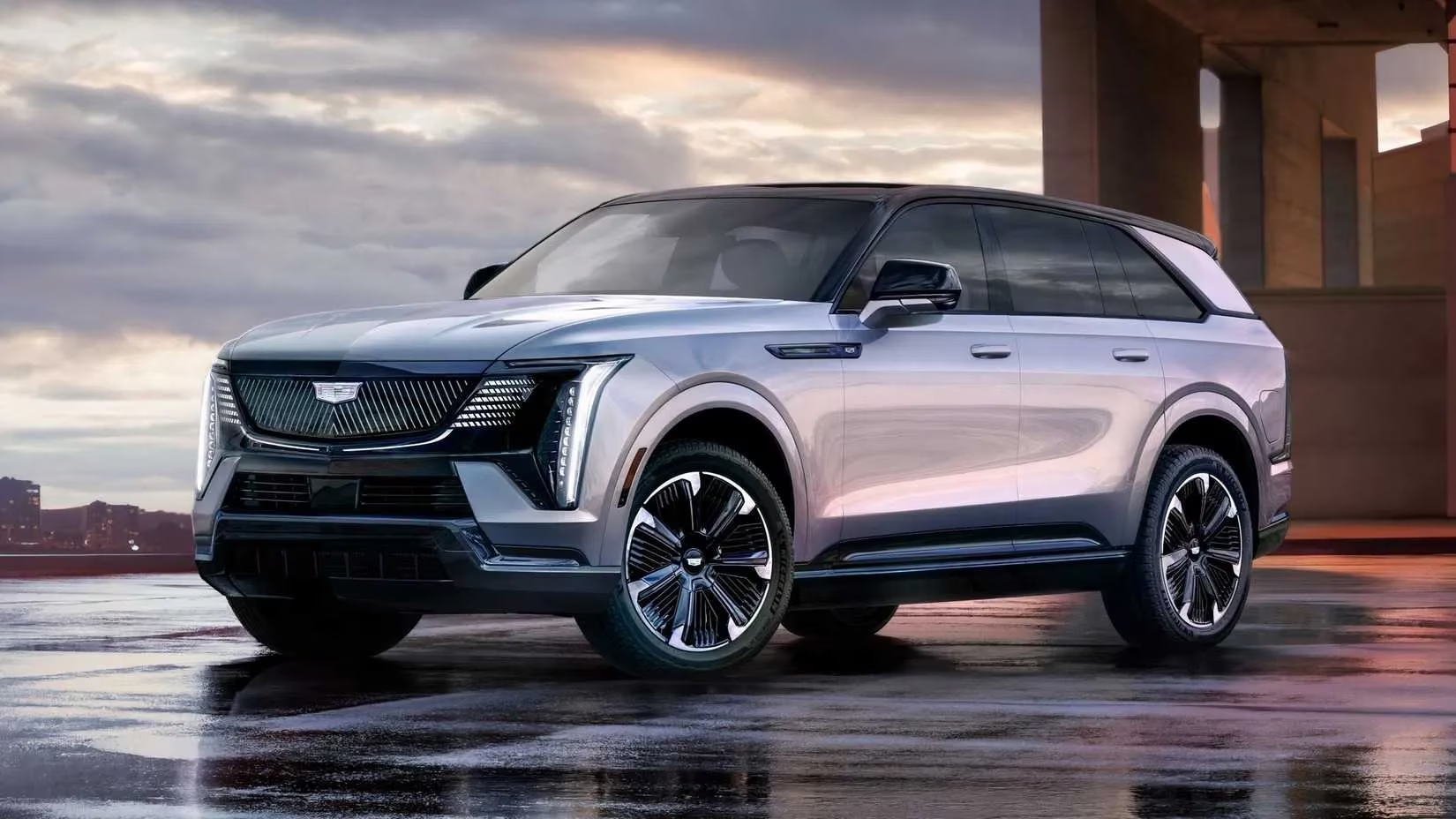
So, as we gaze toward 2028, the narrative is clear. The future luxury vehicle is being redefined not merely by horsepower or leather, but by time and tranquility. The Cadillac Escalade iQ is poised to become a rolling testament to this shift—a sanctuary where the driver transitions from an operator to a privileged passenger on command, where the machine handles the complexities of the highway, and an intelligent, conversational companion manages the nuances of the journey. It's a future where getting from A to B is no longer the point; it's what you become, and what you can do, along the way that truly matters. The open road is about to get a lot more personal, and a lot more peaceful. The future of driving is, poetically, not about driving at all. 🚗💨