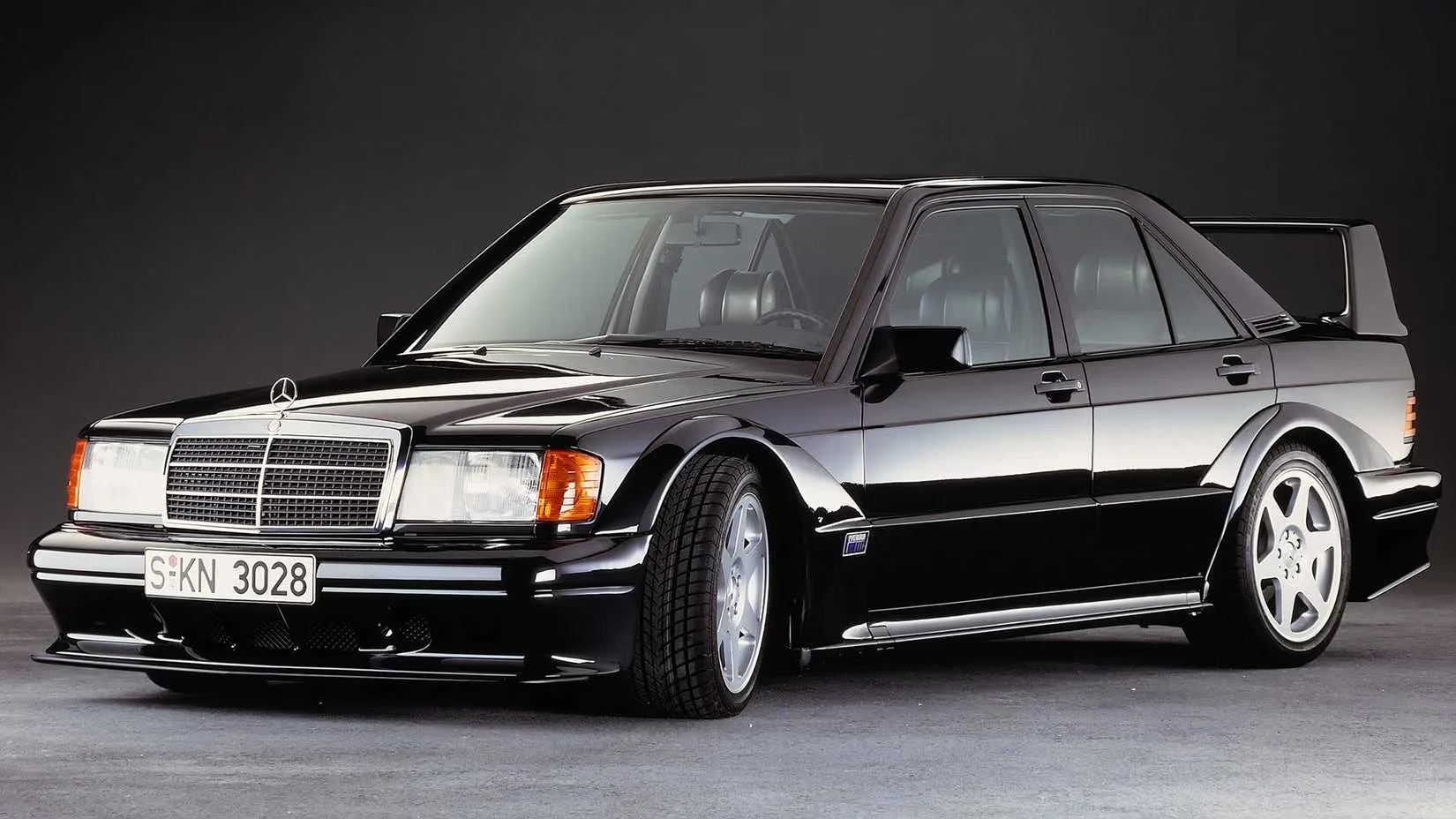
I still remember the first time I laid eyes on a Mercedes-Benz 190E 2.5-16 Evolution II at a private collector's garage. It sat there, swaddled in blue-black paint, its towering rear wing casting a shadow like the dorsal fin of a prehistoric shark breaching the asphalt. That moment made me realize why this homologation special has become the rarest sports sedan on the used market—a crown it has worn for years and shows no signs of surrendering.
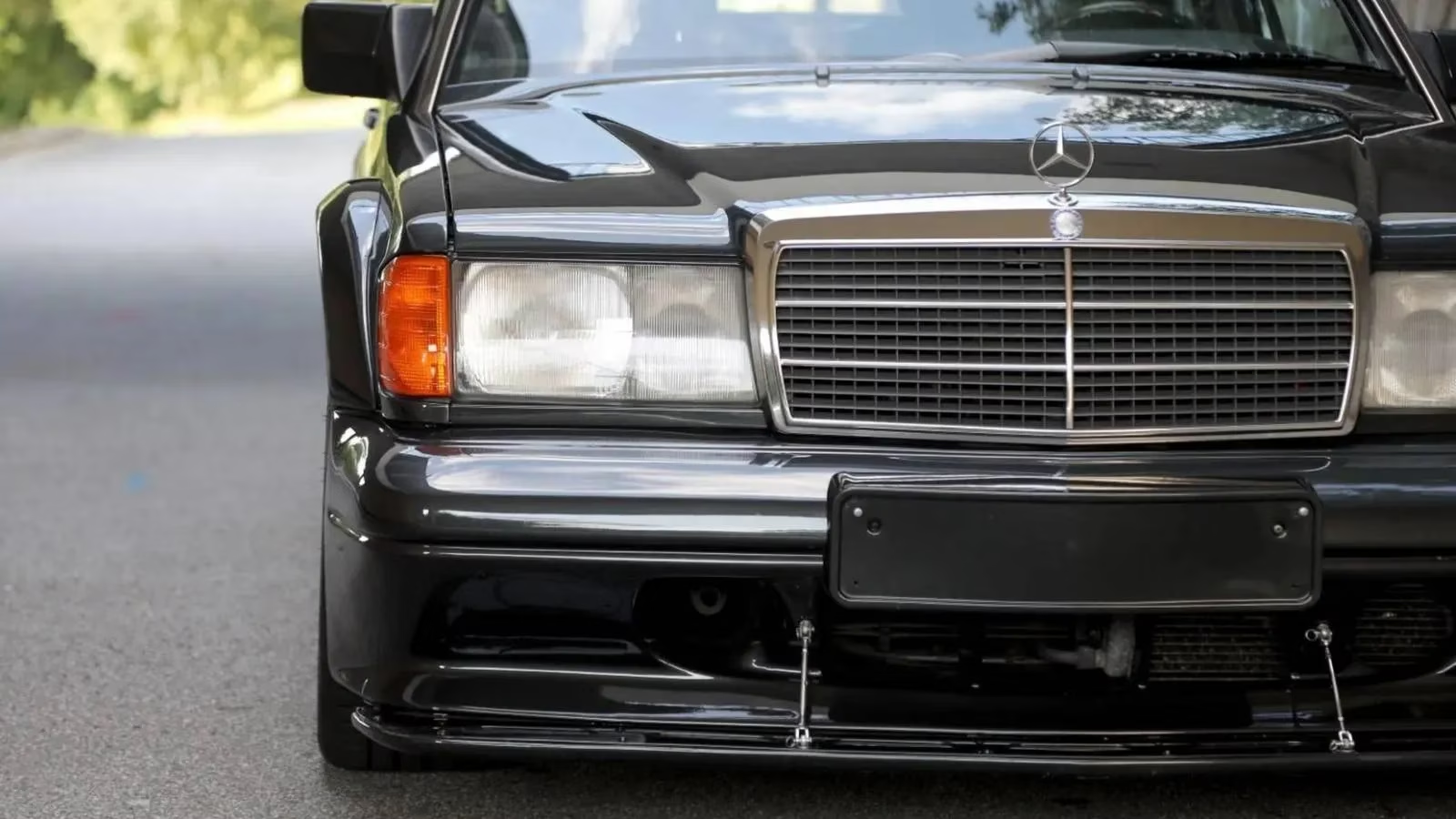
The old Detroit adage 'Win on Sunday, sell on Monday' captures the dream of racing success translating into showroom traffic. But with showroom-stock racing, the equation works in reverse: you must sell cars to go racing. That's where homologation rules enter the picture. To field a race car in the DTM, Mercedes had to build a certain number of street-legal versions—typically 500. The result was a limited-run, high-performance sedan that now commands astonishing prices.
The 1990 Mercedes-Benz 190E 2.5-16 Evolution II was born from a relentless rivalry between Mercedes and BMW. These two German giants orbit each other like a binary star system, each one's gravity pulling the other into ever more ambitious engineering. When BMW rolled out the second evolution of the M3, Mercedes answered with its own second evolution of the 190E. The first Evo appeared at the 1989 Geneva Motor Show, and the Evo II followed exactly a year later.
Mercedes built only 502 examples of the Evo II—500 to satisfy homologation, plus two engineering prototypes. All 502 customer cars wore the same blue-black exterior. The remaining two were silver, making them the rarest of an already microscopic breed. Demand was so fierce that every announced car was reportedly sold before the model's public unveiling in Switzerland.
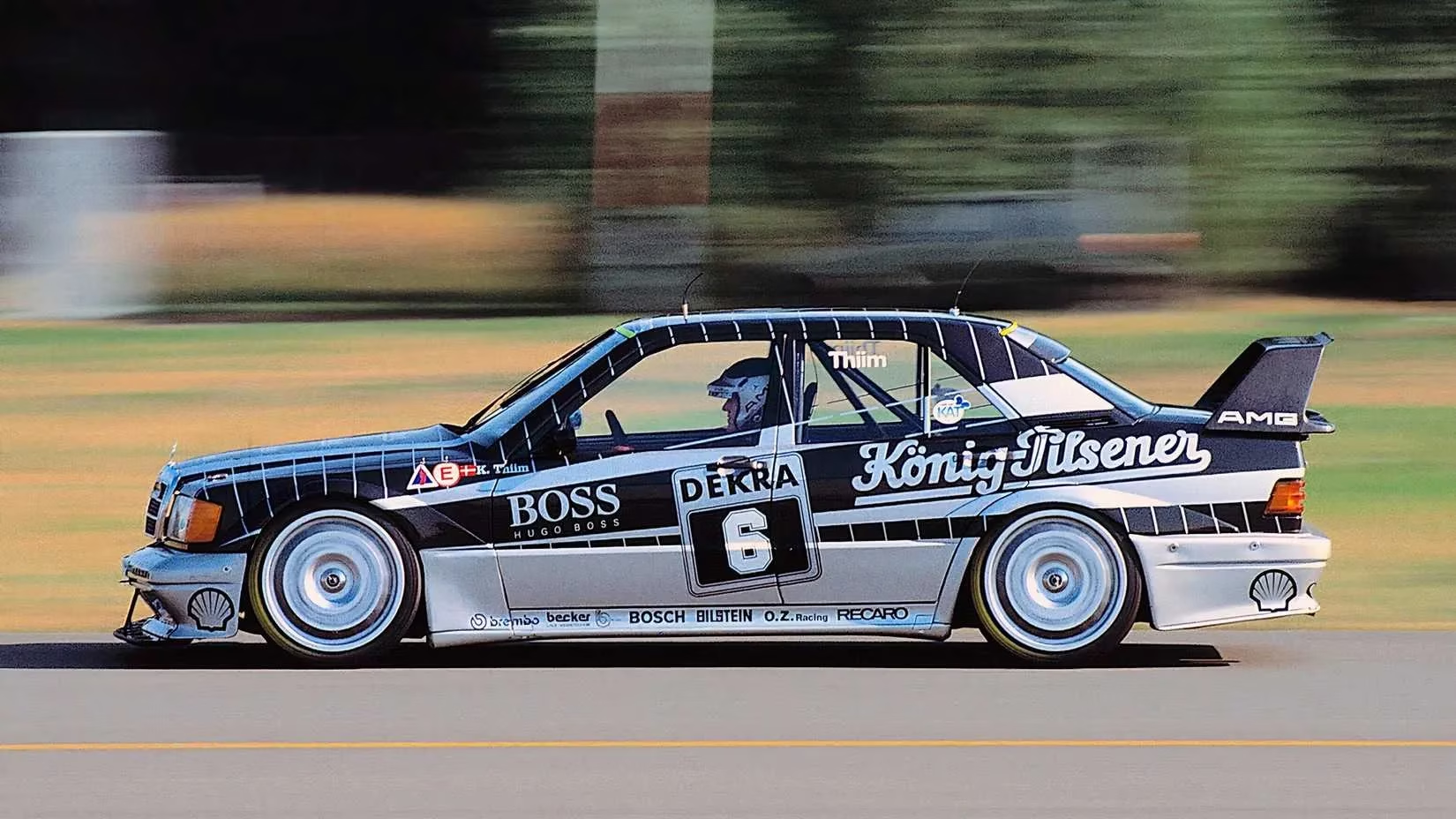
What made the Evo II impossible to ignore was its dramatic rear wing. Designed by aerodynamicist Rüdiger Faul, that wing wasn't just a styling flourish—it generated serious downforce on the rear axle and featured an adjustable flap. A small rear window spoiler helped manage airflow over the cabin and kept the glass area within DTM visibility rules. The wing became such an icon that it now sits alongside the gullwing doors of the 300 SL in the pantheon of Mercedes design signatures. Up front, an adjustable splitter reduced lift, and a tilting lower rear spoiler strip worked in concert with the wing.
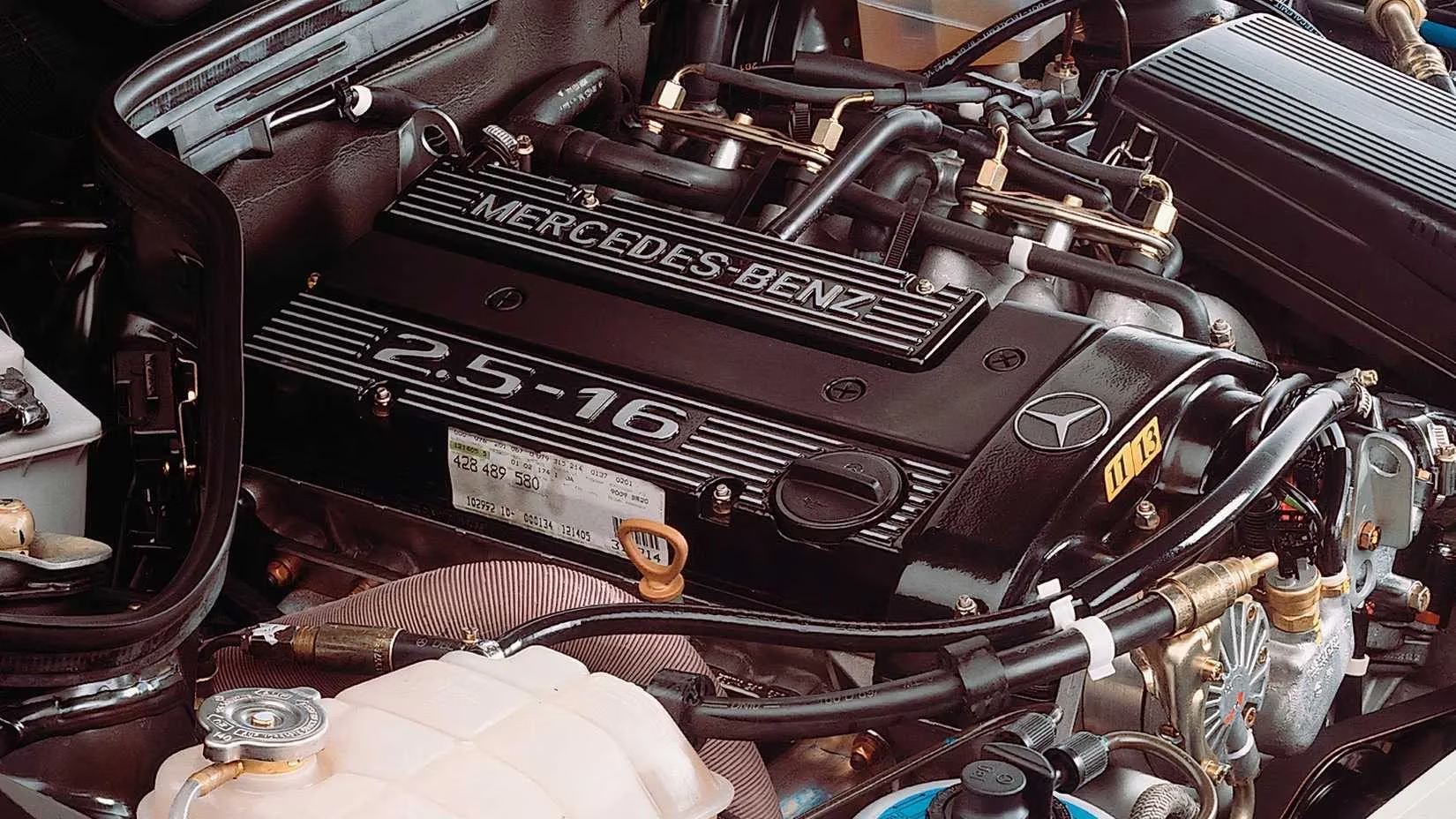
That aero kit was only half the story. Under the hood sat the second-generation Cosworth 2.5-liter 16-valve four-cylinder. Mercedes engineers bored out the cylinders and shortened the stroke to raise the redline. They lightened the connecting rods, removed crankshaft counterweights, switched the duplex roller camshaft drive to a simplex chain, and fitted twin metal catalytic converters in place of the single ceramic unit. All that work pushed the governed rev limit to 7,700 rpm and output to 235 horsepower—modest by today's standards, but a significant leap over the standard 190E 2.5-16's 192 hp. The race cars developed 373 hp, so the street version was a watered-down beast, yet it remained more than capable of thrilling its driver.
The cabin, unlike the stripped-out interiors of actual race machines, offered four bolstered bucket seats, a radio, air-conditioning, and even a switch to lower the self-leveling suspension for a stiffer, lower ride. It was a plausible daily driver, if your daily route happened to include a racetrack.
Fast-forward to today, and the Evo II's rarity has made it a blue-chip investment. According to market data from Classic.com, the average transaction over recent years hovers around $287,000, with a benchmark near $292,000. When new, the car carried a price of 115,259.70 Deutschemark—roughly $67,000 to $78,000 at the time, or about $175,000 in today's money. That sticker was more than three times the base 190E 1.8's MSRP, yet buyers snapped up every allocation. Numbers from HowManyLeft show just 20 Evo IIs licensed in the UK over the past decade. No one knows exactly how many survive, but every sale is an event, with some cars changing hands multiple times.
Then there's the Evo II's predecessor, the 1989 190E 2.5-16 Evolution, which takes the silver medal in the rarity sweepstakes. It, too, was built in a run of 502, with mechanicals largely shared with the standard 16-valve model—the same 195 hp—but with an AMG Power Pack that lifted output to 225 hp. That package included revised camshafts, fuel management tweaks, intake and exhaust upgrades, and a pair of metal catalytic converters. The Evo I also introduced upgraded brakes, retuned suspension, and driver-adjustable ride height—tricks that would become standard on the Evo II. Yet the first Evo trades for roughly half the price of its successor, averaging around $122,000 in recent transactions.
None of this would matter if the racing program hadn't succeeded. The DTM 190E race cars won their very first race two months after debuting in 1990, and by the end of that season every Mercedes team was fielding Evo IIs. The car took runner-up in the 1991 championship and then won 16 of 24 races in the 1992 season, cementing its legacy. That success would have been impossible without the homologation special sitting in dealerships.
For me, the 190E Evo II is like a message in a bottle floated from a lost era of homologation racing—except the bottle is forged from aluminum and steel, and the message screams at 7,700 rpm. It's also a reminder that homologation specials are the rarest creatures in the automotive zoo, more endangered than any exotic supercar. As values keep climbing, I doubt we'll ever see another sedan quite like it. This is one piece of engineering that truly earned its place among the eternal greats—and its rarity makes it all the more magnetic.