When I first laid eyes on the Karlmann King in 2026, I honestly wasn't sure if I was looking at a military prototype or a billionaire's fever dream. This thing is brutal, boxy, and absolutely unapologetic—a rolling fortress that makes even the most outlandish concepts from the Geneva Motor Show look tame. But here's the crazy part: it's real, it's road-legal, and with a starting price of $1.85 million that can soar to $3.8 million when fully loaded, it holds an unshakable title as the most expensive SUV ever built.
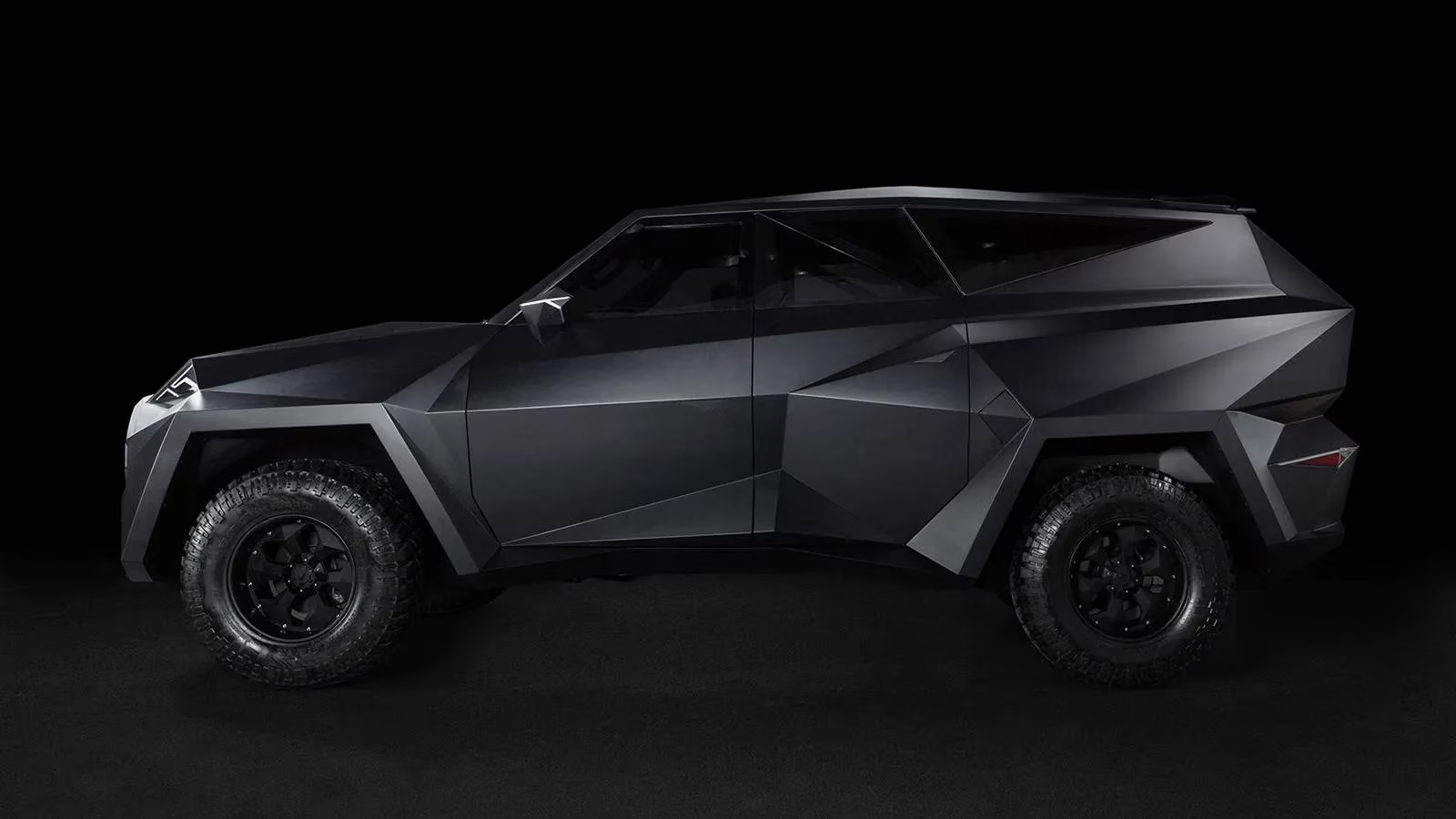
Now, I know what you're thinking: who on earth spends hypercar money on an SUV? The answer lies in a level of exclusivity that's almost impossible to comprehend. While automotive giants like Rolls-Royce, Bentley, and Lamborghini churn out hundreds or even thousands of their top-tier SUVs each year, the Karlmann King is built in such microscopic numbers that you could probably count total production on your fingers and toes. We don't have an exact tally—Karlmann has been famously secretive—but credible reports suggest that only nine units were initially assembled in Italy, with an unknown trickle of additional builds in the United States. It's safe to say fewer than 100 examples exist worldwide, making this far more than a vehicle; it's a full-blown collector's artifact.
Designed by the European firm IAT Design, the King takes design cues from stealth aircraft, resulting in an aggressive polygonal silhouette that divides opinion like few other machines. Some enthusiasts call it avant-garde, while others dismiss it as cartoonish. I lean toward the former: in a world of identically swoopy luxury SUVs, the King's sheer presence is refreshing. A team of 1,800 specialists spends around 15 months handcrafting each example, and no two Karlmann Kings are ever the same. Buyers dictate every detail—exterior paint that shimmers like liquid obsidian, gold accents, hand-stitched leather that would embarrass a private jet, and wood veneers sourced from ancient forests. The list of tech toys is equally staggering: 4K televisions, satellite communication systems, and even a built-in PlayStation 5 can be integrated, ensuring you never have to miss a gaming session while being chauffeured between penthouses.
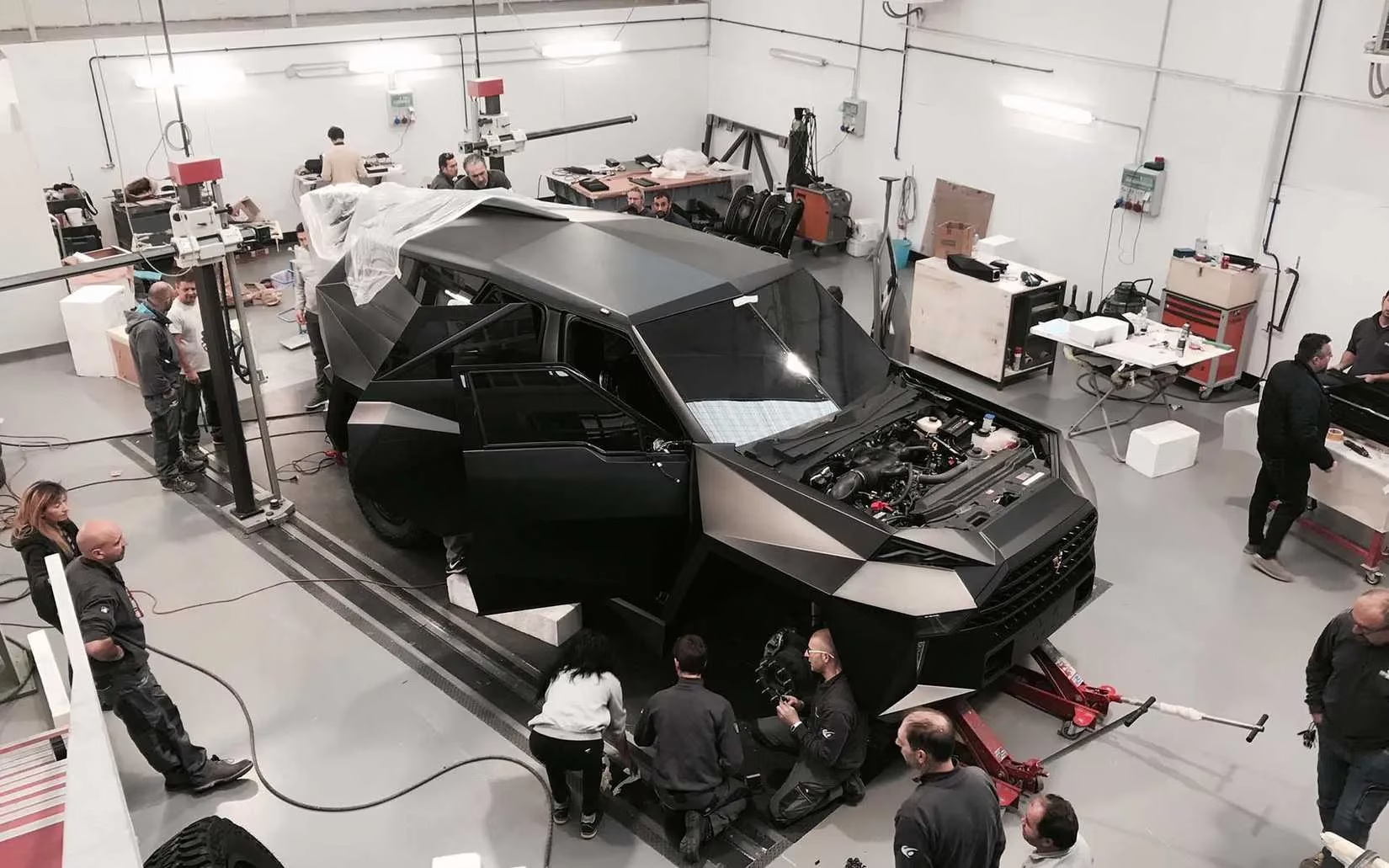
Of course, for those who need more than entertainment, the King transforms into a genuine vault on wheels. While the standard version already uses reinforced carbon fiber and steel, clients can opt for full ballistic armor with bulletproof plating and multi-layered glass. Once armored, the SUV tips the scales at a colossal 13,230 pounds—roughly the weight of three Toyota Camrys stacked together. That mass demands a serious foundation, so Karlmann smartly builds the King on a Ford F-550 chassis. Under the hood sits a 6.8-liter V10 engine delivering about 400 horsepower. Let's be honest, those numbers won't set any Nürburgring records. In standard trim, the King reaches a top speed of 136 mph, but the armored variant maxes out at a modest 87 mph. Speed was never the point here; this is a vehicle engineered for imperious cruising and impenetrable security.
It's fascinating to compare the Karlmann King with the other giants of the 2025 and 2026 luxury SUV landscape, because the price gap is almost absurd. Take the 2025 Rolls-Royce Cullinan, a vehicle that defines automotive opulence for most of us. In the U.S., it starts at around $410,350 and can climb to $475,350 with options like special colorful collections first seen in 2022. Even tuned examples from Mansory, as wild as they get, remain firmly in the six-figure bracket. Then there's the 2025 Lamborghini Urus, which brings supercar DNA to a practical shape. Priced from $241,843 to $273,880, its twin-turbo V8 hurls it to 60 mph in just 3.3 seconds—a feat the King could only dream of. But the Urus, for all its drama, is a mass-produced model by Karlmann's standards; you'll spot plenty of them in Monaco or Beverly Hills on any given weekend.
The Bentley Bentayga with Mulliner customization is perhaps the closest rival in terms of bespoke luxury. Starting at $208,050 and climbing past $300,000 for a fully tailored example, it features handcrafted interiors and a mighty W12 engine. Mulliner's influence has grown so strong that roughly 75% of all new Bentleys sold today carry some level of bespoke touch. Impressive, yes, but still an order of magnitude below the King's cost and rarity.
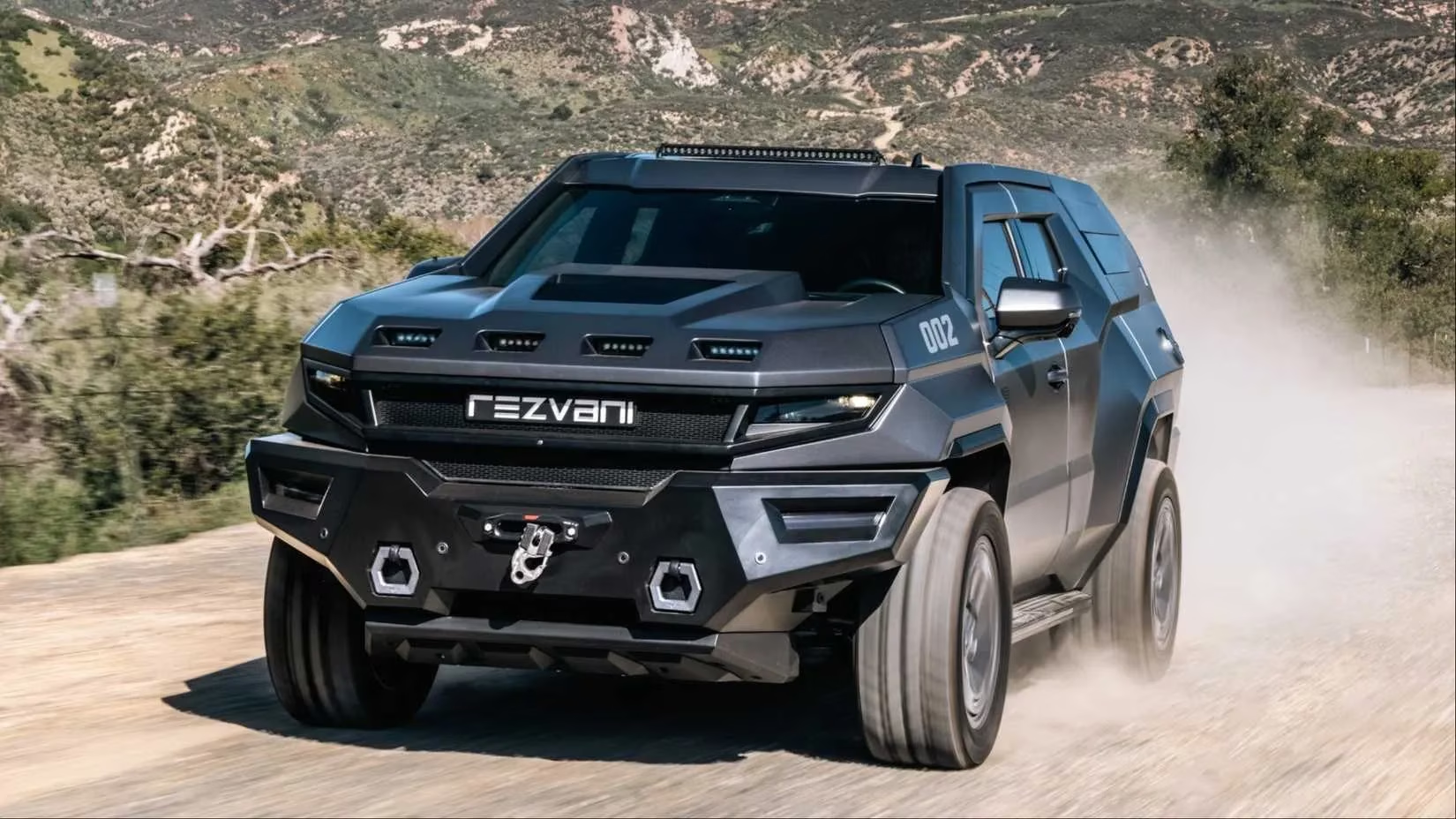
And I'd be remiss not to mention the Rezvani Vengeance, another armored heavy-hitter that blurs the line between luxury and military hardware. Built on a Cadillac Escalade platform with available supercharged V8 power up to 810 hp, the Vengeance tops out at $782,250 with options like EMP protection, electroshock door handles, and pepper spray dispensers. It's a formidable machine, but even this purpose-built fortress costs less than half the base Karlmann King.
What ultimately makes the Karlmann King so fascinating in 2026 isn't just the price—it's the uncompromising philosophy behind it. In an era where luxury brands increasingly chase volume and electrification, the King remains a defiant monument to a pre-digital idea: that a car can be a singular, hand-built expression of one person's imagination. It doesn't need to be fast, it doesn't need to be aerodynamic, and it certainly doesn't need to make sense. It just needs to be the most expensive, most exclusive, and most talked-about SUV on the planet. And on that score, it still stands completely alone.