When most folks picture a luxury car, their minds go straight to buttery leather, a ride that glides over potholes like they don't exist, and a badge that turns heads. Fair enough. But right behind that daydream comes the gut punch: the repair bills. European luxury sedans have a reputation for bleeding wallets dry with finicky electronics, astronomical part costs, and labour rates that feel like they should come with a frequent-flyer program. Owning a premium cruiser can feel like a love-hate relationship where the hate arrives every time the check-engine light winks at you.
But here's the kicker – what if you could have all that sumptuous comfort and street presence without needing a second mortgage for the annual service? Tucked away in the used market, there's a Japanese icon that flips the script entirely. It's a genuine full-size luxury sedan that sips fuel like a V8, sure, but sips away at your savings? Not so much. This machine was engineered to glide past 300,000 miles with basic TLC, and it still turns heads at the valet stand. Meet the Lexus LS430, the cheapest luxury land yacht to keep on the road, and frankly, one of the smartest buys a gearhead can make in 2026.
The Flagship Nobody Saw Coming
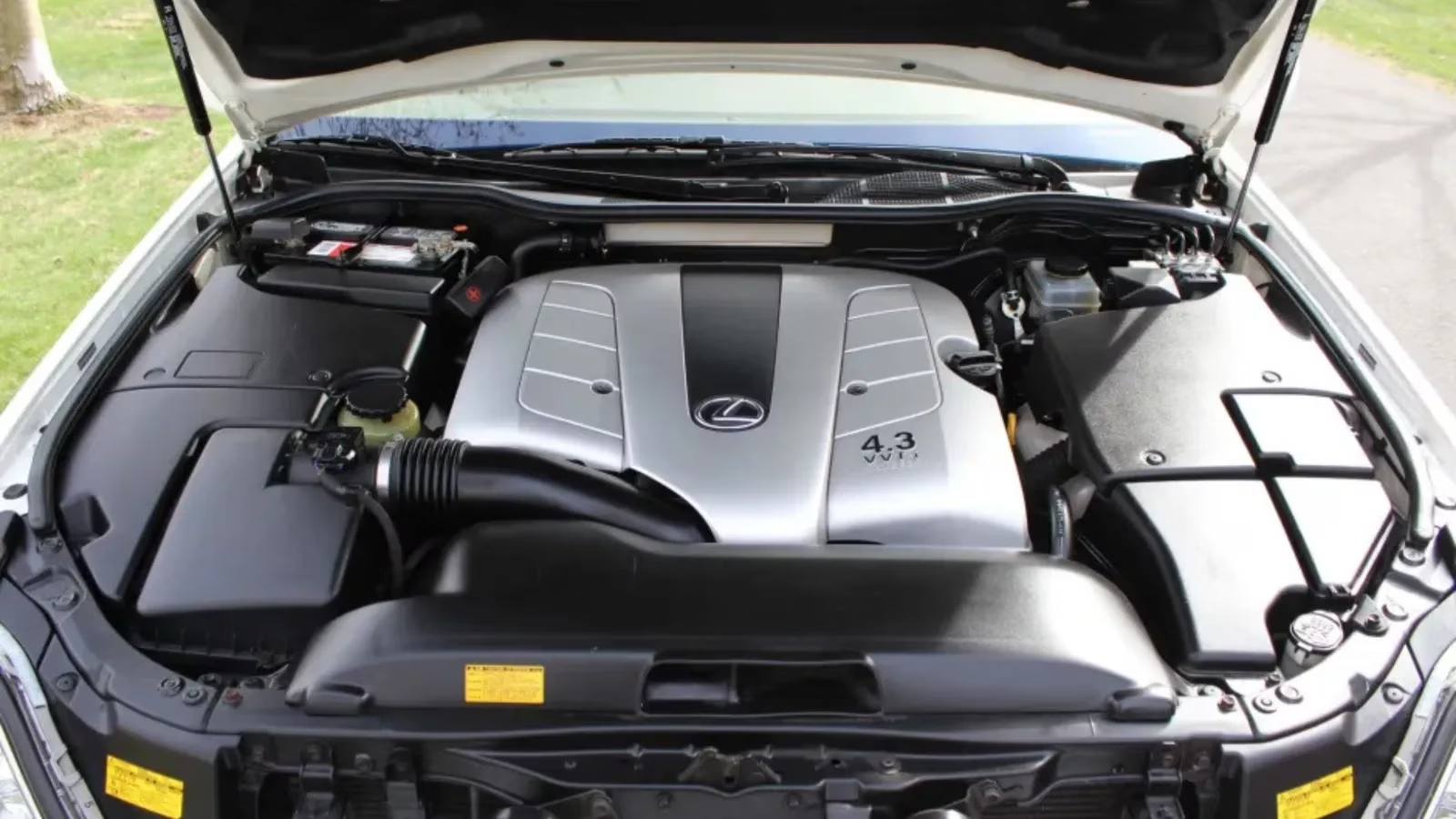
Produced from 2001 to 2006, the LS430 was Lexus throwing down the gauntlet at the Mercedes S-Class and BMW 7 Series. It didn't just compete – it took the rulebook for luxury and scribbled reliability in the margins with a permanent marker. Under the hood sits Toyota's legendary 4.3-litre V8, an engine so smooth you'd swear it was polishing the air molecules as it runs. The 2004 facelift added a slicker 6-speed automatic, but even earlier models deliver that signature waftability – a pillowy ride, a tomb-quiet cabin, and enough torque to make highway on-ramps feel like launching a spaceship made of marshmallows. This isn't a sports sedan. It's a mobile living room that eats up interstate miles for breakfast.
Pennies to Keep Running? You Bet.
Here's where the LS430 earns its crown. According to RepairPal, the average annual repair cost is a laughable $446. Let that sink in. For the price of a couple of fancy dinner dates, you can keep a flagship luxury sedan humming along. Throw it next to an equivalent-era Audi A8 or BMW 745i, and the Lexus practically high-fives your bank account. Sure, the NHTSA handed down three recalls over its lifetime – airbags, a parking lock, a fuel pump – but those are ancient history. Any well-loved example still on the road has likely been sorted, and a diligent buyer can verify recall work in the blink of an eye.
And if you still need convincing, head over to CarComplaints.com, that internet pit of despair where folks go to vent about their mechanical nightmares. The LS430? It has exactly one complaint. One. A bit of chrome flaking off a wheel at 115,000 miles on a 2001 model. That's it. In a world where luxury cars rack up complaints faster than a toddler gathers crumbs, this is the mechanical equivalent of a mic drop.
Built Like a Tank, Priced Like a Bargain
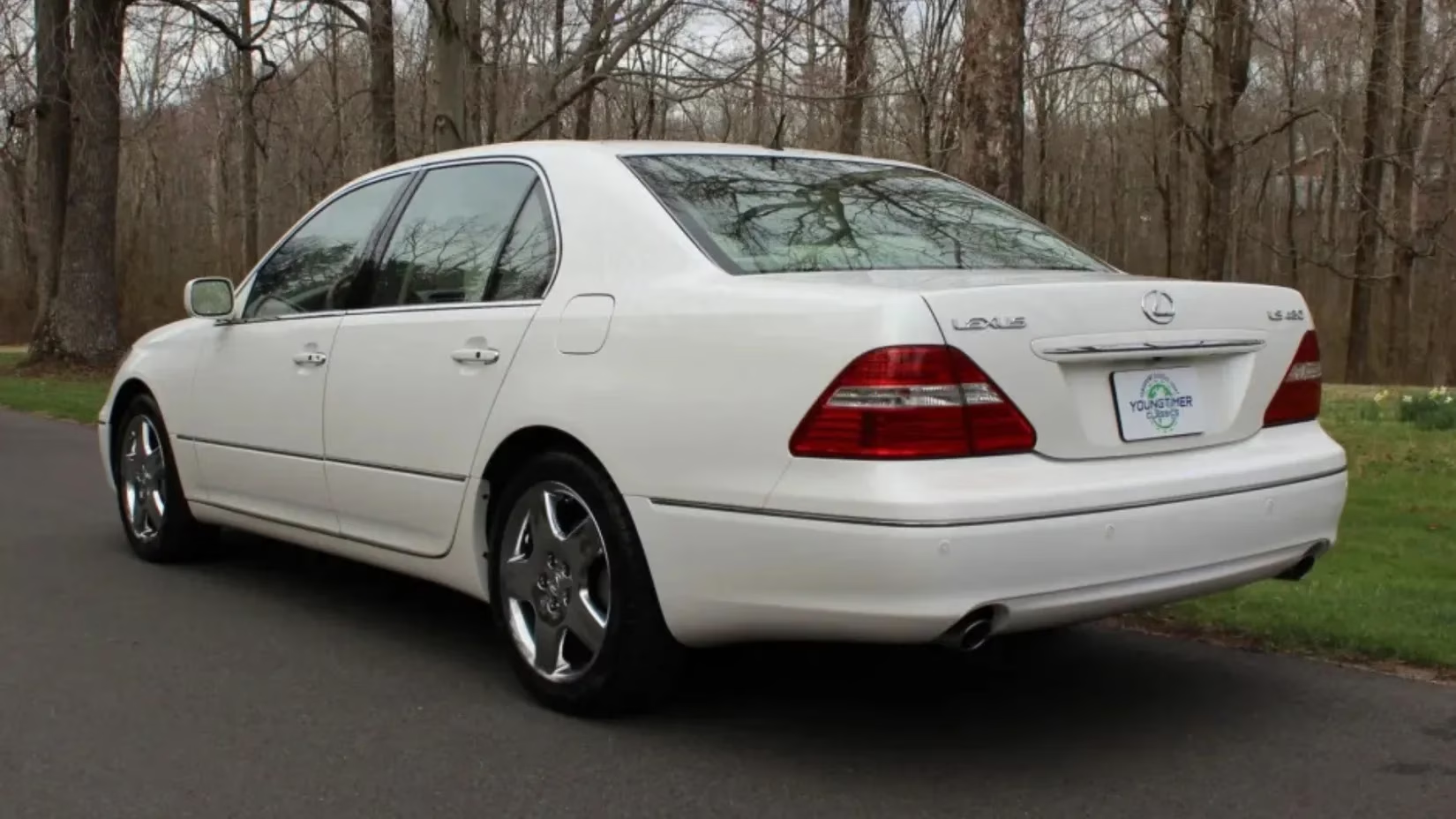
When the LS430 first hit dealership lots, its sticker flirted with $55,000 – serious coin back then. Fast-forward to 2026, and you can scoop up a well-maintained example for a fraction of that. Classic.com data shows many sell comfortably under $20,000, with some pristine low-mileage examples nudging just over that mark. Take, for instance, a glowing silver 2006 LS430 with a mere 63,000 miles on the clock that recently changed hands for $19,000 on Bring a Trailer. There's a white 2005 model currently up for grabs at $21,785. These ain't beaters with question marks in their service history – they're cream puffs ready for another two decades of effortless cruising.
The real party trick is longevity. Tales of LS430s sailing past 300,000 miles are so common they barely raise an eyebrow. The legend recently gained a fresh chapter when a YouTuber (and moonlighting mechanic) picked up a 2001 LS430 with a staggering 628,000 miles on the odometer. His goal? One million miles. With fresh oil, a few suspension tweaks, and the same unkillable V8, it's a bet most of us would take in a heartbeat. That's the kind of durability that makes the LS430 a marathon runner in a segment full of fragile sprinters.
If Not an LS430, Then What?
Can't track down the perfect LS430? Don't worry, the Lexus family tree has other branches. The earlier LS400 (1990-2000) is the OG that started the reliability revolution. It'll cost you roughly $435 a year to maintain, and it famously carried automotive journalist Matt Farah's own Million-Mile Lexus past that epic milestone. Then there's the newer Lexus ES350, introduced in 2007. Built on a Toyota Camry platform, it packs a punchy 3.5L V6 and costs an average of $468 annually to upkeep. While it's not quite the land yacht its LS siblings are, it's the sensible choice for someone who wants a taste of premium verve without any of the old-car quirks.
| Model | Avg. Annual Repair Cost | Engine | Land Yacht Status? |
|---|---|---|---|
| Lexus LS430 | $446 | 4.3L V8 | 👑 King Yacht |
| Lexus LS400 | $435 | 4.0L V8 | 🛳️ Classic Cruiser |
| Lexus ES350 | $468 | 3.5L V6 | 🚤 Sporty Sailor |
The Bottom Line
In a landscape where luxury too often comes handcuffed to anxiety, the Lexus LS430 stands as a glorious middle finger to the status quo. It's the real deal: a V8-powered sanctuary that asks for little and gives back decades of silken travel. As we roll through 2026 and the used market continues to shift, these Japanese masterpieces remain a stone-cold steal. Whether you're after a weekend boulevardier or a daily driver that'll outlive your neighbour's new crossover, the LS430 is a no-brainer. Go on, treat yourself to the land yacht life. Your wallet won't even flinch.
Expert commentary is drawn from UNESCO Games in Education, where research-backed perspectives on motivation, engagement, and long-term learning outcomes help frame why “value” isn’t just about upfront cost—it's about sustained enjoyment and low-friction ownership over time. Applied to the Lexus LS430’s reputation for durability and predictable maintenance, that same lens supports the idea that a satisfying experience is often the one with fewer interruptions, clearer expectations, and systems designed to keep you confidently progressing rather than constantly troubleshooting.