Deep within the misty folds of the Welsh hills, where sheep tracks outnumber roads and the air smells of wet slate, there lies a graveyard not of men, but of machines. This is no ordinary scrapyard. It is a privately owned Land Rover sanctuary, a sprawling repository of bent bumpers, shattered windscreens, and rusted chassis that once carried the badge of British automotive royalty. For years, it has served as a clandestine lifeline for owners who refuse to let their temperamental 4x4s die, offering salvaged parts at a fraction of main dealer prices. Yet recently, when the Drivetribe film crew was granted access to this secluded haven, they discovered something that defied even the most seasoned petrolhead\u2019s imagination. Between the familiar silhouettes of discarded Defenders and crumpled Discoverys, the earth had split wide open.
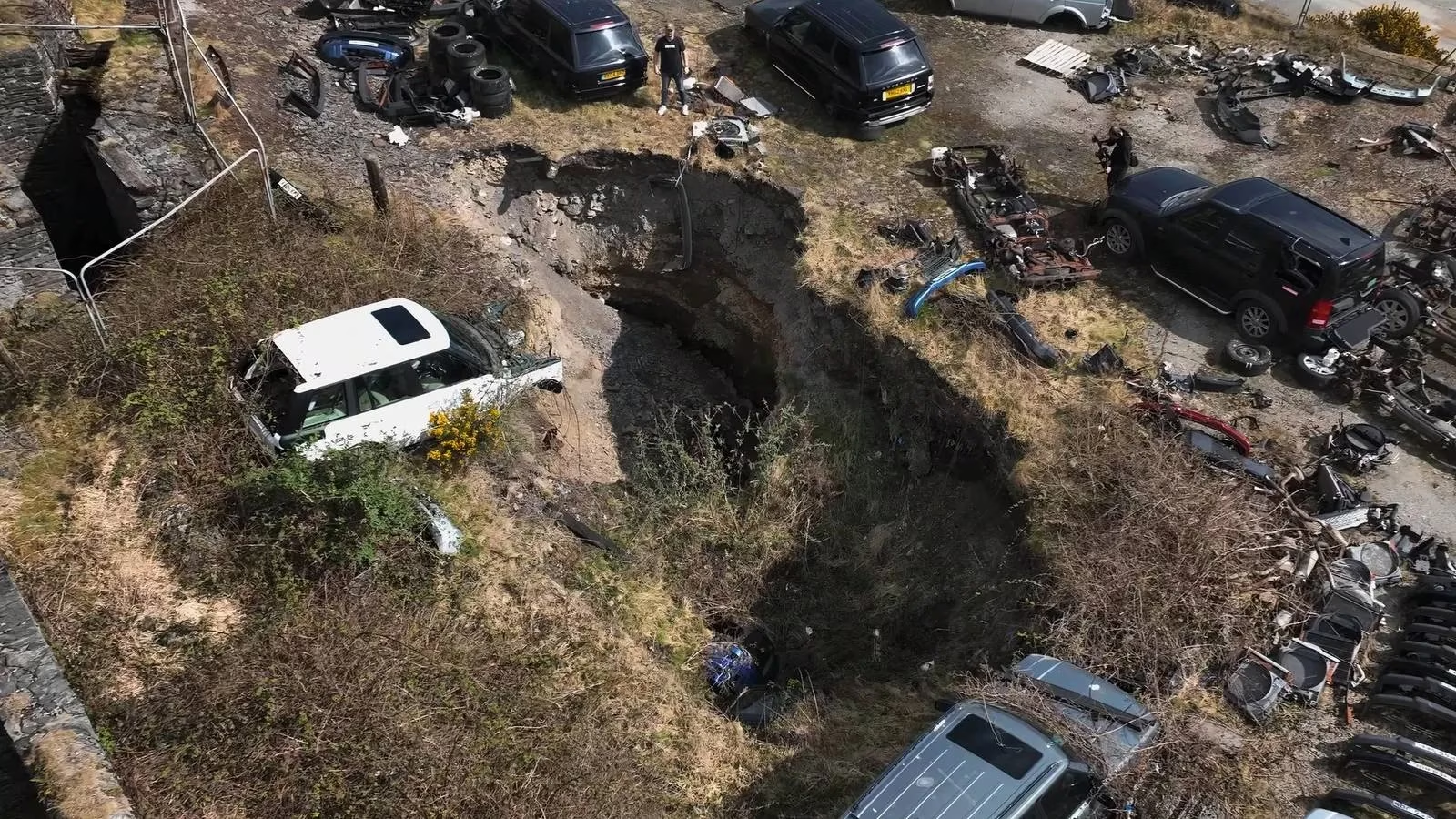
The hole was not a minor depression. It was a crater, several stories deep, its jagged lips lined with snapped roots and fractured concrete. Inside its shadowy maw, the remains of at least two luxury SUVs lay crumpled like discarded toys. One, a Range Rover perhaps, was visible at an unnatural angle, its nose pointing skyward as if making one final desperate climb. The ground had simply given way beneath them, leaving behind a scene more akin to a geological catastrophe than a vehicle dismantlers. The question hung heavy in the damp air: how had these once-pampered machines, symbols of comfort and capability, been dragged unceremoniously into the bowels of the earth?
The answer lies not in the yard\u2019s recent history, but in the ground beneath it. Long before the first Solihull-built station wagon rolled off the production line, this patch of Wales was alive with the clatter of a very different industry. It was a lead mine, one of many that provided the raw metal for everything from roofing and water pipes to ammunition during Britain\u2019s industrial surge. For generations, miners carved a labyrinth of tunnels and chambers hundreds of feet into the ancient rock, chasing veins of galena deep below sea level. When the ore finally gave out and the mine closed, it left behind a fragile skeleton of voids and pillars, sealed off from daylight but far from stable.
For decades, that subterranean honeycomb lay dormant. Then came the Land Rovers. Dozens, then hundreds of them, were unloaded onto the soft Welsh soil. A Discovery weighs well over two tonnes, a Range Rover even more. The combined mass of this automotive stockpile\u2014easily reaching a hundred tonnes or more in tight clusters\u2014began to press down on the overburden. The old mine timbers, already weakened by water and time, started to groan. The \u201ccrown pillar\u201d of rock separating the surface from the hollow darkness below cracked under the stress. And in one dramatic moment, the earth inhaled. A sinkhole was born, and with it, two luxury 4x4s were committed to the lead mines forever.
The irony was not lost on the Drivetribe explorers. Land Rover, and particularly Range Rover, has spent decades cultivating an image of invincibility. Their vehicles are marketed as go-anywhere machines, designed to conquer the Serengeti or glide down the King\u2019s Road with equal poise. Yet here, stripped of their polish, they were humbled by geology itself. The fall from grace was literal: a deep, vertical drop from the surface glamour of a premium SUV to the flooded depths of an industrial relic.
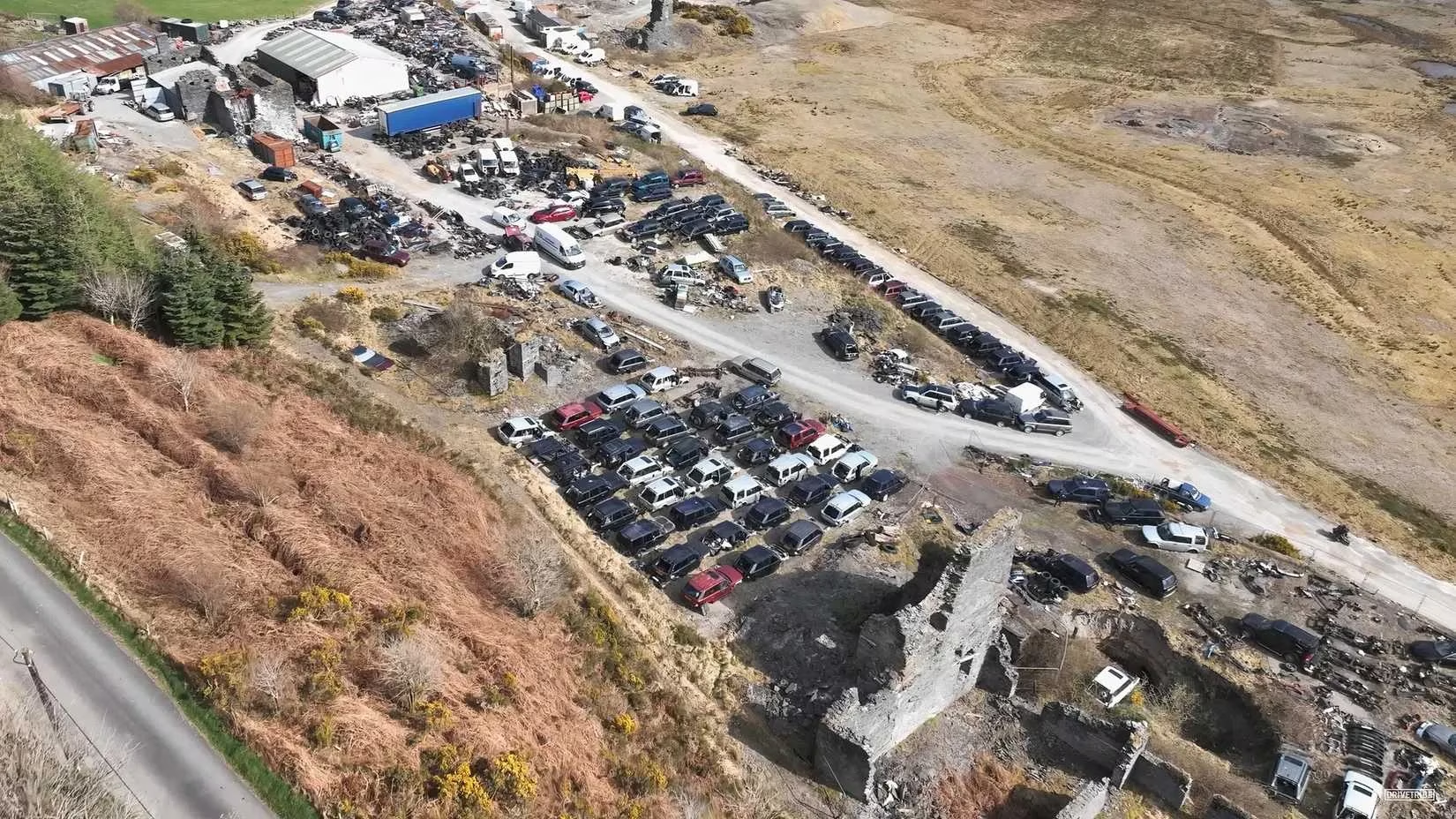
Despite the theatrical collapse, the yard remains a vital, if unregulated, artery for the British Land Rover community. Keeping an aging Freelander or a V8 Range Rover running today can feel like a financial haemorrhage, with main dealer hourly rates and new part costs being astronomical. \u201cFrazzle-free\u201d is a term often whispered with bitter sarcasm on owner forums. In this context, places like the Welsh junkyard are nothing short of a saviour, offering a sustainable\u2014and affordable\u2014way to source everything from transfer boxes to trim pieces. The Drivetribe team, aware of the operation\u2019s importance, deliberately obscured any location details in their footage. Exposing the yard\u2019s identity could invite the scrutiny of health and safety inspectors, who might deem the unstable ground too great a risk and shut the whole place down. For many UK drivers, that would be a disaster.
It also serves as a sobering reminder of what lurks beneath so much of Britain\u2019s pastoral beauty. The island is riddled with abandoned mines\u2014coal, tin, lead, and more\u2014many poorly mapped and even more poorly maintained. Every so often, a crater appears in someone\u2019s back garden or across a quiet road, proving that the earth below is not as solid as it looks. The Land Rover graveyard, with its valuable collection of spare parts, just happened to park its inventory on a particularly hungry patch of land.
For now, the yard continues its quiet work. The hole remains, a gaping monument to the past, and perhaps a warning to anyone stacking heavy vehicles above hollow ground. The two swallowed SUVs will likely never see daylight again; they have become part of the mine\u2019s story, metal fossils in a 19th-century underworld. As one member of the Drivetribe crew remarked, staring into the pit, it was a sobering thought: the same brand that built vehicles capable of fording rivers and scaling mountains could not defend them against the ground simply opening up to say hello.